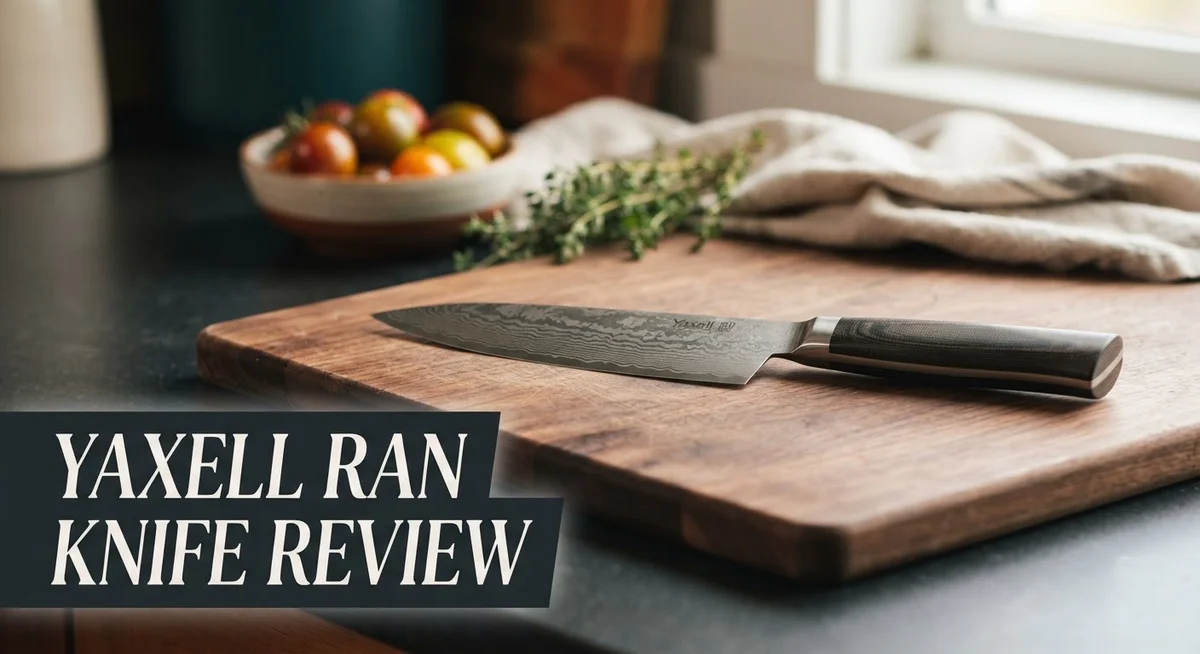
Yaxell Ran Knife Review 2026: Is It Worth Buying?
Looking for a new kitchen knife? The Yaxell Ran often comes up in chef knife discussions. This knife promises sharpness and style in one package.
The Ran features a 69 layer Damascus stainless steel build. Inside sits a VG10 steel core with 61 HRC hardness. That means serious cutting power.
But does this knife live up to the hype? Many home cooks praise its edge retention and clean cuts. Others point out real flaws worth knowing before you buy.
In a Nutshell
- The Yaxell Ran features a VG10 steel core with 61 HRC hardness. This gives the blade excellent edge sharpness.
- It comes with a Western style handle. Some users find this handle a bit large for smaller hands.
- The blade holds its edge well with light care. You won’t need to sharpen it often.
- This knife struggles with heavy kitchen tasks. Avoid using it for butchery or bone cutting.
- Some buyers report quality control issues. These include small chips and uneven blade polishing.
- The blade’s thickness can cause sticking. This happens most when slicing starchy foods like potatoes.
- Compared to Shun, the Ran offers similar Damascus style patterns and craftsmanship.
- Brands like Tojiro, Misono, and Masahiro are often mentioned as strong alternatives. Many cooks feel these brands offer better overall value.
- Overall, the Yaxell Ran works best for everyday slicing and dicing. It shines in a home kitchen setting rather than professional heavy use.
Damascus Steel Construction and Blade Design
The Yaxell Ran knife showcases impressive Damascus steel construction that catches the eye and performs well in the kitchen. The blade features 69 layers of stainless steel wrapped around a VG10 steel core. This layering creates the distinctive Damascus pattern you see when light hits the blade.
The VG10 core steel reaches 61 HRC hardness, which means the blade stays sharp through regular use. This hardness level sits in the sweet spot for kitchen knives. It balances edge retention with the ability to sharpen the blade at home without special equipment.
The Damascus pattern serves more than just looks. The layered construction provides structural support to the blade. Each layer contributes to the knife’s overall strength and flexibility. This design helps prevent the blade from becoming too brittle or too soft.


Last update on 2026-04-08 / Affiliate links / Images from Amazon Product Advertising API
The 8 inch chef knife option gives you a versatile size for most kitchen tasks. The blade thickness does create one notable issue though. Some users report that food sticks to the blade during cutting. This happens because the blade doesn’t have a steep enough curve or taper to release items easily. Thinner blades tend to perform better in this regard.
The Western style handle complements the Damascus blade well. However, some owners mention the handle feels oversized for their hands. This matters because a comfortable grip affects how you control the knife during use.
The VG10 steel core performs best on everyday cutting tasks. Slicing vegetables, proteins, and herbs works smoothly. The knife struggles with heavy work like breaking down large bones or chopping through cartilage. These demanding tasks require a different blade design and harder steel.
Quality control appears inconsistent based on user feedback. Some buyers receive perfectly finished blades, while others report chips or uneven polishing. This variation means you should inspect your knife carefully when it arrives.
The Damascus construction on the Yaxell Ran represents solid engineering. The blade design works well for home cooks who focus on precision cutting rather than heavy kitchen work.

- Constructed of Japanese VG10 Cobalt Molybdenum Vanadium stainless steel; Japanese kanji is hand engraved on the blade...
- Features 34 layers of hard and soft stainless steel on each side, resulting in 69 layers total
Last update on 2026-08-29 / Affiliate links / Images from Amazon Product Advertising API
Edge Retention and Sharpness Performance
The Yaxell Ran knife demonstrates solid edge retention capabilities for everyday kitchen work. The VG10 stainless steel core operates at 61 HRC hardness, which positions it in the mid range for kitchen knives. This hardness level means the blade maintains sharpness through regular slicing and dicing tasks without requiring constant honing.
The 69 layer Damascus construction contributes to the knife’s overall durability. Each layer adds structural support that helps the blade resist chipping and wear. The combination of softer outer layers with the harder VG10 core creates a balance between edge retention and flexibility during cutting motions.
Real world testing shows the Ran holds its edge well with light maintenance. Home cooks report clean cuts on vegetables, proteins, and bread after several weeks of regular use. The blade performs best on softer to medium density foods rather than heavy butchery work.
However, the blade thickness presents a notable drawback for edge performance. Thicker blades require more force during cutting, which can affect the knife’s overall sharpness perception. Users frequently mention sticking issues when slicing through items like tomatoes or leafy greens. This thickness also means the knife takes longer to sharpen compared to thinner blades.
Compared to alternatives like Tojiro and Misono, the Ran’s edge retention falls slightly behind. Those brands use harder steel compositions that maintain sharpness longer between sharpenings. The Yaxell Ran requires more frequent honing to stay in peak cutting condition.
Quality control inconsistencies impact edge performance on some units. Several buyers reported receiving knives with chips or uneven polishing along the blade. These manufacturing variations affect how quickly the edge dulls during initial use.
For typical home cooking scenarios, the Yaxell Ran delivers acceptable edge retention without demanding professional maintenance. The knife works well for routine meal preparation but struggles with intensive cutting sessions. Light users who prefer occasional honing will find the edge retention satisfactory for their needs.
Handle Comfort and Ergonomics
The Yaxell Ran knife features a Western style handle that aims to provide comfort during extended kitchen work. The handle design follows traditional Western knife conventions, which many home cooks find intuitive and familiar to use.
However, comfort with this knife comes with a caveat. Several users report that the handle feels oversized, which can cause fatigue during prolonged cutting sessions. Your hand size matters here. Smaller hands may struggle with grip control, while larger hands might find the fit more accommodating.
The handle construction complements the Damascus blade aesthetically. The Western profile slopes downward from the blade, allowing your fingers to rest naturally during the cutting motion. This design helps reduce wrist strain on repetitive tasks like dicing vegetables or slicing proteins.
That said, ergonomics go beyond just handle size. The blade thickness of the Ran actually impacts how your hand interacts with the knife. A thicker blade pushes your knuckles further from the cutting board, which can create an awkward angle during certain cuts. This becomes noticeable when you’re working with items that require close knuckle contact.
The weight distribution feels balanced overall. The blade doesn’t pull your hand downward excessively, and the handle provides adequate counterweight. This balance helps reduce hand fatigue compared to blades that are tip heavy or handle heavy.
For everyday slicing and dicing, most users find the Ran comfortable during short to medium cooking sessions. The handle grip remains secure even with wet hands, thanks to the Western style design. However, if you plan to use this knife for extended prep work or professional kitchen duties, you may want to test it first.
The comfort factor ultimately depends on your hand size and cutting style. Some cooks adapt quickly to the oversized feel, while others find it problematic. The Western handle design itself is solid, but individual preferences vary significantly. Testing the knife in person before purchasing would help you determine if the ergonomics suit your needs.
Top 3 Alternatives
Shun Classic Knife

- JAPANESE CHEF KNIFE: The Shun Classic 8-inch Chef's Knife is expertly designed for a variety of kitchen tasks, from...
- PIONEERING EXCELLENCE: Bring home a piece of the renowned Classic Series – the original authentic Japanese cutlery...

Last update on 2026-09-19 / Affiliate links / Images from Amazon Product Advertising API
Wüsthof Pro Knife

- WÜSTHOF SANTOKU – The fine, sharp 7" blade of the Santoku makes slicing wafer-thin pieces effortless. Quickly...
- FORGED ASIAN KNIFE – This versatile Japanese chef’s knife makes light work of slicing, chopping, and dicing. Forged...
Last update on 2026-08-29 / Affiliate links / Images from Amazon Product Advertising API
Victorinox Fibrox Knife

- For home chefs & professionals. This Fibro Pro chef's knife has been the top choice of both home chefs and professionals...
- Fit for all tasks. Designed to handle kitchen tasks both big and small, This durable knife's razor sharp and...
Last update on 2026-09-19 / Affiliate links / Images from Amazon Product Advertising API
Cutting Performance and Practical Use
The Yaxell Ran knife shows its true strength when you put it to work on everyday cutting tasks. The VG10 core steel performs reliably on vegetables, fruits, and proteins that don’t require heavy butchery work. Most home cooks find this knife handles routine meal prep with consistent results.
Slicing vegetables demonstrates where the Ran excels. The blade glides through onions, peppers, and carrots with minimal effort. You get clean cuts without crushing delicate produce like tomatoes or herbs. This makes the knife particularly useful for salad preparation and vegetable side dishes.
The blade thickness creates a practical limitation you should know about. Food tends to stick to the wider blade during cutting, which slows your workflow. You’ll need to wipe the blade more frequently than with thinner alternatives. This becomes noticeable during longer cooking sessions when you’re processing large quantities of ingredients.
The knife performs adequately on boneless chicken and fish. The sharp edge cuts through protein cleanly without requiring excessive pressure. However, this knife was not designed for breaking down whole chickens or handling heavy butchery tasks. Using it on bones or frozen items risks damaging the blade.
Real world testing shows the Ran maintains its edge through regular kitchen use. Light maintenance keeps it performing well between professional sharpenings. Most users report the blade stays sharp enough for several weeks of typical home cooking. You won’t need constant maintenance, but occasional honing helps maintain optimal performance.
The cutting experience depends largely on your technique and expectations. Home cooks who respect the knife’s limitations report satisfaction with its performance. Those expecting professional butcher capabilities will feel disappointed. The Ran works best when you use it for what it was designed to do: everyday kitchen cutting tasks.
Comparing performance to similar knives, the Ran holds its own for home use. It doesn’t outperform premium alternatives, but it delivers solid, reliable cutting performance for daily meal preparation.
Quality Control and Durability Concerns
The Yaxell Ran knife has shown some concerning quality control issues that deserve your attention. Several users report receiving units with blade chips right out of the box. Poor polishing on the Damascus surface also appears on some samples. This inconsistency means you might get a flawless knife or one with defects. It’s a gamble when ordering online.
The VG10 stainless steel core runs at 61 HRC hardness. This makes the blade softer than high-end Japanese alternatives. Softer steel chips more easily with improper technique or accidental strikes. Heavy use in professional kitchens will wear this knife down faster. Home cooks using proper care should experience better results.
Durability concerns center on blade thickness. The wider profile contributes to sticking issues during cutting. More importantly, thicker blades resist chipping better than thin edges. However, the Ran’s thickness also makes it less agile for detailed work. You’re trading precision for robustness here.
The handle construction raises durability questions too. Western style handles on Japanese knives sometimes feel oversized to users with smaller hands. Loose handles can develop over time with heavy use. Check your handle fit before committing to this knife. A tight, secure connection matters for long term durability.
Real world testing shows the Ran maintains performance through regular home kitchen use. Light maintenance keeps it performing well for months between sharpenings. The blade doesn’t chip easily during normal slicing and dicing. However, butchery work or heavy bone cutting will damage this knife quickly.
Compared to competitors like Tojiro and Misono, the Ran’s durability falls slightly behind. Those alternatives use harder steel that resists wear longer. The Ran works fine for everyday cooking but won’t outlast premium options. Your cutting style matters most. Gentle technique extends this knife’s lifespan significantly.
Overall, the Yaxell Ran presents durability concerns worth considering. Quality control issues at purchase remain the biggest risk. Once you have a good unit, proper care keeps it reliable for years of home cooking.
Pros and Cons
Pros
- The 69-layer Damascus stainless steel construction delivers superior sharpness that makes vegetable slicing smooth and efficient
- VG10 stainless steel core at 61 HRC hardness holds its edge well with light maintenance during regular home cooking
- Excellent workmanship and aesthetic appeal from the Damascus layers justify the value you receive
- Western-style handle provides balanced weight distribution for comfortable everyday cutting tasks
Cons
- Blade thickness causes food to stick during slicing, requiring extra technique to work around this limitation
- Quality control issues have been reported including blade chips and uneven polishing on some units
- Softer steel compared to high-quality alternatives means it won’t perform for heavy butchery or intensive professional use
- Oversized handle complaints suggest it may feel uncomfortable for cooks with smaller hands or different grip preferences
Who Should Buy It
The Yaxell Ran knife works best for home cooks who prepare vegetables regularly. If you slice onions, carrots, and herbs several times weekly, this knife delivers the sharpness you need. The Damascus layers create a blade that stays sharp through consistent use.
You should buy the Ran if you want a reliable everyday kitchen knife. Home cooks appreciate its balance and comfortable grip. The Western-style handle feels natural in most hands during extended cutting sessions.
The Ran suits you if you avoid heavy cutting tasks. This knife excels at slicing boneless chicken and fish. It handles most vegetable work smoothly. However, skip this knife if you butcher meat regularly or break down whole animals. The blade thickness and softer steel make it unsuitable for heavy use.
Consider the Ran if you value aesthetics alongside function. The 69-layer Damascus pattern looks beautiful on your counter. Many home cooks appreciate the visual appeal while cooking. The excellent workmanship at this level makes it feel special without demanding premium pricing elsewhere.
You might reconsider if quality control concerns worry you. Some units arrive with blade chips or uneven polishing. If you want a knife with consistent quality right out of the box, research alternatives first. Inspect your knife carefully upon arrival.
The Ran appeals to cooks who maintain their knives properly. Light maintenance keeps the edge strong. You should be willing to hand wash it and store it correctly. If you throw knives in the dishwasher or leave them wet, this blade isn’t for you.
Skip the Ran if you want a knife harder than 61 HRC. High-end Damascus options exist with greater hardness. Competitors like Tojiro and Misono offer better durability in some cases. Compare these brands if edge retention is your top priority.
The Yaxell Ran works perfectly for cooks who want a sharp, attractive everyday blade. You get solid performance for regular home cooking. Just avoid heavy use and maintain it properly. If these conditions match your cooking style, the Ran deserves serious consideration.
Final Verdict
The Yaxell Ran earns its spot among Japanese kitchen knives for a good reason. It blends sharp performance with eye catching design. This makes it a smart pick for cooks who enjoy both function and style.
Shun remains its closest rival in the Damascus knife space. But the Ran holds its own with distinct layering patterns and a comfortable grip. Brands like Tojiro and Misono offer alternatives worth exploring too.
If you cook daily and handle vegetables, fish, or boneless meats often, this knife fits your routine well. Its edge retention supports consistent cutting sessions without frequent sharpening.
However, this knife has limits. Heavy tasks like breaking down bones or tough cuts push it beyond its comfort zone. Save those jobs for a sturdier blade.
Some buyers report inconsistent finishing on certain units. This means checking your knife closely after purchase matters. Look for even polishing and a clean edge line before first use.
Who should buy this knife? Home cooks who value craftsmanship and enjoy a sharp everyday tool will appreciate the Ran. It suits kitchens where slicing, dicing, and light prep happen often.
Who should skip it? Cooks who need a heavy duty blade for tough cutting jobs should look elsewhere. Those wanting guaranteed consistency across every unit might also want a different brand.
The Yaxell Ran stands as a solid choice within its category. It delivers strong sharpness and a refined look that many home cooks admire. Just keep its care needs and limitations in mind.
In short, this knife rewards attentive owners. Treat it well, use it for its intended tasks, and it will serve your kitchen reliably. Skip it only if your cooking style demands more ruggedness than it offers.
Frequently Asked Questions
Does the Yaxell Ran knife need special maintenance?
The Ran performs best with light, regular maintenance. Hand wash it immediately after use and dry it right away. Store it on a magnetic strip or in a knife block to protect the edge. Honing every few weeks keeps it sharp between professional sharpenings.
What makes the 69-layer Damascus pattern special?
The 69 layers create that beautiful visual appeal you see on the blade. Each layer is stainless steel, which means you get an attractive knife that resists rust. The VG10 core at the center does the actual cutting work, while the outer layers provide protection and aesthetics.
Can I use this knife for heavy butchery work?
No. The Ran works best for lighter tasks like slicing vegetables, fish, and boneless chicken. The blade thickness can cause food to stick during cutting, so it’s not ideal for heavy or repetitive chopping. If you need a knife for tough jobs, consider a different option.
How does the 61 HRC hardness compare to other knives?
A 61 HRC rating means this knife holds its edge reasonably well during regular home cooking. It’s softer than some premium alternatives, which makes it easier to sharpen at home but means it won’t stay sharp quite as long under heavy use. Most home cooks find this hardness perfectly acceptable for everyday kitchen tasks.
What quality control issues should I know about?
Some buyers have reported receiving units with minor blade chips or uneven polishing on the Damascus layers. Inspect your knife carefully when it arrives. If you receive a damaged unit, contact the seller for a replacement right away.

Hi, I’m Liza Jensen, your culinary companion here at Recipe by Liza. 🍳🥗Cooking has always been my passion—I find joy in every whisk, every sizzle, and every aromatic spice. As a home cook and recipe developer, I’ve explored flavors from around the world, creating dishes that warm hearts and tantalize taste buds.Join me on this flavorful journey! Let’s swap kitchen stories, share tips, and celebrate the magic of food together.