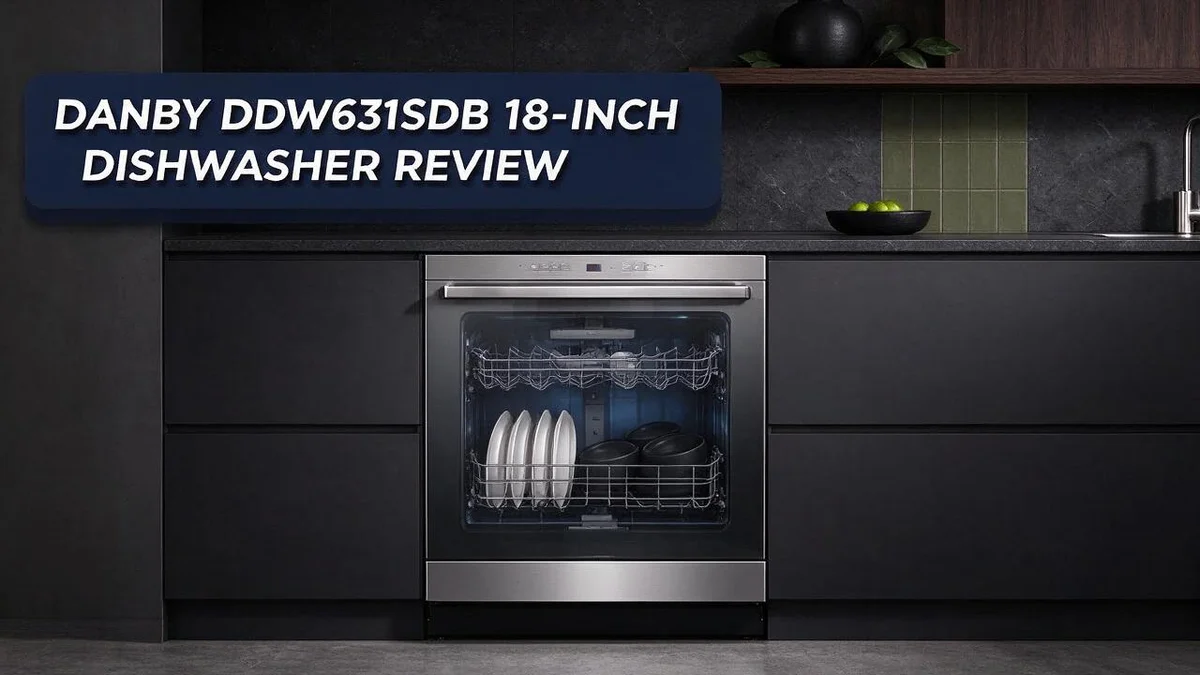
Danby DDW631SDB 18-Inch Dishwasher Review: Worth the Price?
Are you short on kitchen space but tired of washing dishes by hand? A compact dishwasher might be the answer. The Danby DDW631SDB is a countertop model made for small spaces.
It is marketed as a good fit for apartments and small kitchens. It holds four place settings, including cups and dinnerware. Many home cooks also want a unit that handles pots and pans, and this one is said to do that.
Here is what you need to know before you decide. This review covers the key facts we found. We also point out what the sources do not tell us yet.
In a Nutshell
-
Capacity: The Danby DDW631SDB holds four place settings, including cups and dinnerware. This makes it a practical choice for a small household that wants to skip hand washing.
-
Cookware: Sources say this model cleans pots and pans, not just plates and glasses. This matters if you cook often and dislike scrubbing heavy pans by hand.
-
Portable design: The unit sits on the countertop, so it does not need a built-in installation. You can store it out of the way when you do not need it.
-
Award label: One source calls it a “best portable dishwasher 2022” pick. Treat this as marketing, since the research shows no independent testing behind the label.
-
Missing details: The research did not include dimensions, noise level, cycle options, or energy and water use. These details shape daily use, so check the official specifications.
-
Reliability: Our sources listed no cons and no verified reliability data. Reading recent owner reviews can show how the machine performs over the long term.
Capacity and Place Setting Fit

- Slimline Design with Large Capacity: This 18-in COMFEE' built-in dishwasher boasts a slim body that takes up minimal...
- 8 Place Settings: Measuring 22.6"D x 17.6"W x 32.4"H with adjustable legs, this compact under-sink/built-in dishwasher...

Last update on 2026-11-02 / Affiliate links / Images from Amazon Product Advertising API
Four place settings sounds simple, but what does that mean for your kitchen? Think about how many people you cook for each day. A unit like this often suits a couple or a small household.
Count your dishes before you decide. After your next dinner, add up the plates, bowls, mugs, and utensils. If the total stays close to four settings, the machine may handle your daily load.


Last update on 2026-04-08 / Affiliate links / Images from Amazon Product Advertising API
Try a quick test at home. Stack your everyday dishes on the counter and see how much space they fill. This easy step shows you the real fit better than any number on a label.
Cookware needs extra planning. Large skillets and baking sheets can use several slots at once. Roasting pans need open space too. Plan those loads so you do not run out of room during the cycle.
Smart loading makes a big difference. Place bulky items along the edges and angle plates so water can reach every surface. Good spacing keeps dishes cleaner and helps them dry faster.
Also measure the open counter space where the unit will sit. Leave room for the door to open fully. Check that you can reach a water source and a power outlet without stretching cords.
Match the capacity to your habits. A four setting machine works best when your household runs it once a day or every other day. If you wash several loads each night, you may need a bigger option or a backup plan.
Honest math beats guessing. Write down your real dish count and compare it with the stated capacity. You will know quickly whether this model fits your life.
Cleaning Performance on Pots and Pans
Pots and pans are the real test for any dishwasher. Plates and bowls are easy to clean. Heavy cookware often carries grease, dried sauce, and food stuck on the surface.
The research says the Danby DDW631SDB can clean this type of cookware. However, the sources do not explain how well it removes baked on residue. No test results or cleaning scores appeared in the notes.
Think about your pans after a typical dinner. A light film of oil needs little work. A pot with burnt cheese needs more heat, more water, and more time.
Measure your largest pan before you plan a load. Big skillets and stockpots may not fit easily in a compact countertop unit. Check the inside space of your tools first, so you avoid surprises.
Many people soak heavy pots before they load them. This simple step may loosen stubborn grime. The sources did not test this with the Danby model, so treat it as a smart habit rather than a proven rule.
Nonstick pans deserve extra care. Read the care label on each piece before it goes inside. Some coatings wear faster in harsh cycles, so hand washing may protect your favorite pan.
Cast iron pans and copper pieces need special attention. Most experts advise hand washing and quick drying for cast iron, because water can cause rust. Check your manual before you add these items to any dishwasher.
Keep expectations realistic for the first few weeks. Run a test load with your toughest items. Then decide whether the results match your standards for a clean kitchen. A clear result after one or two loads tells you more than any label.
Build Quality and Countertop Portability
Build quality matters more than many buyers expect. A portable unit sits on your counter, so it faces daily bumps and steam.
Check the outer shell, the door hinges, and the latch before you commit. Those parts tell you a lot about how the machine will age.
Stability is the first thing to test. A countertop dishwasher should sit flat and stay put when the door opens. Place a level on the top surface if you have one. Wobbly feet can cause rattling and uneven spray.
Next, think about the water connection. Most portable models use a faucet adapter and a drain hose. Your sink must have space for the hose and a clear path for drainage. Measure the distance between the faucet and the planned spot first. Ask a plumber if you feel unsure about the adapter.
Moving the unit also needs planning. Some portable models roll on wheels, but our sources did not confirm this feature. Ask yourself who will lift it, and where it will go when guests arrive.
Keep the power cord away from hot surfaces and sharp edges. Ventilation matters too. Steam escapes during long cycles, so leave a few inches of air around the back and sides.
Keep the unit away from cabinets with thin wood or heat sensitive finishes. Hot steam can also warp thin plastic trim. Wipe the counter after each run to prevent water rings.
Finally, look at the door seal. A worn gasket lets water leak onto the counter. A firm latch keeps steam inside and protects your floor. Open and close the door several times on delivery day. Notice whether it feels solid or flimsy.
Top 3 Alternatives
If the Danby DDW631SDB does not suit your kitchen, these three options may work better. Each one solves a different space problem.
Bosch SPE53C

- 【Powerful Motor and 160 Nm Torque】 This screwdriver is equipped with a powerful 16 V high-performance motor, and...
- 【Intelligent 3-speed control】 3-speed gear selection allows you to fully control each task and strategically choose...
Last update on 2026-11-02 / Affiliate links / Images from Amazon Product Advertising API
The Bosch SPE53C is a compact dishwasher for small kitchens. It runs quietly, so it works well in open living spaces.
Its stainless steel interior cleans dishes with strong water jets. Many owners like its simple controls and clear rack layout. Its quiet motor makes night loads easy.
Midea Portable Dishwasher

- A perfect size (H17.25″×W22″×D20″)- Holds up to 6 Place Settings perfect for 2-3 people. The Midea compact...
- Simple Installation- Can be connected directly to a faucet (a suitable adaptor is needed) and placed on a countertop or...
Last update on 2026-11-02 / Affiliate links / Images from Amazon Product Advertising API
The Midea Portable Dishwasher rolls on wheels, so you can move it easily. It connects to a standard faucet with a short hose.
This option suits renters and anyone without built-in space. It offers several wash cycles for everyday meals. Setup takes only a few minutes. When not in use, it can tuck neatly into a closet.
Igloo Countertop Dishwasher

Last update on 2026-06-09 / Affiliate links / Images from Amazon Product Advertising API
The Igloo Countertop Dishwasher sits right on your counter. It needs no installation, so you can start using it fast.
It works well in dorm rooms, RVs, and tiny apartments. You can fill it from the sink or use a built-in tank. It gives you an easy way to save time on cleanup.
Each alternative fits a different kitchen. Pick the one that matches your space, your water setup, and your daily routine.
Installation and Daily Use
Setting up the Danby DDW631SDB is simpler than many people expect. Read the owner manual before you plug in the unit. It shows the exact steps for your model.
Run a test cycle first. An empty run shows you how the machine sounds and how the door closes. Watch the base during the first cycle for any drips or leaks.
Daily use starts with a simple routine. Scrape large food bits off plates, then rinse greasy pans. Load the dishes, add detergent, and press start.
Pick detergent with care. Use only dishwasher detergent. Regular dish soap creates too many suds and can leave the inside messy.
Keep a supply ready too. Store a box of tablets or powder near the unit so you never run out in the middle of the week.
Timing matters as well. Many people run the unit after dinner or overnight. Listen to a full cycle in your home before you plan calls or sleep around it.
Unload in the right order. Empty the bottom rack first. Drips from the top rack can fall onto clean plates below if you reverse the order.
Good habits keep the unit working well. Wipe the door and the rubber seal after each load. Leave the door open a little once the cycle ends so the inside can air out.
Check the manual for filter care too. Many dishwashers have a filter that needs rinsing. Clean it on a set schedule so water flows freely and dishes come out clean.
Keep a simple log for the first month. Note how the dishes look after each run. Small notes help you spot patterns and fix problems early.
Daily use becomes easy with practice. Most people find their own rhythm within a week or two.
Noise, Energy and Water Use
Noise is a question mark for this model. The research gives no decibel rating for the Danby DDW631SDB.
Without that number, you cannot know how loud it runs in a quiet kitchen.
Placement changes what you hear most.
A unit near a bedroom or open living area may feel louder than one in a closed kitchen.
Listen during your first load.
Pay attention to the spray and the drain pump.
Note any sound that seems sharp or rattling.
Energy and water use are also unknown.
The sources do not list electricity or water use per cycle.
Many compact machines use less water than hand washing.
That is a general pattern, not a verified claim for this model.
Check the official spec sheet.
Ask the seller or look for the manufacturer data.
Look for the decibel rating, the energy rating, and the water use per cycle.
Compare those figures with other countertop models of the same size.
Use an eco setting if one exists.
Many machines offer a lighter cycle that uses less heat.
Confirm that this model has one before you plan around it.
Run full loads only.
A full rack uses less water per dish than several small loads.
Wait until the racks are full before you start a cycle.
Warm water can help results.
Run the tap until it feels warm before you start the unit.
Check the manual for the water temperature it needs.
Treat the best of 2022 label with care.
The label is marketing, not independent testing of noise or energy.
Use it as a starting point, then check the numbers yourself.
Good data helps you avoid surprises after delivery.
Ask for these numbers before you buy.
Reliability and Long-Term Use
The research gives no verified reliability data for the Danby DDW631SDB. Sources are a listicle, a review excerpt, and a video description. None of them show how this unit holds up after years of daily use.
Treat the “best of 2022” label as a starting point, not a promise. Marketing labels do not prove durability. Real answers come from your own kitchen over time.
Long term use depends on small changes. Watch for a cycle that runs longer than before. Notice dishes that come out wet or cloudy. These signs can point to wear.
Heavy use adds strain. A compact unit with four place settings works hard when you run it every day. Lighter use often means less wear on parts over the years.
Plan a simple check every few months. Look at the racks and feet for cracks or looseness. Tighten anything that moves, and replace worn pieces early.
Room temperature changes can affect plastic parts over time. Watch for warping or discoloration, especially if the unit sits near a warm appliance or a sunny window.
Ask about warranty terms before you commit. The research does not cover coverage length or what it includes. Read the paperwork yourself and save your receipt.
Replacement parts matter too. Check whether parts are easy to find if something fails. A countertop unit that lacks available parts may be harder to keep running.
Keep a record of repairs and service calls for the whole time you own the unit. That record shows patterns you might miss otherwise.
Think of reliability as a slow story. Each month of steady results builds trust. Each odd sound or leak tells you to pay attention early.
Pros and Cons
Pros
- Fits four place settings for small homes or couples.
- It cleans pots and pans, not just everyday dishes.
- Its countertop design suits compact apartment kitchens.
- One source lists it as a best portable dishwasher 2022 pick.
- A portable unit can move with you to a new space.
Cons
- Cycle options are not listed in the research.
- Exact dimensions are missing, so measure your counter space first.
- Rival models are not named, so a side by side check is hard.
- The only cleaning claim found covers cookware, so ask about other loads.
Who Should Buy It
This model suits a specific type of household. Some people will gain more from it than others. Think about your daily routine first.
Renters are a strong match. Many leases block permanent installs. A portable unit can roll to the next home, so the setup moves with you. Check your lease before you buy.
Home cooks who use heavy pans may appreciate it. The only cleaning claim covers cookware. People who scrub skillets by hand after dinner may find that task drops off their list.
Singles and couples with light daily cooking fit well. Small households create fewer dishes each day. A compact load fills up slowly, so the unit can run less often.
Busy people who dislike evening cleanup may gain time. Hand washing after every meal takes real minutes. A machine can handle that job while you rest or tackle other chores. Many people find this the hardest part of the day.
Those who want a set and forget routine should test first. The research gives no cycle list, so you cannot choose a quick or heavy setting. Run a test load before you rely on it every day.
Large households may want a different machine. Families who run a full load every day will likely fill this one fast. Four place settings may not keep up with a busy table.
Buyers who need a built in look should keep searching. This model sits on a counter, so it will not blend into cabinets. Plan your choice around that fact from the start.
In short, this unit suits renters, light cooks, and busy solo or pair households. Measure your space, count your daily dishes, and review your lease terms before you decide.
Final Verdict
Our final take is clear. The Danby DDW631SDB looks like a sensible starting point. It fits a small kitchen and cleans more than everyday plates.
Treat the sources with care, though. Most facts come from a listicle, a short review excerpt, and a video description. None of them offers independent testing.
Before you buy, run a short checklist. Measure your counter and the open space around it. Check how water fills and drains in your home. Confirm the power needs too.
Ask the seller about the return window as well. A short window leaves you less time to test the machine properly.
Plan your first two weeks carefully. Run a few normal loads and listen closely. Check whether pots and pans come out clean. Note any odd smells or leaks.
Set your expectations for daily loads. Scrape large food off plates first. Run the unit only when it is full. This helps you judge its real capacity.
Keep your expectations realistic. The unit may suit light daily use better than a crowded family kitchen. Test it with your own routine before you rely on it.
Who should look elsewhere? Shoppers who need a clear cycle menu or proof of quiet operation should keep searching. The research cannot answer those needs yet.
Next step: Read two or three owner reviews from buyers who used a similar model. Look for comments on noise, fit, and cleaning results. Real stories can fill the gaps that this research leaves open.
In short, this unit fits small homes well. It still needs a hands-on trial before you trust it fully.
Frequently Asked Questions
Does this model need a water connection?
The research does not explain how this unit gets its water. Check the manual before you plan your space. Some portable models fill from a tap, while others use a tank that you refill by hand. Knowing this helps you judge how easy daily use will feel.
How loud is the Danby DDW631SDB?
The sources do not list a noise level. Plan to run it when noise matters least. If you live in a shared building, ask your neighbors how sound carries through the walls. You can also run it while you are out or during the day.
Is it a good fit for a guest space or second home?
A portable unit can help when you host often. Guests can use it for quick cleanup after a big meal. Keep in mind that it holds only four place settings. For longer stays or larger groups, you may still need to wash some items by hand.
Where should I look for owner feedback?
The current sources are a listicle, a short review, and a video description. None of them share long-term owner experiences. Look for verified owner reviews on retail sites. Read comments about leaks, drying results, and how long each load takes. These details tell you more than a “best of” label.

Hi, I’m Liza Jensen, your culinary companion here at Recipe by Liza. 🍳🥗Cooking has always been my passion—I find joy in every whisk, every sizzle, and every aromatic spice. As a home cook and recipe developer, I’ve explored flavors from around the world, creating dishes that warm hearts and tantalize taste buds.Join me on this flavorful journey! Let’s swap kitchen stories, share tips, and celebrate the magic of food together.