
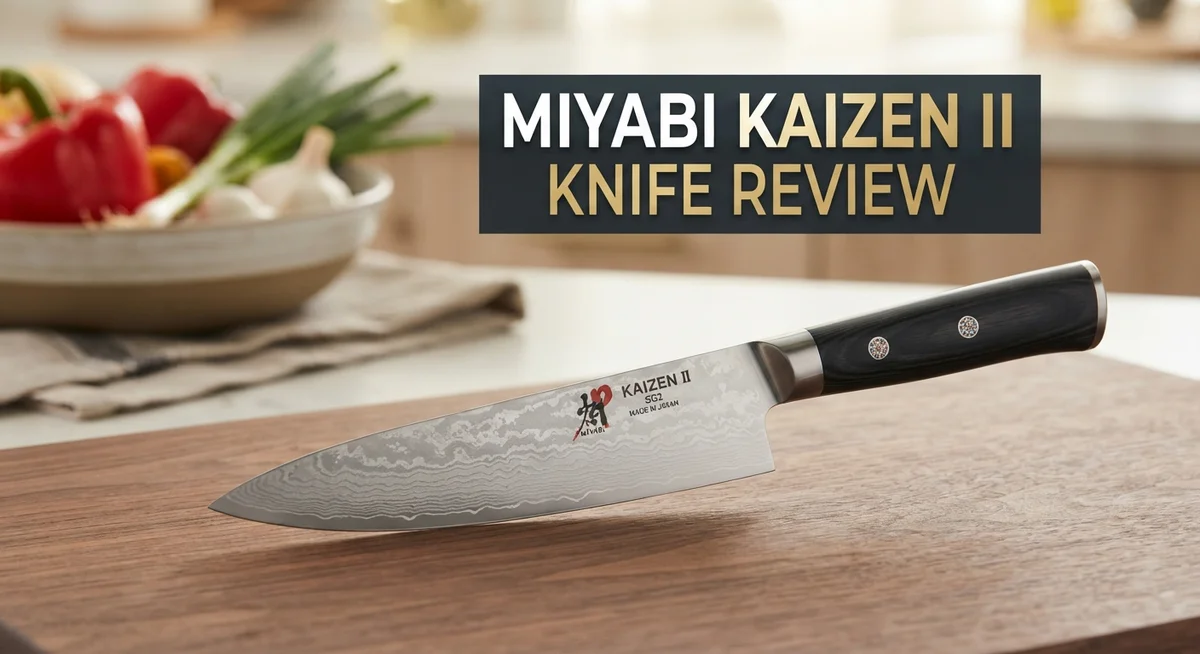
Miyabi Kaizen II Knife Review 2026: Performance & Edge Retention
Looking for a knife that blends beauty and performance? The Miyabi Kaizen II might be your answer. This knife stands out in any kitchen with its striking Damascus pattern and sharp bite.
Miyabi built this knife with a FC61 core steel. This steel sits inside 48 to 49 layers of Damascus cladding. The result is a blade that holds its edge and resists stains.
The handle feels natural in your hand. Black pakkawood meets a steel end cap and red trim. This combo gives the knife a premium look and steady grip.
In a Nutshell
- Steel core: The blade uses FC61 steel wrapped in 48 to 49 layers of Damascus cladding. This gives it a sharp edge and a beautiful pattern.
- Hardening process: Miyabi uses the FRIODUR ice hardening method. This step makes the blade tough and resistant to rust.
- Edge performance: The knife holds its edge well over time. It also sharpens easily when you need a touch up.
- Handle design: The black pakkawood handle has a steel end cap and red trim. It feels balanced and comfortable during long prep sessions.
- Beginner friendly: This knife feels more forgiving than entry level VG10 Japanese knives. New users can handle it with confidence.
- Build quality: The full tang construction adds strength and stability. It also gives the knife a solid, premium feel in hand.
Blade Material and Steel Composition
The Miyabi Kaizen II uses FC61 steel as its core. This material sits at the heart of the blade and gives the knife its cutting performance. FC61 is a German stainless steel known for holding an edge well and resisting corrosion.
Miyabi wraps this core in 48 to 49 layers of Damascus cladding. Each layer creates the distinctive pattern you see on the blade. This layering technique does more than look beautiful. It adds strength to the blade while keeping weight down.
The Damascus layers use different steel compositions. They alternate to create contrast and visual appeal. The pattern tells you this knife is handcrafted with care. No two blades look exactly alike.


Last update on 2026-04-08 / Affiliate links / Images from Amazon Product Advertising API
The FRIODUR ice hardening process sets this knife apart from many competitors. Miyabi freezes the blade to extreme cold temperatures during manufacturing. This special treatment increases hardness and edge retention. The result is a blade that stays sharp longer between sharpenings.
The steel composition makes the Kaizen II more forgiving than entry level VG10 Japanese knives. VG10 steel can feel brittle to new users. The FC61 core offers better balance between hardness and flexibility. Home cooks appreciate this middle ground.
Corrosion resistance is another strength of this steel combination. The stainless properties mean you won’t see rust spots easily. This matters if you wash your knife by hand or store it in humid kitchens. The blade maintains its appearance over years of use.
The steel also takes an edge well and sharpens easily. You won’t struggle to maintain this knife. A simple honing steel or whetstone brings back sharpness quickly. The blade responds to sharpening without requiring special skills or expensive equipment.
Overall, the blade material reflects Miyabi’s commitment to quality. FC61 steel paired with Damascus cladding creates a knife that performs and looks exceptional. The ice hardening process ensures consistent results across every blade. This combination makes the Kaizen II a reliable choice for serious home cooks and professionals alike.

- Revolutionary FC61 steel core features fine carbide distribution and is protected by a durable 48 layers of damast steel
- Fine carbide distribution creates a razor-sharp and durable blade with a 61 Rockwell hardness
Last update on 2026-09-19 / Affiliate links / Images from Amazon Product Advertising API
Handle Design and Ergonomics
The handle of the Miyabi Kaizen II deserves special attention. Miyabi chose black pakkawood for the grip, which feels smooth and warm in your hand. This material resists moisture better than wood alone, making it practical for kitchen use.
The steel end cap sits at the blade’s base. It adds weight and balance to the knife. The red trim accent runs along the handle edge, giving the knife a premium look without being flashy.
Full tang construction means the steel core runs completely through the handle. This design creates a stronger connection between blade and grip. You feel more control when you use the knife, and it won’t wobble during cuts.
The handle length is generous but not oversized. Most cooks find it comfortable for an 8 inch chef’s knife. Your fingers fit naturally around the grip without cramping during extended use.
Weight distribution matters for comfort. The Miyabi Kaizen II balances well between the blade and handle. You don’t feel like the knife is pulling you down or dragging your wrist. This balance reduces fatigue when you chop, slice, or dice for long periods.
The grip texture prevents slipping. Even when your hands are wet or oily, the pakkawood surface stays secure. You maintain control without gripping too hard, which means less hand strain over time.
The handle design reflects Japanese knife philosophy. It prioritizes function over decoration. Every curve and contour serves a purpose. The red trim isn’t just pretty—it helps you see where your fingers are relative to the blade edge.
Beginners appreciate this ergonomic approach. The knife doesn’t feel intimidating to hold. Experienced cooks enjoy the precision the handle offers. Whether you’re learning or perfecting your technique, the Kaizen II’s handle adapts to your skill level.
The overall feel is one of confidence. You grip the knife and immediately sense quality. The pakkawood feels substantial, the steel end cap adds reassurance, and the balance invites you to start cutting. This is what good handle design accomplishes—it gets out of your way and lets you focus on the food.
Edge Retention and Sharpness Performance
The Miyabi Kaizen II keeps its edge sharp for an impressive length of time. This performance comes from the FC61 steel core combined with the FRIODUR ice hardening method. The process creates a blade that resists dulling better than many competitors in its class.
When you first unbox the knife, the edge feels razor sharp. The blade glides through vegetables, proteins, and herbs with minimal effort. Most users report that this sharpness persists through weeks of regular kitchen use.
The 48 to 49 Damascus layers surrounding the core contribute to edge stability. These layers protect the core steel from chipping during normal cutting tasks. The result is a blade that maintains its geometry longer than softer alternatives.
One standout feature is how easily the Kaizen II accepts a new edge. When sharpening time comes, the steel responds quickly to honing stones and steels. You won’t struggle with stubborn metal or uneven sharpening. The blade takes an edge well, which means less frustration during maintenance.
The steel composition makes a real difference in daily performance. Unlike entry level VG10 Japanese knives, the Kaizen II feels more forgiving during cutting work. It handles the occasional contact with a cutting board without immediately losing sharpness. This durability extends the time between sharpenings.
Corrosion resistance adds another layer of protection to edge retention. The Damascus cladding shields the core from moisture and oxidation. A well maintained blade stays sharp and rust free for years.
Some users note that long term edge durability data remains limited. The knife is relatively new to the market, so extensive wear testing is still ongoing. However, early feedback from professional and home cooks remains consistently positive.
The combination of superior steel, proper hardening, and thoughtful design makes the Kaizen II a reliable performer. You can expect this knife to hold its edge through hundreds of cuts. Whether you’re slicing delicate herbs or breaking down chicken, the blade delivers consistent results. The sharpness retention justifies regular use in any serious kitchen.
Top 3 Alternatives
Wüsthof Classic Chef Knife

- KITCHEN WORKHORSE – The WÜSTHOF 8” Classic Chef’s Knife is essential for preparing any meal. This all-purpose...
- WÜSTHOF CLASSIC SERIES – The Full Tang, Triple Riveted handles of the Classic Line offer the widest range of cutlery...

Last update on 2026-06-09 / Affiliate links / Images from Amazon Product Advertising API
Zwilling J.A. Henckels Knife

- 3-piece knife set for professional and home cooks: Paring and paring knife (blade: 10 cm) for cutting fruit and...
- High-quality workmanship: Long-lasting sharpness, stability and flexibility thanks to ice-hardened FRIODUR blade, Made...
Last update on 2026-08-29 / Affiliate links / Images from Amazon Product Advertising API
Victorinox Fibrox Chef Knife

- For home chefs & professionals. This Fibro Pro chef's knife has been the top choice of both home chefs and professionals...
- Fit for all tasks. Designed to handle kitchen tasks both big and small, This durable knife's razor sharp and...
Last update on 2026-09-19 / Affiliate links / Images from Amazon Product Advertising API
Corrosion Resistance and Maintenance
The Miyabi Kaizen II handles moisture and salt exposure well. The FC61 core steel combined with its 48 to 49 Damascus layers creates a protective barrier against rust and oxidation. This multi layer design is one reason why the knife resists corrosion better than many competitors in its category.
You’ll want to hand wash this knife rather than use a dishwasher. Hot water and mild soap work best. Dry the blade immediately after washing to prevent water spots and mineral buildup. This simple habit keeps the knife looking fresh and performing optimally.
The black pakkawood handle resists moisture naturally. Wood handles can absorb water over time, but pakkawood is specially treated to minimize this problem. The steel end cap adds durability and prevents the handle from splitting or warping. Wipe the handle dry after each use to extend its lifespan.
Storing the knife matters more than you might think. Keep it in a knife block, on a magnetic strip, or with a blade guard. Avoid leaving it loose in a drawer where it can contact other utensils. Metal to metal contact can scratch the beautiful Damascus pattern and expose the steel underneath.
Sharpening maintains both edge performance and corrosion resistance. A sharp blade cuts more efficiently and requires less force during use. Less pressure means fewer micro scratches that could allow moisture to seep into the steel. Use a whetstone or honing steel regularly to keep the edge in top condition.
The FRIODUR ice hardening process gives the Kaizen II an advantage here. This treatment strengthens the steel at a molecular level, making it more resistant to rust formation. The hardness also means the blade holds its edge longer between sharpenings, reducing maintenance frequency overall.
Proper care keeps this knife performing beautifully for years. The combination of quality materials and thoughtful construction means the Kaizen II responds well to basic maintenance. You don’t need special chemicals or expensive products. Consistency and attention to these fundamentals protect your investment and ensure reliable kitchen performance.
Sharpening and Care Requirements
The Miyabi Kaizen II requires straightforward care to keep it performing at its best. This knife responds well to simple maintenance routines that any home cook can follow.
Hand washing is your first line of defense. You should never put this knife in a dishwasher, as the harsh environment can damage both the blade and the pakkawood handle. Instead, rinse it under warm water immediately after use and dry it with a soft cloth. This simple step prevents water spots and keeps moisture away from the steel.
Storage matters more than many people realize. You want to keep the blade protected between uses. A knife block, magnetic strip, or blade guard all work well. Avoid storing it loose in a drawer where the edge can dull or chip against other utensils.
Sharpening the Kaizen II is refreshingly easy. The blade accepts a new edge quickly, whether you use a whetstone, honing steel, or professional sharpening service. Most home cooks find that regular honing with a steel maintains the edge between deeper sharpening sessions. The FC61 core steel combined with the Damascus layers makes the sharpening process forgiving, even for beginners.
The black pakkawood handle resists moisture naturally, so it won’t absorb water like wood handles might. Simply wipe it clean and let it air dry. The steel end cap adds durability and requires no special care.
The FRIODUR ice hardening process gives this knife an advantage in corrosion resistance. The blade handles moisture and salt exposure well when you follow basic care practices. Avoid leaving the knife wet for extended periods, and you’ll maintain that protection.
Think of maintenance as an investment in longevity. The Miyabi Kaizen II rewards consistent care with years of reliable performance. You don’t need complicated routines or expensive products. Basic hand washing, proper storage, and occasional sharpening keep this knife sharp and beautiful for daily use in any kitchen.
Pros and Cons
Pros
- Razor sharp edge out of the box that holds up impressively during regular use
- FC61 core steel with 48-49 Damascus layers delivers excellent corrosion resistance and easy sharpening
- Comfortable balance and ergonomic design make it more forgiving than entry-level Japanese knives
- Black pakkawood handle resists moisture naturally and pairs well with the steel end cap
- FRIODUR ice hardening process ensures the blade stays reliable for years with proper care
Cons
- Long-term edge durability data remains limited, so real-world performance over many years is unclear
- Requires hand washing and careful storage to maintain corrosion resistance
- Sharpening skills matter more than with some Western knives to keep the edge at peak performance
Who Should Buy It
The Miyabi Kaizen II works best for home cooks who want a serious upgrade from basic kitchen knives. You’ll love this blade if you prep vegetables regularly and want something that feels premium in your hand.
Professional cooks and culinary students should consider this knife too. The 8-inch chef’s knife handles most cutting tasks with ease. It performs well in busy kitchens where you need speed and reliability.
Home enthusiasts who appreciate Japanese knife craftsmanship will find real value here. The Damascus cladding looks stunning, and the black pakkawood handle feels solid. If you enjoy knives as tools and art, this one delivers on both fronts.
The Kaizen II suits people who are willing to hand wash their knives. This knife needs care to stay sharp and rust-free. If you’re committed to proper maintenance, you’ll get years of excellent performance.
Cooks who sharpen their own blades will appreciate how easy this knife is to maintain. The FC61 core steel takes an edge quickly and holds it well. You won’t struggle with difficult sharpening sessions.
This knife is less forgiving than entry-level Japanese options, but more forgiving than high-end carbon steel blades. If you’re stepping up from basic knives and want something that won’t punish mistakes, the Kaizen II hits that sweet spot.
People who work with fish, vegetables, or meat in their daily cooking benefit most. The corrosion resistance matters if you handle acidic foods or salty ingredients often.
Skip this knife if you use a dishwasher regularly. The blade and handle need hand washing. Also, if you want a knife that requires zero maintenance, look elsewhere.
The Kaizen II appeals to cooks aged 25 to 65 who take their kitchen seriously. You don’t need to be a professional to appreciate what this knife offers. You just need to respect good tools and be willing to care for them properly.
This blade rewards attention and technique. If that sounds like you, the Miyabi Kaizen II deserves your consideration.
Final Verdict
The Miyabi Kaizen II earns its spot as a standout kitchen companion. It blends sharp performance with a design that feels good in your hand. This knife rewards cooks who want quality without stepping into intimidating carbon steel territory.
The FC61 core steel proves itself again and again. It holds an edge through daily chopping, slicing, and dicing tasks. You get sharpness that lasts, paired with a blade that forgives small mistakes.
This knife works well for many kitchen skill levels. Beginners moving up from basic knives will notice the difference right away. Seasoned cooks will appreciate the balance and precision this blade offers.
The build quality shows in every detail. From the Damascus cladding to the pakkawood handle, nothing feels like an afterthought. Miyabi clearly put thought into how this knife looks and performs.
Corrosion resistance stands out as a real strength here. You won’t stress about rust ruining your investment if you care for it properly. This makes the Kaizen II less demanding than many high-end alternatives.
Some questions remain about long-term durability. Data on years of heavy use stays limited right now. Still, current performance signals point toward a knife built to last.
Compared to other options in the Miyabi lineup, the Kaizen II holds its own. It offers a middle ground between entry-level and premium tiers. You get craftsmanship without needing advanced knife skills to appreciate it.
This knife suits home cooks who want to elevate their kitchen game. It also fits culinary students building their first serious knife collection. Professional chefs will find it capable enough for demanding kitchen environments too.
Should you add this knife to your collection? If you want Japanese craftsmanship with practical everyday use, the answer is yes. The Kaizen II delivers sharpness, comfort, and style in one package.
This knife proves that quality and usability can coexist. It doesn’t demand expert-level maintenance skills to keep performing well. For most cooks looking to upgrade, the Miyabi Kaizen II checks every important box.
Frequently Asked Questions
Does the Miyabi Kaizen II hold an edge better than other Damascus knives?
Yes, it performs well. The FC61 core steel combined with the 48-49 layer Damascus cladding gives you excellent edge retention. Most users report the blade stays sharp through regular home cooking tasks. However, long-term durability data remains limited, so we cannot make absolute claims about performance after several years of heavy use.
Is this knife suitable for beginners?
The Kaizen II works for cooks at many skill levels. It’s more forgiving than high-end carbon steel blades, yet sharper and more responsive than basic entry-level Japanese knives. The comfortable balance makes it easier to control. If you’re willing to hand wash your knife and store it properly, you’ll find this blade approachable and rewarding.
How does the Kaizen II compare to other Miyabi models?
The Kaizen II holds its own against other Miyabi series options like the Mizu, Koya, and Birchwood. It sits in the middle range of the lineup. The Damascus cladding and ice-hardened process set it apart from simpler Miyabi models. If you want Japanese craftsmanship without stepping into premium territory, the Kaizen II delivers solid value.
What maintenance does this knife require?
Hand wash only. Never use a dishwasher. Dry it immediately after washing to protect the corrosion resistance. Store it in a knife block or on a magnetic strip. The black pakkawood handle resists moisture naturally, but proper storage keeps the blade safe. Sharpening is straightforward—this knife takes an edge well and responds quickly to honing.
Can professionals use the Miyabi Kaizen II?
Absolutely. Culinary students and professional cooks can use this knife in busy kitchens. The 8-inch blade handles most cutting tasks. The real question is whether professionals want to hand wash and maintain it carefully, since commercial dishwashers will damage the blade and handle.

Hi, I’m Liza Jensen, your culinary companion here at Recipe by Liza. 🍳🥗Cooking has always been my passion—I find joy in every whisk, every sizzle, and every aromatic spice. As a home cook and recipe developer, I’ve explored flavors from around the world, creating dishes that warm hearts and tantalize taste buds.Join me on this flavorful journey! Let’s swap kitchen stories, share tips, and celebrate the magic of food together.

