Gaggia Classic Pro Review 2026: Worth Buying?
Are you thinking about buying the Gaggia Classic Pro in 2026? You are not alone. This machine has held its ground as one of the most popular semi automatic espresso machines for years. It sits at a sweet price point under $500 and promises cafe quality espresso at home. But the espresso machine market has changed a lot recently.
New competitors have entered the scene. Upgrades like PID controllers, pressure profiling, and auto frothing are now standard on many machines in this price range. So, does the Gaggia Classic Pro still deserve a spot on your kitchen counter?
This review covers everything you need to know before spending your money. You will learn about build quality, shot quality, steam performance, and common issues. I also cover the infamous “Boilergate” controversy and whether it still affects buyers today.
Key Takeaways
- The Gaggia Classic Pro uses commercial grade components like a 58mm portafilter, a brass group head, and a 3 way solenoid valve. These parts give it a build quality that many machines in this price range cannot match.
- Shot quality is excellent once you dial it in. The machine can produce rich, balanced espresso with beautiful crema. However, it does require a learning curve, especially around temperature surfing and pressure adjustments.
- The steam wand received a major upgrade from the old Panarello style wand. The current version can produce quality microfoam suitable for latte art, though steam power is limited by the single boiler design.
- The “Boilergate” issue affected some Evo Pro units with a flaking boiler coating. Gaggia has addressed this, and the newer E24 version features a brass boiler that eliminates this concern entirely.
- It lacks a PID controller out of the box. This means temperature stability depends on manual techniques like temperature surfing. Many competitors now include PID as a standard feature at similar price points.
- The Gaggia Classic Pro remains one of the most upgradeable and repairable espresso machines available. A huge community of modders supports it with parts, tutorials, and aftermarket accessories.

- Solid Steel Housing, Made in Italy
- 9 Bar Espresso Extractions

Last update on 2026-06-09 / Affiliate links / Images from Amazon Product Advertising API
Gaggia Classic Pro Overview
The Gaggia Classic Pro traces its roots back to 1991. The original Gaggia Classic became an instant favorite among home baristas. It offered commercial style features at a fraction of the cost. The “Pro” version arrived in 2019 with several key improvements.
Gaggia is an Italian brand with a history that stretches back to the 1930s. Founder Giovanni Achille Gaggia invented the high pressure brewing method that creates the crema we all love today. The brand changed hands over the decades. Saeco acquired it in 1999. Then Philips bought Saeco in 2009.


Last update on 2026-04-08 / Affiliate links / Images from Amazon Product Advertising API
The current machine sits in the $400 to $500 price range. It comes in several color options including brushed stainless steel, classic blue, and polar white. The machine weighs about 20 pounds and measures roughly 9.5 x 7.5 x 14.2 inches. It fits comfortably on most kitchen counters.
The Gaggia Classic Pro targets home baristas who want to learn the craft of espresso making. It rewards patience and skill with outstanding shots. But it does ask more from you than many modern alternatives.
Build Quality and Design
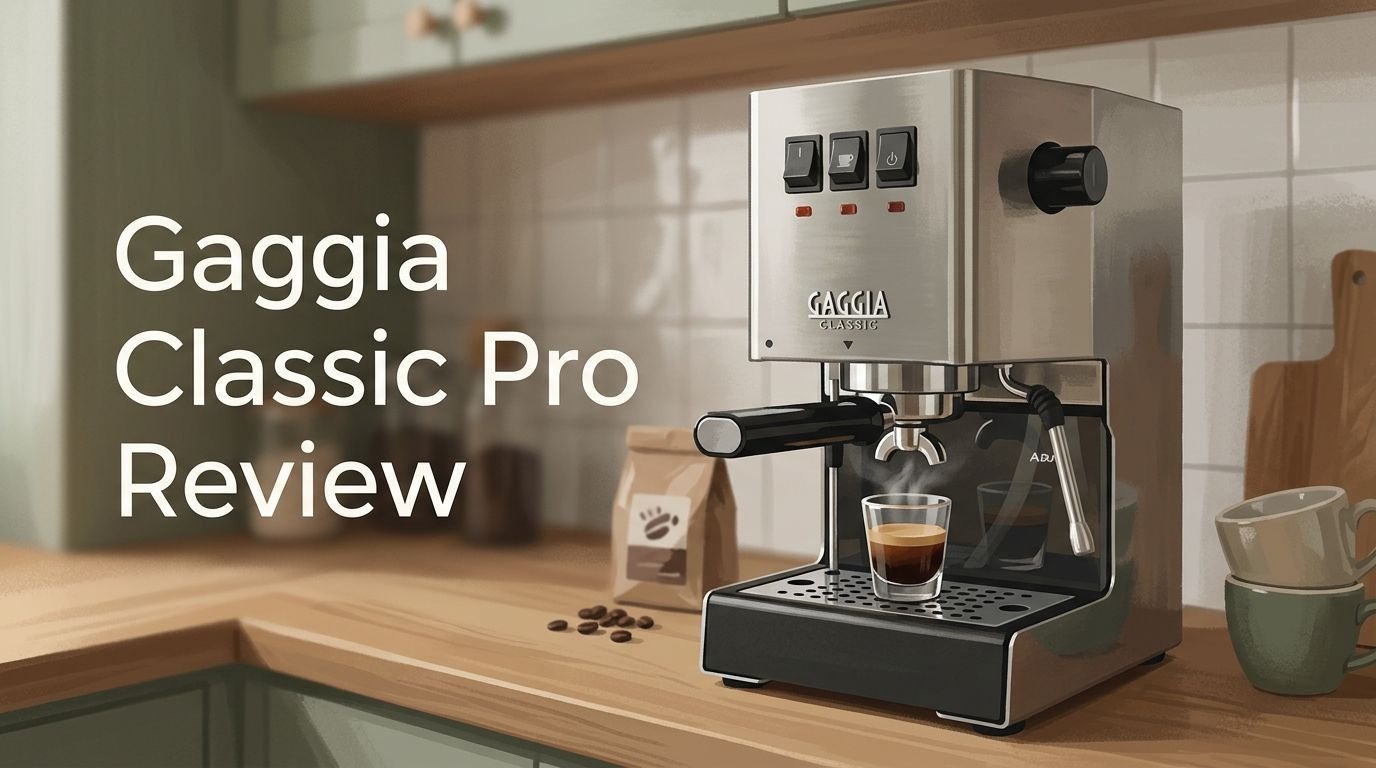
The Gaggia Classic Pro feels solid the moment you unbox it. The body is made from heavy gauge steel with a polished or brushed finish depending on your color choice. This machine does not feel like a toy. It feels like a piece of professional equipment.
The 58mm commercial size portafilter is one of the machine’s standout features. Most entry level machines use 54mm or even 51mm portafilters. A 58mm basket allows for a larger, thinner puck of coffee. This can lead to better and more even extraction.
The brass group head retains heat well. This helps with temperature consistency between shots. The drip tray is sturdy and easy to remove for cleaning. The water tank holds 72 ounces (2.1 liters), which is generous for a machine this size.
The three button layout on the front panel is simple and straightforward. You get a power button, a brew button, and a steam button. There are no digital screens or complicated menus. Some users will love this simplicity. Others may miss the programmable features found on competing machines.
The overall design strikes a balance between classic Italian style and modern minimalism. It looks great on any countertop and does not take up too much space.
Espresso Shot Quality
This is where the Gaggia Classic Pro earns its reputation. The machine is capable of pulling truly exceptional espresso shots. Rich crema, balanced flavor, and a smooth mouthfeel are all possible with this machine.
However, there is a catch. The machine ships with the pump set to 15 bars of pressure. Most espresso experts agree that 9 bars is the ideal brewing pressure. The higher pressure works fine with the included pressurized baskets. But if you want to use standard single wall baskets or a naked portafilter, you will want to lower the pressure.
The North American Evo Pro version comes with a 9 bar OPV spring from the factory. If you have an older model, you can buy an affordable spring mod kit to bring the pressure down. The installation process takes about 30 minutes and requires basic tools.
Temperature surfing is another skill you will need to master. Because the machine lacks a PID controller, the boiler temperature fluctuates. You need to time your shots based on when the heating element cycles on and off. This sounds more complicated than it is in practice. After a few days of use, most people develop a routine that produces consistent results.
Paired with a quality grinder and fresh beans, this machine can produce shots that rival machines costing two or three times more.
Top 3 Alternatives for Gaggia Classic Pro
Breville Bambino Plus

- The Breville Bambino Plus delivers third wave specialty coffee at home using the 4 keys formula and is part of the...
- DOSE CONTROL GRINDING: Achieve a consistent and balanced espresso using the right amount of ground coffee; The 54mm...
Last update on 2026-06-09 / Affiliate links / Images from Amazon Product Advertising API
Rancilio Silvia

- Classic Espresso: The Silvia has been in production for over 20 years-- making it one of the most stable espresso...
- Single Boiler: The single 12-ounce brass boiler serves both brew and steam temperatures.
Last update on 2026-06-09 / Affiliate links / Images from Amazon Product Advertising API
De’Longhi Dedica Arte

- 15-BAR PROFESSIONAL PRESSURE. Assures quality results, with adjustable controls for personal preferences.
- My LatteArt STEAM WAND. Makes it easy to achieve the perfect milk texture for café quality lattes and cappuccinos
Last update on 2026-06-09 / Affiliate links / Images from Amazon Product Advertising API
Steam Wand Performance
The 2019 Pro upgrade replaced the old Panarello wand with a commercial style steam wand. This was a huge improvement. The previous wand could only produce frothy, bubbly foam. The new wand produces proper microfoam suitable for latte art.
The single boiler design means you must switch from brew mode to steam mode. This transition takes about 30 to 45 seconds. For a single cappuccino or latte, this is perfectly manageable. If you need to make drinks for a group, the wait time between brewing and steaming will add up.
Steam power is adequate but not exceptional. The small boiler limits how much steam you can produce before the temperature drops. A standard 12 ounce pitcher of milk takes about 45 seconds to froth properly. This is slower than machines with larger boilers or dedicated steam boilers.
The wand tip has a single hole design. Some users prefer multi hole tips for faster steaming. You can easily swap the tip for an aftermarket option if you want more speed or a different foam texture.
For one or two milk drinks per session, the steam wand performs well. If you are making multiple lattes back to back, you may find the recovery time between rounds frustrating.
The Boilergate Controversy
The “Boilergate” issue became a hot topic on Reddit and coffee forums in 2023 and 2024. Some Gaggia Classic Evo Pro units shipped with a defective boiler coating. The aluminum boiler had a protective internal coating that started flaking off after a few months of use.
Users reported finding small particles in their water and espresso. Understandably, this caused alarm. Nobody wants unknown flakes floating in their morning coffee.
Gaggia and their North American distributor responded by offering free replacements for affected units. They also sent replacement boilers that owners could install themselves. The response was generally viewed as adequate, though many felt the issue should never have occurred in the first place.
The good news for 2026 buyers is that this problem has largely been resolved. The newer Gaggia Classic Pro E24 model features a brass boiler instead of the coated aluminum version. This upgrade eliminates the flaking concern entirely and also provides better thermal stability.
If you are buying new from an authorized retailer today, you should receive an updated unit. However, it is still wise to verify the model number before purchasing. Look for the E24 designation to ensure you get the brass boiler version.
The Gaggia Classic Pro E24 Upgrade
- Solid Steel Housing, Made in Italy
- 9 Bar Espresso Extractions
Last update on 2026-06-09 / Affiliate links / Images from Amazon Product Advertising API
The E24 version represents the most significant upgrade to the Gaggia Classic Pro line in years. The headline feature is the new brass boiler. It replaces both the original stainless steel boiler and the controversial coated aluminum version from the Evo Pro.
Brass is the preferred boiler material among commercial espresso machines. It heats quickly, retains heat consistently, and resists corrosion. The E24’s brass boiler has a capacity of about 3.5 ounces, which is sufficient for pulling doubles and steaming milk for one or two drinks.
The E24 also brought refinements to the pump mounting system. The pump sits more securely in the chassis, which reduces vibration and noise during brewing. This is a subtle but welcome improvement during early morning use.
The 58mm portafilter got a polished stainless steel upgrade. The group head now features brass with a stainless steel surround. These changes improve both appearance and thermal performance. The overall build quality of the E24 feels like a meaningful step up from earlier versions.
The E24 retails around $499. This places it at the higher end of the entry level segment. But the brass boiler and improved build quality justify the price increase for most buyers.
Modding and Upgradability
One of the biggest reasons people choose the Gaggia Classic Pro is the massive modding community behind it. No other espresso machine at this price point has this level of aftermarket support.
The most popular mod is the PID controller installation. A PID gives you precise digital control over the boiler temperature. This eliminates the need for temperature surfing and produces much more consistent shots. PID kits cost between $100 and $200 and take a couple of hours to install.
The OPV spring swap is another common modification. This brings the pump pressure down from 15 bars to 9 bars. The spring itself costs under $20 and takes about 30 minutes to install. Many users consider this an essential first modification.
Other popular mods include:
Upgraded shower screens and precision baskets from IMS or VST improve water distribution across the coffee puck. Bottomless portafilters let you see the extraction in real time and diagnose problems with your grind or distribution. Silicone group head gaskets replace the stock rubber gaskets and last much longer.
There is also a dedicated subreddit with thousands of members who share tips, tutorials, and modification guides. YouTube is full of step by step videos for every possible upgrade. This community support is a genuine advantage that few competitors can match.
Ease of Use for Beginners
Let me be honest here. The Gaggia Classic Pro is not the easiest espresso machine for a complete beginner. It requires some learning and practice to produce great results consistently.
Temperature surfing is the biggest hurdle. Without a PID, you need to learn the machine’s heating cycle. You flush water before your shot to bring the brew temperature into the right range. This technique is not difficult, but it does require attention and practice.
The 15 bar factory pressure setting also adds a layer of complexity. Beginners using single wall baskets may struggle with channeling and inconsistent shots until they adjust the pressure. The included pressurized baskets are more forgiving, but they limit the quality ceiling.
On the positive side, the three button interface is dead simple. There are no menus, no programming, and no digital displays to confuse you. Press the brew button and water flows. Press the steam button and the boiler heats up for steaming.
If you enjoy learning new skills and don’t mind a few bad shots on the way to great ones, the Gaggia Classic Pro is a rewarding machine. But if you want perfect espresso with minimal effort from day one, machines like the Breville Bambino Plus offer a more plug and play experience with features like auto frothing and built in PID.
Maintenance and Cleaning
The Gaggia Classic Pro is relatively easy to maintain. The 3 way solenoid valve is a key feature here. It allows you to backflush the machine, which clears old coffee oils and residue from the group head.
You should backflush with clean water after every session. A deep backflush with espresso machine cleaner should happen once a week for regular users. This process takes less than five minutes and keeps your shots tasting fresh.
Descaling is important for any espresso machine, and the Gaggia Classic Pro is no exception. The frequency depends on your water hardness. Most users should descale every one to three months. Gaggia recommends their own descaling solution, but any citric acid based descaler works well.
The drip tray and water tank should be emptied and rinsed daily. The portafilter and baskets benefit from a soak in cleaning solution once a week. The shower screen can be removed with a screwdriver for deeper cleaning.
One advantage of the Gaggia Classic Pro is parts availability. If something breaks, replacement parts are widely available and affordable. The machine uses standard components that any espresso technician can service. With proper care, this machine can last 10 to 20 years or more.
Who Should Buy the Gaggia Classic Pro?
This machine is ideal for the aspiring home barista who wants to learn and grow. If you enjoy the process of making espresso as much as drinking it, the Gaggia Classic Pro will reward you generously.
It suits people who like to tinker. The modding community means you can upgrade this machine over time as your skills improve. You can start with basic shots and gradually add a PID, precision baskets, and a bottomless portafilter as you progress.
The Gaggia Classic Pro also makes sense for anyone who values build quality and longevity. Commercial grade components mean this machine will outlast many competitors. Parts are easy to find and affordable to replace.
However, this machine may not be for you if:
You want perfect espresso immediately with no learning curve. You make more than four or five milk drinks in a single session. You prefer a fully automated or highly programmable machine. You do not want to perform basic modifications to get the best results.
Budget conscious buyers who can stretch to the $499 E24 version will get the best current experience. The brass boiler alone is worth the price difference over older models.
Gaggia Classic Pro vs Breville Bambino Plus
This is the comparison most shoppers want to see. Both machines sit in similar price territory, but they take very different approaches to home espresso.
The Breville Bambino Plus costs slightly less and includes features the Gaggia lacks out of the box. It has a built in PID for temperature stability. It offers automatic milk frothing. It heats up in just 3 seconds thanks to its thermojet heating system. For beginners and latte lovers, the Bambino Plus is often the easier choice.
The Gaggia fights back with build quality and long term potential. Its 58mm portafilter, brass group head, and solenoid valve are features typically found on machines costing much more. The Bambino Plus uses a 54mm portafilter and has a more consumer grade construction.
Shot quality on both machines is good. The Gaggia has a slightly higher ceiling once dialed in, especially with modifications. The Bambino Plus delivers more consistent results out of the box without any tinkering.
If you want a machine that produces great espresso today with minimal fuss, choose the Bambino Plus. If you want a machine that grows with you and offers the highest possible quality with patience and upgrades, choose the Gaggia Classic Pro.
Price and Value for Money
The Gaggia Classic Pro E24 retails at approximately $499 in 2026. Earlier versions and color variants may be available for less. This places it firmly in the entry level prosumer category.
At this price, you get genuine commercial grade components. The 58mm portafilter, brass group head, solenoid valve, and now brass boiler represent real value. Many machines in the $800 to $1000 range use similar internal components.
However, you should budget for a few extras. A quality burr grinder is essential. The included tamper and baskets are basic and should be upgraded. A realistic total investment including grinder, tamper, scale, and precision basket comes to around $700 to $900.
If you plan to add a PID controller down the road, add another $100 to $200. This brings the total investment closer to machines like the Rancilio Silvia Pro or Lelit Anna PID, which include these features from the factory.
The value proposition of the Gaggia Classic Pro depends on your perspective. If you view it as a platform that you will customize and grow with, it offers outstanding value. If you want everything perfect out of the box, other machines may provide a better dollar for dollar experience.
Final Verdict
The Gaggia Classic Pro remains a strong contender in the entry level espresso machine market in 2026. Its combination of build quality, shot potential, and upgradability is hard to beat at this price.
The E24 brass boiler upgrade addresses the biggest concern from previous years. The Boilergate issue is behind us. The commercial grade 58mm portafilter and solenoid valve still set it apart from most competitors.
The machine does demand patience and a willingness to learn. Temperature surfing, pressure adjustments, and basic maintenance are part of the Gaggia experience. This is a feature for some buyers and a drawback for others.
I recommend the Gaggia Classic Pro E24 for home baristas who want a long term companion on their espresso journey. It is a machine that grows with you. Start with the basics and add modifications as your palate and skills develop. With proper care, it will serve you excellent espresso for a decade or more.
If you prefer convenience over customization, look at the Breville Bambino Plus or similar PID equipped machines. But if you want to truly learn the art of espresso and own a machine built to last, the Gaggia Classic Pro is still one of the best choices you can make.
Frequently Asked Questions
Is the Gaggia Classic Pro good for beginners?
The Gaggia Classic Pro can work for beginners, but it has a steeper learning curve than some competitors. You will need to learn temperature surfing and may want to modify the pump pressure. Machines like the Breville Bambino Plus offer a more beginner friendly experience out of the box. However, if you enjoy learning and want a machine that grows with your skills, the Gaggia is an excellent starting point.
Does the Gaggia Classic Pro come with a PID?
No, the Gaggia Classic Pro does not include a PID controller. You must rely on temperature surfing to manage brew temperature. Many owners add an aftermarket PID kit for around $100 to $200. The installation takes a couple of hours and basic electrical knowledge. The newer E24 model still does not include a PID, so this remains a manual addition.
What grinder pairs best with the Gaggia Classic Pro?
A quality burr grinder is essential for the best results. Popular pairings include the Eureka Mignon Specialita, Baratza Sette 270, and the 1Zpresso JX Pro manual grinder. Budget at least $200 to $400 for a grinder that can produce the fine, consistent grounds needed for espresso. The grinder matters just as much as the machine itself.
Has the Boilergate issue been fixed?
Yes. The newer Gaggia Classic Pro E24 uses a brass boiler instead of the coated aluminum boiler that caused the flaking issue. If you buy from an authorized retailer in 2026, you should receive the updated version. Always verify the model number includes the E24 designation to be sure you are getting the brass boiler model.
How long does the Gaggia Classic Pro last?
With proper maintenance, the Gaggia Classic Pro can last 10 to 20 years or more. Its commercial grade components are durable and easy to replace. Regular backflushing, descaling, and gasket replacement will keep the machine running smoothly. The large community and wide parts availability make long term ownership practical and affordable.
Can you make latte art with the Gaggia Classic Pro?
Yes. The upgraded commercial style steam wand produces quality microfoam suitable for latte art. Steam power is limited by the single boiler, so it works best for one or two drinks at a time. With practice, you can create rosettas, hearts, and tulips. Upgrading the steam tip to a multi hole version can improve steaming speed and milk texture.

Hi, I’m Liza Jensen, your culinary companion here at Recipe by Liza. 🍳🥗Cooking has always been my passion—I find joy in every whisk, every sizzle, and every aromatic spice. As a home cook and recipe developer, I’ve explored flavors from around the world, creating dishes that warm hearts and tantalize taste buds.Join me on this flavorful journey! Let’s swap kitchen stories, share tips, and celebrate the magic of food together.