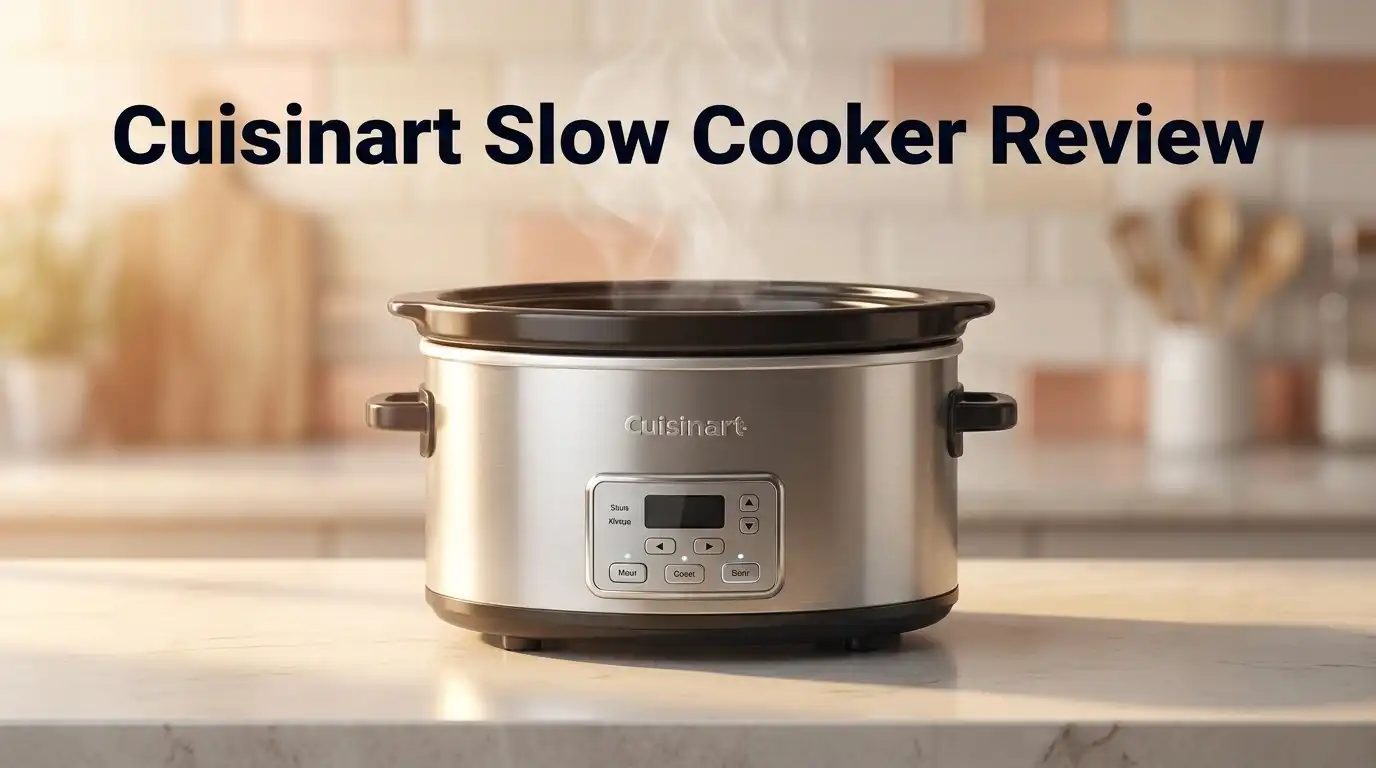
Cuisinart Slow Cooker Review 2026: Worth It?
Most slow cookers ask you to dirty a skillet first. You brown the meat on the stove, scrape the fond into the crock, then wash two pans for one dinner.
That single annoyance is why the Cuisinart 3-in-1 Cook Central keeps showing up on shortlists. It browns, slow cooks, and steams in one nonstick aluminum pot.
I’ve cooked pot roast, dried beans, pulled pork, and a lot of weeknight chili in this thing. Some of what Cuisinart promises holds up beautifully. Some of it does not.
Here’s the honest breakdown before you spend around $150 to $200 on it.
In a Nutshell
- It genuinely replaces two appliances. The brown/sauté mode climbs to 400°F, hot enough for a real sear on beef chuck or chicken thighs. You build fond and slow cook in the same pot.
- Slow cooking results are consistently good. Meat comes out fork tender. Dried beans cook creamy without turning to mush, which is where cheaper cookers fail.
- The nonstick aluminum pot is the weak point. It cleans easily but wears faster than stoneware. Bubbling and flaking after two to three years is the most common owner complaint.
- It leans hot. Low behaves more like many cookers’ high. Delicate vegetables and lean cuts overcook if you follow recipe times exactly.
- The handles are excellent. Wide plastic side handles sit far from the hot base, and the locking gasket lid makes potluck transport safe.
- It’s heavy and it’s big. At roughly 21 inches long, this eats counter space and is awkward to store in an upper cabinet.
Best for people who cook braises, stews, chilis, and beans regularly. A poor fit for anyone who slow cooks twice a year.
Cuisinart 3-in-1 Cook Central 6-Quart Multicooker

- One touch switches modes when recipe calls for combination cooking
- Extra-large blue backlit LCD display with easy-to-read time and temperature settings

Last update on 2026-06-09 / Affiliate links / Images from Amazon Product Advertising API


Last update on 2026-04-08 / Affiliate links / Images from Amazon Product Advertising API
The model number is MSC-600, and it has been in production long enough to build a real track record. That matters more than a new release with 200 reviews.
You get four slow cook settings: Low, High, Simmer, and Warm. The timer runs in 30-minute increments up to 24 hours, then drops to keep warm automatically.
Brown/sauté adjusts in 50°F steps up to 400°F. Steam runs up to 90 minutes with the included rack.
The 6-quart capacity handles a 4-pound pork shoulder or a full batch of chili for eight people. The oval shape suits long cuts better than a round crock.
Controls sit on a blue backlit LCD with a dedicated button per function. There’s no menu diving, which I appreciate at 6 a.m.
One caution worth knowing upfront: Cuisinart has listed versions of this model as discontinued on its own site while continuing to sell the MSC-600NAS variant. Stock and pricing swing accordingly.
Unboxing and First Impressions
The box is plain corrugated cardboard with foam end caps. No ceremony, no magnetic flap, no tissue paper. Cuisinart spent the money on the appliance.
Inside you get the base, the cooking pot, the glass lid, a stainless steaming rack, and a manual with recipes printed on the back cover.
First thing I noticed was the weight. This is a 17-pound unit empty. Lifting it out of the box takes two hands and a bit of core engagement.
The pot has a dull grey nonstick interior with a faint factory smell out of the box. That smell disappeared entirely after one wash and one dry heat cycle.
The lid feels substantial. Tempered glass, silicone gasket, a large plastic knob, and two side clips that snap down with a satisfying click.
Fit and finish is good, not luxurious. There’s brushed stainless on the exterior, but the side handles and control housing are plastic. It reads as a serious kitchen tool rather than a design object.
Setup took under three minutes. Wash the pot, plug it in, choose a mode.
Build Quality and the Nonstick Pot
The pot is the whole story here, for better and worse.
Aluminum conducts heat far faster than ceramic. That’s exactly why searing works in this machine and doesn’t work in a traditional crock.
The tradeoff is coating life. Nonstick over aluminum wears. Stoneware doesn’t.
I’ve read too many owner reports of the surface bubbling around the base after two to three years of regular use. This is the single most repeated complaint about the Cook Central, and it’s a fair one.
You can slow the wear considerably. Use silicone or wood tools only, hand wash despite the dishwasher-safe label, and never shock a hot pot with cold water.
Cuisinart sells a replacement pot directly, which softens the blow. It costs a fraction of a new unit.
The base itself has held up well for me. The exterior gets warm rather than hot, and the electronics have never glitched.
A handful of owners report cracked control panels or failed displays inside the three-year warranty window. Cuisinart’s replacement process is reportedly straightforward, so keep your receipt.
Top 3 Alternative for Cuisinart Cook Central Multicooker

- 8 COOKING FUNCTIONS: Slow cook, Sear/Sauté, Braise, Keep Warm, White Rice, Brown Rice, Oats and Pasta.
- REPLACES 10 KITCHEN TOOLS: No more cluttered countertops. Replaces Slow Cooker, Food Warmer, Nonstick Pot, Sauté Pan...
Last update on 2026-08-02 / Affiliate links / Images from Amazon Product Advertising API
Ninja Foodi Everyday PossibleCooker Pro 6.5-Quart

- Programmable Digital Timer: Control cooking times from 30 minutes up to 20 hours
- Serve a Crowd: 6 quart Cook & Carry Slow Cooker serves 7 plus people
Last update on 2026-06-10 / Affiliate links / Images from Amazon Product Advertising API
Crock-Pot 6-Quart Cook & Carry Programmable Slow Cooker

- NOT YOUR MOM’S SLOW COOKER: Smart technology allows you to cook a recipe to either a desired cooking time or specific...
- PATENTED TEMPERATURE PROBE: Place the temperature probe into large cuts of meat to cook to a precise temperature. The...
Last update on 2026-07-11 / Affiliate links / Images from Amazon Product Advertising API
Hamilton Beach Set & Forget 6-Quart Programmable Slow Cooker
Browning and Sautéing Without a Second Pan
This is the function that justifies the price, and it works.
Set the temperature to 350°F, add oil, and the pot is ready in roughly four minutes. That’s faster than most multicooker sauté modes.
Chuck roast cubes develop a proper dark crust, not the grey steamed exterior you get from underpowered searing.
The 6-quart oval footprint helps. There’s enough surface area to brown a pound of meat in two batches instead of four, which many narrower multicookers require.
Onions soften and take on color without scorching at the center. Deglazing with wine or stock lifts the fond cleanly off the nonstick surface.
Two honest limitations. First, the pot sides are shallow enough that oil spatters onto the rim during aggressive searing. Keep a towel handy.
Second, 400°F is the ceiling, and the nonstick coating is the reason. That’s plenty for browning but below what cast iron delivers for a hard crust.
For stews, ragùs, curries, and pulled pork, the browning quality is genuinely restaurant adjacent. One pot, one cleanup.
Slow Cooking Results After Eight Hours
Braised meat is where this cooker earns repeat use.
An eight-hour pot roast on Low came out fork tender and still juicy. Carrots held their shape and flavor. Onions went soft without dissolving.
Dried beans are my real test, because uneven heat leaves them chalky in the middle. One pound of white beans cooked creamy and evenly here, edge to center.
Pulled pork shredded cleanly at the seven-hour mark. No dry outer layer, which is a common failure in cookers with strong bottom-only heating.
The aluminum pot heats from the base and sides more assertively than stoneware. Stirring once mid-cook is not required, but it does even things out.
Where it stumbles is vegetable-forward cooking. Potatoes, zucchini, and celery drifted past soft into borderline mushy on standard recipe timings.
The fix is simple. Add quick-cooking vegetables in the last 90 minutes instead of at the start.
Soups, chilis, tough braising cuts, and legumes are the sweet spot. Delicate ingredients need supervision.
Steaming, Simmer Mode, and the Warm Setting
The steam function surprised me. I assumed it was marketing filler.
Drop in the stainless rack, add water, and you get 90 minutes of usable steaming for broccoli, green beans, or fish fillets.
It’s genuinely useful in summer, when you’d rather not fire up a stove burner for one side dish.
The Simmer setting sits between Low and High and is the most underrated feature on this machine. It holds a gentle bubble for reducing sauces or finishing a chili.
I use it constantly at the end of a slow cook, when the braising liquid needs to thicken by a third.
Warm kicks in automatically once your programmed time expires. Food holds safely for hours without further cooking, and it works well for parties.
The unit also chimes at the start and end of each cycle. It’s quiet enough to miss from another room, which is a small design miss.
Combination cooking is one button. Sear, then press slow cook, and the transition happens without unplugging or swapping vessels.
Does It Run Hot on Low
Yes. This deserves a direct answer because it affects every recipe you’ll make.
The Low setting on the Cook Central sits at the upper end of the accepted slow cooking range, and it climbs there faster than a stoneware cooker does.
Modern slow cookers across every brand run hotter than models from twenty years ago. Manufacturers raised temperatures for food safety reasons.
The Cook Central is not the worst offender. Independent testers found it held a safer, steadier temperature than several cheaper competitors, and it never boiled violently for me.
Still, if you’re using recipes written for an older crock, expect food to finish 60 to 90 minutes early.
Practical adjustments that work: subtract an hour from unfamiliar recipes, fill the pot at least halfway to buffer the heat, and use Low rather than High for anything lean.
Chicken breast and pork loin dry out quickly here. Fatty, collagen-heavy cuts are far more forgiving.
Check doneness the first time you make any dish. After one run, you’ll know the offset.
Cleaning and Everyday Handling
Cleanup is the quiet win. Nonstick aluminum releases stuck-on food far more easily than glazed stoneware.
Most nights, warm water and a soft sponge handle it. Scorched sugar from a barbecue sauce needs a ten-minute soak.
The pot is labeled dishwasher safe, but I hand wash it and recommend you do the same. Detergent and high heat accelerate coating breakdown.
Never use steel wool, scouring powder, or a metal spatula. That single habit determines whether the coating lasts two years or six.
The lid and gasket come apart for washing. Food residue collects under the gasket lip, so check it monthly.
Handling is a mixed bag. The oversized side handles sit well clear of the hot base, which is a real safety improvement over cookers with recessed grips.
The lid knob is large and stays cool. The clip-down locking lid means you can carry a full pot of chili to a party without a towel over the top.
Storage is the problem. At roughly 21 inches long and 10 inches tall, this lives on the counter or not at all.
Pros and Cons
Pros
- Real searing power at up to 400°F, hot enough to build fond and skip the skillet entirely.
- Excellent braising results with fork-tender meat and evenly cooked dried beans, which is where budget cookers fall apart.
- Four heat settings including a Simmer mode that most competitors omit, plus automatic keep warm.
- Locking gasket lid and cool side handles make transport genuinely safe for potlucks and tailgates.
- Simple one-button controls with a backlit display. No menu navigation, no learning curve.
- Replacement pots are sold directly by Cuisinart, extending the useful life of the base.
- Three-year limited warranty, longer than many competing multicookers offer.
Cons
- Nonstick coating wears out. Bubbling and flaking after a few years is the most common long-term complaint.
- Runs hot on Low. Expect recipes to finish early and lean proteins to dry out.
- Vegetables overcook on standard timings unless you add them late.
- Heavy and long. Storage is difficult, and lifting the loaded unit takes real effort.
- No pressure cooking, unlike similarly priced multicookers.
- Sear spatter hits the rim during high-heat browning.
- Availability is inconsistent as Cuisinart shuffles model variants.
Who Should Skip the Cook Central
Be honest about how you actually cook before buying this.
Skip it if you slow cook occasionally. A $40 basic cooker will serve you fine, and you won’t have wear on a coating you barely use.
Skip it if you want pressure cooking. For similar money, a multicooker gives you fast beans and 45-minute pot roast. This machine only cooks slowly or sears.
Skip it if nonstick concerns you. If you prefer ceramic-coated or stainless interiors, a GreenPan-style metal pot or a traditional stoneware crock is the better philosophical fit.
Skip it if counter space is tight. This is not an appliance you’ll happily haul out of a cabinet twice a week.
Skip it if you mostly cook chicken breast and vegetables. The heat profile fights you on lean, delicate ingredients.
Buy it if you make braises, stews, chilis, curries, and beans on a regular schedule and you’re tired of washing a separate pan. That specific cook gets outsized value from it.
Frequently Asked Questions
Can the Cuisinart Cook Central pot go in the oven?
The aluminum pot handles oven temperatures well, and many owners finish dishes under the broiler. Confirm the limit in your manual, since guidance varies by model variant.
Is the nonstick coating PFOA free?
Current production units use a PFOA-free nonstick coating. If flaking appears, stop using the pot and order a replacement rather than continuing to cook on damaged coating.
How long does the nonstick pot actually last?
With hand washing and silicone tools, expect four to six years of regular use. Dishwasher cycles and metal utensils cut that closer to two.
Does it need liquid added for slow cooking?
Yes, though less than you’d think. The gasket lid traps steam efficiently, so reduce liquid by about a quarter compared to open-crock recipes.
Can I leave it running while I’m out?
The automatic keep warm transition is designed for exactly that, and the exterior stays cool. Fire safety organizations advise against leaving any appliance unattended, so decide based on your own comfort level.
Is it loud?
No. There’s a soft chime at cycle start and end, and nothing else. It’s quieter than a pressure cooker releasing steam.
How does it compare to an Instant Pot for slow cooking?
The Cook Central sears better and evaporates liquid more naturally. The Instant Pot adds pressure cooking and a smaller footprint. Neither wins outright.
What size should I buy for two people?
Six quarts is oversized for two, but slow cookers perform best when at least half full. Consider Cuisinart’s smaller 3.5-quart model instead.
Does it come with recipes?
The manual includes a starter set printed on the back cover, covering basic roasts, chilis, and steamed sides.

Hi, I’m Liza Jensen, your culinary companion here at Recipe by Liza. 🍳🥗Cooking has always been my passion—I find joy in every whisk, every sizzle, and every aromatic spice. As a home cook and recipe developer, I’ve explored flavors from around the world, creating dishes that warm hearts and tantalize taste buds.Join me on this flavorful journey! Let’s swap kitchen stories, share tips, and celebrate the magic of food together.