RoadPro 12V Slow Cooker Review: Worth It?
Truck stop meals drain a paycheck faster than diesel does. A hot plate of chili from your own crock costs about two dollars, and it does not sit in a warming tray for six hours first.
That is the promise behind the RoadPro RPSL-350, a 1.5 quart stoneware slow cooker that plugs straight into a 12 volt socket. No inverter, no shore power, no generator.
I ran this cooker for several weeks across long highway days, two nights of car camping, and a few lazy afternoons in a driveway. Some of the marketing holds up. Some of it does not.
Here is the honest breakdown, including the temperature ceiling nobody talks about and the fuse issue that catches new buyers off guard.
In a Nutshell
- It is a simmer pot, not a true crock pot. RoadPro rates it between 140°F and 170°F. That range warms, simmers, and holds food safely, but it will never bubble a stew the way your kitchen unit does.
- The power draw is real. The unit pulls 96 watts at roughly 8 amps. Many car sockets are fused at 10 or 15 amps, so it works, but it leaves little headroom for a phone charger on the same circuit.
- Capacity suits one or two people. The 1.5 quart stoneware crock holds about two generous servings. Solo drivers, van dwellers, and couples are the right audience. Families are not.
- Cleanup is genuinely easy. The crock lifts out and goes in a dishwasher. The base wipes clean in seconds.
- The lid system is the weak link. A glass lid held by a stretch cord is fine on a smooth interstate. It is not a locking, spill proof seal.
- Value is strong at around $32. The Amazon average sits near 3.9 stars across roughly 736 ratings, which tells you expectations matter more than build quality here.
RoadPro RPSL 350 12V Slow Cooker

- Plugs directly into 12-Volt power port to provide hot meals while camping or traveling
- Easy-to-clean stoneware crock is removable and dishwasher safe

Last update on 2026-07-31 / Affiliate links / Images from Amazon Product Advertising API
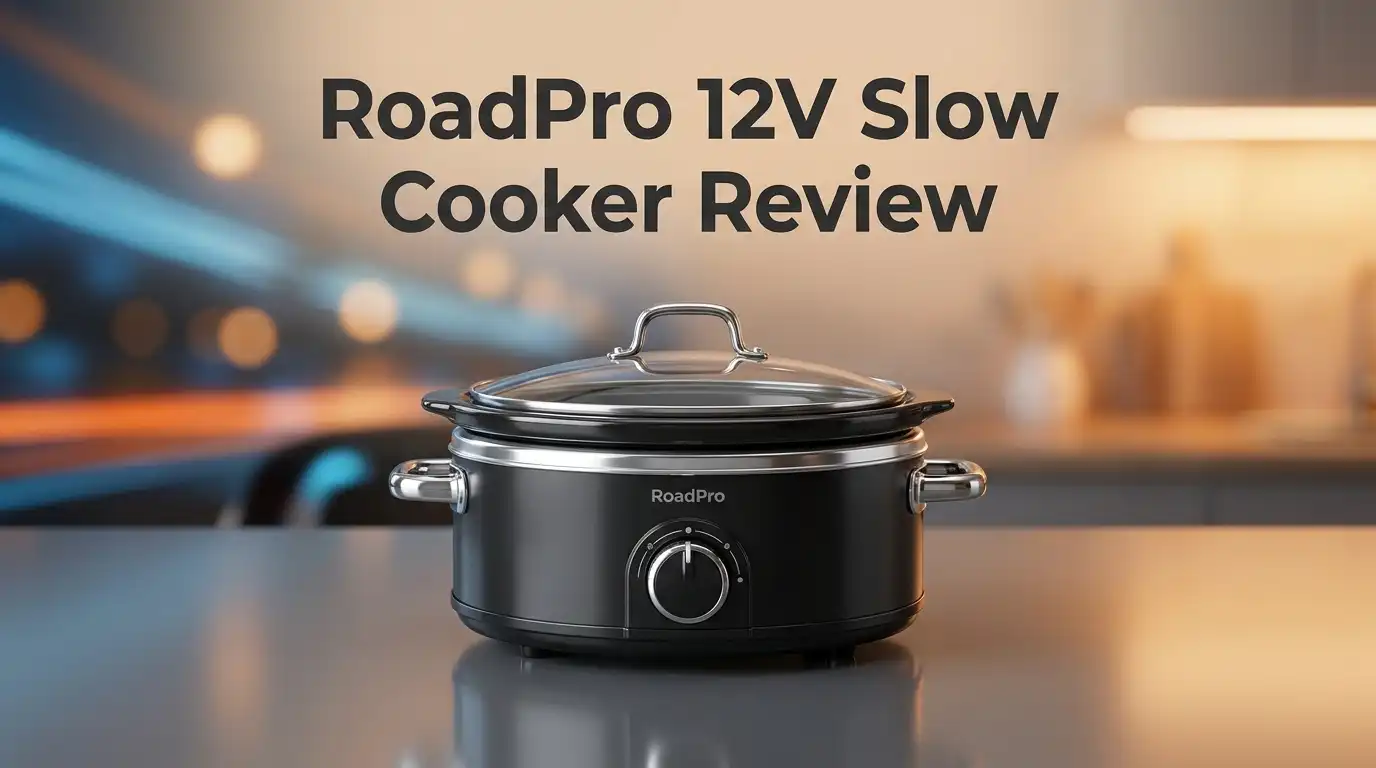
The RPSL-350 is the model most people mean when they say RoadPro slow cooker. It measures 8.9 inches deep, 9.4 inches wide, and 7.5 inches high, and it weighs 4.6 pounds fully assembled.


Last update on 2026-04-08 / Affiliate links / Images from Amazon Product Advertising API
The base is black plastic with easy grip handles on both sides. The removable insert is real stoneware, not aluminum, which is why heat spreads evenly instead of scorching one hot spot.
A 6 foot power cord runs off the back with an inline on and off switch built into the cable. That switch matters more than it sounds. You can kill power without yanking the plug out of a hot socket.
The glass lid sits loose and relies on a rubber stretch cord to stay put. RoadPro includes that cord in the box.
Power specs are printed clearly: 12 volts, 96 watts, 8 amp draw. This is not a dual voltage unit. There is no 120 volt cord, so you cannot run it in a hotel room without an adapter.
The current listing price hovers around $31.82, which puts it well under most 12 volt cooking gear.
Unboxing and First Impressions
The box is plain cardboard with a product photo and almost no padding. Mine arrived intact, though several buyers report glass lids missing or broken on arrival, so open it the day it lands.
Inside you get the base, the stoneware crock, the glass lid, the stretch cord, and a thin instruction sheet. That is the whole kit.
First impression: the crock feels better than the base. The stoneware has real weight and a smooth glaze. The plastic housing feels light and hollow by comparison.
There is a faint plastic and machine oil smell on the first heat cycle. I ran it empty for twenty minutes with the windows cracked and the odor disappeared.
The plug is a standard barrel style 12 volt tip. It seated firmly in my truck socket but wiggled in an older car outlet, which caused intermittent heating until I rotated it.
Fit and finish are basic. This is workhorse gear, not a design piece. At this price, that trade feels fair.
Top 3 Alternatives for the RoadPro 12V Slow Cooker
No products found.
Roadpro RPSL-335 12V Portable Frying Pan

- 12V PORTABLE COOKING POT: A game-changer for travelers, campers, and adventurers. This cooking pot with cover is perfect...
- NON-STICK SURFACE: Cook, simmer, and savor your favorite dishes anytime, anywhere. This small appliance includes a...
Last update on 2026-07-31 / Affiliate links / Images from Amazon Product Advertising API
Travel Time 12V Cooking Pot with Cover

- HOT FOOD ON HAND: Our warming lunch box is ideal for cooking healthy dishes, heating frozen boxed meals, and warming...
- YOUR FOOD, PERFECTLY COOKED: Better than an insulated lunchbox, this easy-to-use electric lunch box heater can reheat or...
Last update on 2026-07-31 / Affiliate links / Images from Amazon Product Advertising API
HOTLOGIC Mini Portable Oven
How It Cooks on a 12 Volt Line
Cooking here means patience. The crock climbs slowly and holds a steady simmer rather than a rolling one.
From a cold start with cold ingredients, I hit serving temperature in about four to five hours. Precooked food, like leftover pasta or canned soup, was hot in roughly ninety minutes.
Heat distribution surprised me. The stoneware moderates everything, so nothing burned onto the sides even after a six hour run.
Liquids do not reduce much. A stew stays soupy because there is not enough energy to drive off steam. Season lightly at the start and adjust at the end.
Voltage matters more than time. On a running engine at around 14 volts, food heated noticeably faster than on a parked battery sitting at 12.4 volts.
Stirring once mid cook helped a lot. Without it, the bottom third of the crock ran warmer than the top.
The practical takeaway: load it before you roll out and eat when you stop. Treat it as a five hour appliance and it delivers. Expect a two hour dinner and you will be disappointed.
Heat Range Timing and Food Safety
This section deserves attention because the marketing glosses over it. RoadPro states a working range of 140°F to 170°F.
That top number sits below the 165°F threshold poultry needs, with almost no margin. My thermometer read 158°F in the center of the crock after five hours.
My honest recommendation: brown or fully cook raw meat before it goes in. Use the cooker to simmer, blend flavors, and hold food hot.
Raw chicken from a cold start is the one use I will not endorse. The climb through the 40°F to 140°F range takes too long for comfort.
Vegetables, beans, rice, canned goods, precooked sausage, and leftovers all perform beautifully. Thaw frozen food overnight in a cooler first, because frozen blocks stall the heating curve badly.
A cheap probe thermometer solves most of this. Twelve dollars buys certainty.
Used correctly, the unit is a safe hot holding device with light simmering ability. Used as a substitute for a kitchen crock pot, it invites risk.
Power Draw Fuses and Battery Drain
Eight amps is a meaningful load. Most cigarette lighter sockets carry a 10 or 15 amp fuse, so the cooker fits, but barely.
Do not run it on a splitter with other devices. I popped a 10 amp fuse in an older sedan the moment I added a phone charger to the same outlet.
Battery math is simple. Eight amps for five hours pulls roughly 40 amp hours from your bank.
A standard car battery cannot absorb that while parked. A truck with the engine idling, a dual battery setup, or a decent lithium house bank handles it without drama.
Van and RV owners should check their fuse panel rating before plugging in. Most 12 volt sockets in campers are fused at 15 amps and cope fine.
Cord quality matters too. Long, thin extension leads cause voltage drop, and voltage drop means slower cooking.
One safety habit worth building: switch it off with the inline switch before starting the engine. Cranking surges are hard on cheap heating elements.
Build Quality and the Stretch Cord Lid
The stoneware crock is the star. Mine survived weeks of road vibration without a chip or crack.
The plastic base is adequate. It does not flex under load, though the handles feel thin and I would not swing it around when full.
Now the flaw. The glass lid does not lock or seal, and the included stretch cord is the only thing holding it down.
On smooth pavement it works. On a gravel campsite road, a full crock sloshed liquid onto the base, and I had to wipe it down.
Fill it two thirds at most. That single change eliminated almost every spill I experienced.
The cord and switch assembly feels like the part most likely to fail first. Several long term owners report the inline switch loosening after heavy use.
There is no thermostat, no timer, and no indicator light beyond the switch. You are the temperature control. For a $32 unit, I accept that, but buyers expecting modern features should know upfront.
Cleaning and Storage in a Small Cab
Cleanup is the strongest part of the ownership experience. The crock lifts straight out with two fingers.
Glazed stoneware releases food easily. A rinse and a sponge handled every meal I made, including a sticky lentil dal.
It is dishwasher safe, which matters for drivers who use truck stop facilities or a campground kitchen. The base is not, and should only be wiped with a damp cloth.
Never submerge the base. Water in the heating housing ends the appliance permanently.
Storage is reasonable but not clever. The crock nests in the base and the lid sits on top, though nothing latches together.
There is no cord storage channel, so the six foot cable ends up wrapped around the unit or stuffed loose in a cabinet. That is a small design miss.
At 4.6 pounds it stows easily under a bunk or in a footwell. A grocery tote keeps the lid and cord from rattling, which is the trick most owners land on eventually.
Meals That Work and Meals That Fail
Certain dishes suit this cooker perfectly. Chili, canned soup, oatmeal, baked beans, lentils, curry, pulled pork reheats, and rice with broth all came out well.
Oatmeal deserves a special mention. Steel cut oats, water, and a pinch of salt loaded at bedtime made an excellent breakfast.
Precooked meat in sauce is the sweet spot. Rotisserie chicken and jarred salsa produced a legitimately good meal in two hours.
Failures were predictable. Large cuts of raw meat, dried beans from scratch, anything needing a boil, and pasta cooked in water all fell short.
Dried beans never softened, even after seven hours. There simply is not enough heat.
Vegetables held their texture better than in a home crock pot, which some people will consider a benefit.
My best result overall was a simple beef stew using precooked stew meat, canned potatoes, carrots, and a beef stock cube. Six hours, one stir, and dinner was ready at the truck stop.
Keep a can opener and a spice tin nearby. This appliance rewards simple, forgiving recipes.
Pros and Cons
Pros
- Plugs directly into any 12 volt socket with no inverter, making it usable in almost any truck, car, van, or RV.
- The removable stoneware crock is dishwasher safe and cleans up faster than any nonstick 12 volt pot I have used.
- Even heat distribution means no scorched patches, even on long unattended runs.
- The inline on and off switch lets you cut power safely without pulling a hot plug.
- Compact at 4.6 pounds and ideal for solo drivers, couples, and minimalist campers.
- Excellent value near $32, cheaper than two truck stop meals.
Cons
- The 140°F to 170°F ceiling makes it unsuitable for cooking raw poultry or dried beans from scratch.
- The glass lid relies on a stretch cord, not a locking seal, so spills happen on rough roads.
- An 8 amp draw can blow older 10 amp socket fuses and will drain a single battery when parked.
- No timer, thermostat, or dual voltage cord for indoor use.
- Reports of missing or broken lids on delivery are common enough to warrant checking the box immediately.
- No cord storage, which makes packing untidy.
Who Should Buy It and Who Should Skip It

- Plugs directly into 12-Volt power port to provide hot meals while camping or traveling
- Easy-to-clean stoneware crock is removable and dishwasher safe
Last update on 2026-07-31 / Affiliate links / Images from Amazon Product Advertising API
Buy it if you are an over the road driver, a van dweller, a job site worker, or a road tripper who wants hot food without an inverter. The value at this price is hard to argue with.
It suits people who plan meals around precooked proteins, canned goods, and simmering. That mindset turns a limited appliance into a genuinely useful one.
Skip it if you want to load raw chicken thighs in the morning and eat safely at night. The temperature ceiling does not support that workflow.
Skip it also if you cook for a family. 1.5 quarts is two servings, full stop.
Anyone parked off grid on a single battery should skip it too, or upgrade the electrical system first. Forty amp hours is a lot to give up.
Owners who already run an inverter have better options. A standard household mini crock pot cooks hotter for similar money.
The right buyer here is realistic, patient, and cooking for one or two. That person will get years of use from it.
Expert FAQs
Can you cook raw chicken in the RoadPro 12V slow cooker?
I do not recommend it. The unit tops out near 170°F and takes hours to climb, leaving raw poultry in the risk zone too long. Cook or brown the meat first, then use the crock to hold and simmer it.
How long does it take to heat food?
Precooked or canned food reaches serving temperature in about ninety minutes. A full cold load of raw vegetables and broth needs four to five hours. Running the engine speeds this up because system voltage rises.
Will it drain my truck or van battery?
Yes, if the engine is off. At 8 amps it pulls roughly 40 amp hours over a five hour cook, which is too much for a single starter battery. Use it while driving, while idling, or on a dedicated house battery.
Does it leak while driving?
It can. The glass lid is held by a stretch cord rather than a locking seal, so hard bumps push liquid past the rim. Filling it no more than two thirds solved this for me almost entirely.
Can I use it in a standard car socket?
Usually yes, but check the fuse rating first. Sockets fused at 10 amps sit uncomfortably close to the cooker’s 8 amp draw, and adding a second device will blow it. Never run it through a splitter.
Is the stoneware crock replaceable?
RoadPro does not sell replacement crocks or lids widely, which is a real ownership risk. Damage to either part usually means replacing the whole unit. Pack it padded and it should last.
Can I run it from a portable power station?
Yes, through the 12 volt DC output, provided the station supports a sustained 8 amp draw. Expect to consume around 500 watt hours over a full cook. Using the AC outlet with a household cooker is often more efficient.

Hi, I’m Liza Jensen, your culinary companion here at Recipe by Liza. 🍳🥗Cooking has always been my passion—I find joy in every whisk, every sizzle, and every aromatic spice. As a home cook and recipe developer, I’ve explored flavors from around the world, creating dishes that warm hearts and tantalize taste buds.Join me on this flavorful journey! Let’s swap kitchen stories, share tips, and celebrate the magic of food together.