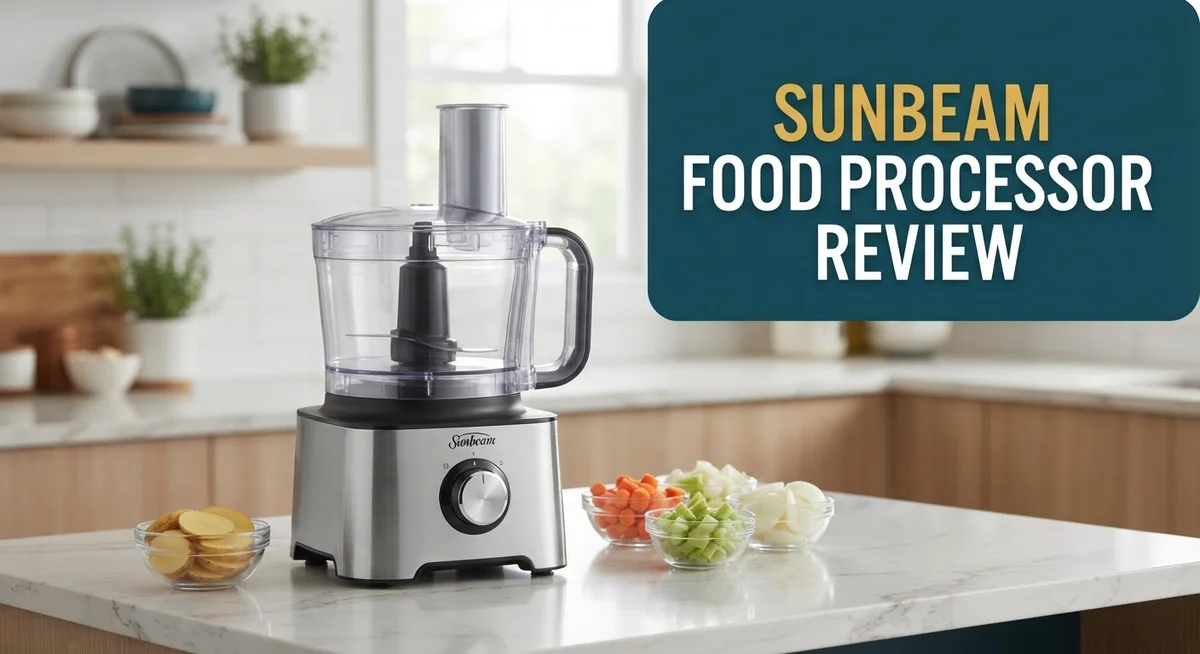
Sunbeam Food Processor Review 2026: Complete Guide
Do you want a kitchen helper that chops, slices, and purees in seconds? The Sunbeam food processor might be your answer. This appliance promises to cut your prep time down.
Sunbeam offers several models, like the LC6200, LC6250, and the Oskar 14081. Each one comes with different capacities and attachments.
But does this brand actually perform well? Or does it fall short compared to bigger names like Cuisinart and KitchenAid?
In a Nutshell
- Assembly takes effort. The Oskar model has over 8 pieces. You need patience to put it together correctly.
- Durability is a concern. Some users report cracked blades and broken lids after regular use.
- Cleaning takes time. Multiple parts and tight corners make washing a chore for busy kitchens.
- Slice thickness stays fixed. You cannot adjust how thin or thick your cuts turn out.
- Weight matters here. Some models tip the scale at 27+ pounds. Moving it around your counter feels like a workout.
- Best for occasional use. This processor suits weekend cooking projects rather than daily meal prep.
- Attachments do their job. Slicing and shredding discs work fine for basic tasks, though they won’t wow you.
Build Quality and Design
The Sunbeam food processor comes in several body styles to fit different kitchen spaces. You can choose between full-size models and compact mini versions. The full-size units weigh over 27 pounds, so counter space and storage matter before you buy.
The exterior casing feels plastic-heavy across most models. This design choice keeps the machine lightweight compared to metal alternatives, but it also raises durability questions. Users report that lids crack under normal use, and some blades have fractured after modest chopping sessions. The plastic components don’t hold up as well as stainless steel found on competitor brands.
Assembly demands real effort from you. The Oskar 14081 model requires fitting together 8 or more pieces before first use. The main bowl, lid, pusher tube, and multiple discs all need careful alignment. This complexity frustrates many owners, especially those expecting quick setup. Once assembled, the unit sits stable on counters, but the process itself takes patience.


Last update on 2026-04-08 / Affiliate links / Images from Amazon Product Advertising API
The control panel keeps things simple. You get basic speed settings and a pulse button. No digital displays or fancy touch screens appear here. This straightforward approach means fewer mechanical parts to break, though it also limits your control over processing speed.
The feed tube opening varies by model size. Smaller models have tighter openings that require pre-cutting large vegetables. Larger models accept bigger chunks, saving you prep time. The pusher design works adequately, though some users find it awkward to hold while feeding items through.
Blade and disc storage presents another design consideration. Most models don’t include a dedicated storage solution, so you must find space in drawers or cabinets. The discs take up surprising room, and keeping track of all pieces becomes tedious.
The overall design prioritizes function over durability. Sunbeam focused on creating an affordable machine with basic capabilities rather than engineering a tank. If you plan light, occasional use, the design works fine. Heavy daily processing will likely expose weak points in the plastic construction faster than you’d expect.

- Simply stack and press to chop: The patented stack & press design makes it easy to assemble and use. Simply press the...
- Perfect size for everyday use: Chop and mix up to 3 cups of ingredients every day of the week with this 3 cup chopper...

Last update on 2026-06-09 / Affiliate links / Images from Amazon Product Advertising API
Capacity and Size Options
Sunbeam offers you a real range of sizes to match your kitchen needs. The lineup spans from compact mini models all the way up to 14 cup full size units. This variety means you can pick the exact capacity that fits your cooking style.
The LC6200 and LC6250 represent the mid range options. These models give you solid chopping power without taking over your counter space. Many home cooks find this size sweet spot works best for everyday tasks like dicing onions or grinding nuts.
The Oskar 14081 sits at the larger end of the spectrum. With its 14 cup capacity, this model handles bigger batch jobs. If you regularly prepare meals for a family or like to meal prep, this size makes sense. However, the larger units do weigh more than 27 pounds, so placement matters.
Mini versions exist too if you have limited kitchen real estate. These smaller processors work great for light chopping or making small batches of sauce. They take up minimal storage space and move easily between cabinets.
Size affects how you use the machine. Larger bowls mean fewer refills during food prep. Smaller bowls fit tight kitchens but require more frequent emptying. The feed tube opening changes based on model size, which impacts how quickly you can feed ingredients.
One thing to know: all Sunbeam models come with multiple attachments for slicing, shredding, and chopping. Your actual working space depends on which disc you attach at any given moment. Some users find the larger models harder to maneuver during assembly and cleaning.
Think about your typical cooking volume. Do you chop vegetables once a week or every single day? Occasional users find the smaller to mid range sizes perfect. Heavy daily use might push you toward the 14 cup option, despite its weight.
The plastic construction keeps all models relatively lightweight compared to commercial machines. Still, moving a 27 pound processor repeatedly gets tiring. Consider where you will store it and how often you will move it around your kitchen.
Performance and Chopping Power
When you switch on a Sunbeam food processor, you get rapid chopping and pureeing power that handles most kitchen tasks without delay. The motor spins fast enough to break down vegetables, nuts, and fruits in seconds. Users report that soups and sauces come together quickly with minimal effort.
The chopping discs work well for basic prep. You can process onions, carrots, and celery in bulk batches. The shredding attachments handle cheese and vegetables adequately. Slicing discs cut through softer produce without much resistance.
One real limitation stands out: you cannot adjust slice thickness. Every model cuts at a fixed depth. This means uniform results, but you lose flexibility if you want thicker or thinner slices for different recipes. Some cooks find this frustrating when they need variety in one meal.
The motor power varies slightly between models. Larger capacity models like the Oskar 14081 pack more muscle than mini versions. Full-size processors handle tougher jobs better than their smaller cousins. If you plan to process nuts or frozen items regularly, pick a larger model.
Heat buildup can occur during extended use. Running the machine for several minutes straight generates warmth in the motor housing. Most users don’t experience problems, but longer prep sessions demand attention.
Assembly complexity affects your actual chopping experience. More pieces mean more time setting up before you start. Once assembled correctly, performance stays solid. Incorrect assembly sometimes causes vibration or noise during operation.
Blade sharpness matters for clean cuts. Fresh blades produce crisp results on vegetables and herbs. Dull blades tear rather than slice, creating uneven pieces. Users report that blade durability varies across units.
For occasional cooking, Sunbeam delivers adequate chopping power. You won’t get professional restaurant results, but everyday meal prep happens smoothly. Heavy daily use may expose durability limits over time. The machine works best when you match its capabilities to your actual cooking frequency and volume needs.
Top 3 Alternatives
Cuisinart Food Processor

- SUPERIOR FUNCTION: The Cuisinart Food Processor with 720-watt motor functions as a vegetable chopper, blender, and food...
- MUST-HAVE FEATURES: The 14-cup food chopper has “on” and “off/pulse” buttons with an extra-large feed tube with...
Last update on 2026-06-09 / Affiliate links / Images from Amazon Product Advertising API
Cuisinart offers reliable food processing power for your kitchen. This brand excels at chopping, slicing, and mixing tasks with consistent results. The motor runs smoothly and handles both soft and hard ingredients well. Many users appreciate the easy-to-clean bowl and sharp blades that stay effective over time.
The control options give you flexibility. You can pulse for precise cuts or use continuous operation for larger batches. The feed tube design works efficiently, so you waste less food during preparation. Cuisinart’s reputation for durability makes it a solid choice if you process food regularly.
Hamilton Beach Food Processor

- STACK AND SNAP TECHNOLOGY FOR EASY ASSEMBLY: With this well-designed food processor, you can skip frustrating, awkward...
- 12 CUP SEALED BOWL: Most food processors are too small for large processing jobs. This 12 cup sealed bowl fits large...
Last update on 2026-06-10 / Affiliate links / Images from Amazon Product Advertising API
Hamilton Beach brings affordability without sacrificing performance. This processor handles everyday kitchen tasks like mincing vegetables and mixing batters. The compact design fits well in smaller kitchens or cabinets. Users report that setup takes just minutes, and cleaning up afterward is straightforward.
The blade system works effectively for most common food prep jobs. Speed settings let you control texture from chunky to fine. The bowl capacity suits small to medium households nicely. Hamilton Beach focuses on practical features that actually help you cook faster.
Black+Decker Food Processor

- EASY ASSEMBLY: The smart design lets you set the work bowl onto the base, and uses the lid as the locking mechanism. No...
- 8-CUP WORK BOWL: The large capacity gives you plenty of room to work with when creating salsas, nut butter, hummus, and...
Last update on 2026-06-24 / Affiliate links / Images from Amazon Product Advertising API
Black+Decker delivers simple, effective food processing for basic kitchen needs. This option works great if you chop vegetables occasionally or prepare simple recipes. The lightweight design makes storage easy, and the controls are straightforward to understand.
Performance remains consistent for routine tasks like dicing onions or grinding nuts. The motor provides adequate power for standard food prep work. This processor appeals to people who want functionality without unnecessary complexity. You get reliable results for everyday cooking without paying extra for advanced features.
Ease of Assembly and Cleaning
Assembly requires patience and attention. The Oskar 14081 model involves 8+ separate pieces that need proper arrangement before use. You must align the bowl, attach the motor base, secure the lid, and position your chosen disc or blade. This process takes longer than with simpler competitors.
The LC6200 and LC6250 models demand similar care during setup. Each component has a specific place. Rushing through assembly can lead to loose connections or improper disc placement. Take time to read the instruction manual before your first use.
One key point stands out: the assembly complexity affects how often you actually use the machine. If you find setup frustrating, you might avoid the processor altogether. This matters for occasional users who want convenience.
Cleaning presents the bigger challenge here. The multiple attachments mean more items to wash after each session. The blade discs have sharp edges that require careful handling. You cannot simply toss everything in the dishwasher on most models. Hand washing remains the safest approach for longevity.
The bowl itself cleans relatively easily with warm water and dish soap. Food residue comes off without excessive scrubbing. However, the feed tube opening and the underside of the lid trap small particles. You need to inspect these areas carefully after each use.
Storage of all attachments adds another layer of complexity. You must keep track of slicing discs, shredding discs, and chopping blades. Some models include storage compartments. Others leave you searching through drawers for the right piece.
The plastic construction helps with cleaning since it resists staining better than some materials. However, the seams between components collect debris. A small brush or old toothbrush helps you reach these tight spots.
For people who use their food processor weekly or monthly, this cleaning routine becomes manageable. You develop a system. For daily heavy use, the time investment grows quickly. Consider your typical cooking schedule before purchasing. Light, occasional prep work fits well with Sunbeam’s design. Frequent, intensive use may frustrate you.
Attachments and Versatility
The attachment system on Sunbeam food processors gives you real flexibility in the kitchen. Each model includes multiple discs that handle different tasks. You get slicing discs, shredding discs, and chopping blades all in one package.
Switching between attachments takes just seconds. The discs pop in and out of the bowl without tools. This means you can move from slicing cucumbers to shredding cheese without stopping your workflow. The variety lets you prep multiple ingredients without leaving your counter.
One important limitation affects your slicing work. You cannot adjust the thickness of your slices. The machine produces uniform cuts every time, which works well for consistent cooking. However, if you need thin slices one moment and thick slices the next, you’ll need to use a knife instead.
The shredding discs work effectively for cheese, carrots, and zucchini. Many users find the results comparable to hand shredding but much faster. The chopping blades handle herbs, nuts, and vegetables with solid performance for everyday cooking tasks.
Storage of all these attachments requires some thought. The pieces stack but take up drawer or cabinet space. You need somewhere to keep the bowl, lid, feed tube, and all the discs together. Some models include storage solutions while others require you to find your own spot.
Cleaning each attachment matters for food safety and longevity. The discs trap food particles between the blades, so rinsing immediately after use prevents buildup. Hand washing works best since dishwashers can dull the blades over time.
The versatility of Sunbeam processors shines when you match the right attachment to your task. Occasional cooks find the basic disc set covers most needs. Daily meal prep users might wish for more specialized attachments like dough hooks or emulsifying discs.
Assembly complexity affects which attachments you’ll actually use. If setup feels tedious, you might skip certain attachments even though they work well. Taking time to learn your machine’s system unlocks its full potential in your kitchen routine.
Pros and Cons
Pros
- Rapid chopping and pureeing power handles most kitchen prep tasks with ease
- Multiple attachments give you real flexibility for slicing, shredding, and chopping
- Works well for occasional or non daily cooking without heavy daily demands
- Plastic construction resists staining and cleans up relatively easily with warm water
Cons
- Complex assembly with 8+ pieces takes patience and attention before first use
- Durability concerns include cracked blades and broken lids reported by some users
- Cleaning each attachment and the bowl requires significant time and effort
- Cannot adjust slice thickness, so you get uniform cuts only without customization options
Who Should Buy It
Sunbeam food processors work best for home cooks who prepare meals occasionally or monthly rather than daily. If you chop vegetables a few times per week, this machine handles the job efficiently without demanding heavy use.
You should consider buying one if you want quick prep work without complexity. The rapid chopping and pureeing power tackles most kitchen tasks. You pop in a disc, add your ingredients, and get results fast. This appeals to busy people who value speed over fancy features.
Mini models suit apartment dwellers and small households. A 3 or 4 cup capacity handles garlic, nuts, and small batches without taking up much counter space. Full-size options work for families who need to process larger quantities of vegetables or fruits at once.
The attachment variety attracts cooks who like flexibility. You get slicing discs for tomatoes and cucumbers, shredding discs for cheese and carrots, and chopping blades for onions and herbs. Switching between them takes seconds, so you can tackle different prep tasks in one session.
People who dislike hand chopping should buy this. Your hands stay clean, and repetitive work finishes in moments. This matters if you have arthritis, weak grip strength, or simply want to save time during meal prep.
However, skip this if you use a food processor daily. The assembly complexity and cleaning demands become frustrating with frequent use. You’ll spend more time cleaning attachments than actually cooking. Daily users need something faster to assemble and maintain.
Also avoid it if durability concerns worry you. Some owners report cracked blades and broken lids. If you want a machine that lasts years without problems, explore other brands first.
Casual cooks with modest storage space find real value here. You get genuine kitchen help without overwhelming complexity. The machine sits ready in your cabinet, and you use it whenever chopping sounds better than doing it by hand. That’s the sweet spot for Sunbeam ownership.
Final Verdict
Sunbeam food processors earn a solid spot in kitchens that need occasional help, not daily heavy duty work.
They handle chopping, pureeing, and prep tasks without fuss. This makes them a smart pick for casual cooks who value simplicity over restaurant grade performance.
If you compare them to Cuisinart or KitchenAid, Sunbeam holds its own for basic tasks. It won’t match the precision or endurance of these bigger names, but it gets the job done for everyday needs.
Ninja and Magic Bullet offer speed and compact design, yet they lack the attachment range Sunbeam provides. This gap matters if you want one machine that slices, shreds, and chops without buying extra gadgets.
The bottom line comes down to how you cook. Home cooks who prepare meals a few times a week will find Sunbeam reliable enough. Those who cook daily or run a busy household kitchen may outgrow it faster than expected.
Think about your storage space too. Compact models fit smaller kitchens well, while full size options need more room on your counter or in your cabinet.
Durability remains a fair concern. Some users report cracked parts over time. If you treat the unit gently and follow care instructions, it should serve you well for its intended use.
Sunbeam wins points for flexibility and ease of use. It loses some ground on build quality compared to premium brands. This tradeoff makes sense if you want variety without complexity.
Choose Sunbeam if you want a versatile helper for light to moderate kitchen work. Skip it if you need heavy duty performance every single day.
For most home cooks, this brand delivers dependable results without overcomplicating your kitchen routine. It suits people who value practical function over premium branding.
Overall, Sunbeam offers a balanced choice for anyone starting their food processor journey or upgrading from manual prep work. It fits real kitchens with real needs.
Frequently Asked Questions
Can I adjust the slice thickness on a Sunbeam food processor?
No, you cannot adjust slice thickness. Sunbeam food processors deliver uniform cuts every time. The slicing disc produces consistent results, but you don’t get the flexibility to make thicker or thinner slices based on your recipe needs.
How long does assembly take before first use?
Assembly takes patience. The Oskar model includes 8 or more pieces to fit together. You’ll need to attach the motor base, bowl, lid, and your choice of disc or blade. Read the manual carefully before starting.
Are Sunbeam food processors easy to clean?
Cleaning requires significant time and effort. Each attachment, the bowl, and the lid need separate attention. Warm water works, but dried food can stick to the crevices. Plan extra time after meal prep for thorough cleaning.
What size should I choose for my kitchen?
Full-size models work best if you have counter or cabinet space. Mini versions suit apartment dwellers and small households. Consider how often you cook and your storage situation before deciding.
How does Sunbeam compare to Cuisinart or Ninja?
Sunbeam holds its own for basic chopping and pureeing tasks. Cuisinart and KitchenAid offer stronger build quality. Ninja focuses on speed and compact design. Sunbeam wins on attachment variety and flexibility. Your choice depends on whether you prioritize durability, speed, or versatility.

Hi, I’m Liza Jensen, your culinary companion here at Recipe by Liza. 🍳🥗Cooking has always been my passion—I find joy in every whisk, every sizzle, and every aromatic spice. As a home cook and recipe developer, I’ve explored flavors from around the world, creating dishes that warm hearts and tantalize taste buds.Join me on this flavorful journey! Let’s swap kitchen stories, share tips, and celebrate the magic of food together.