
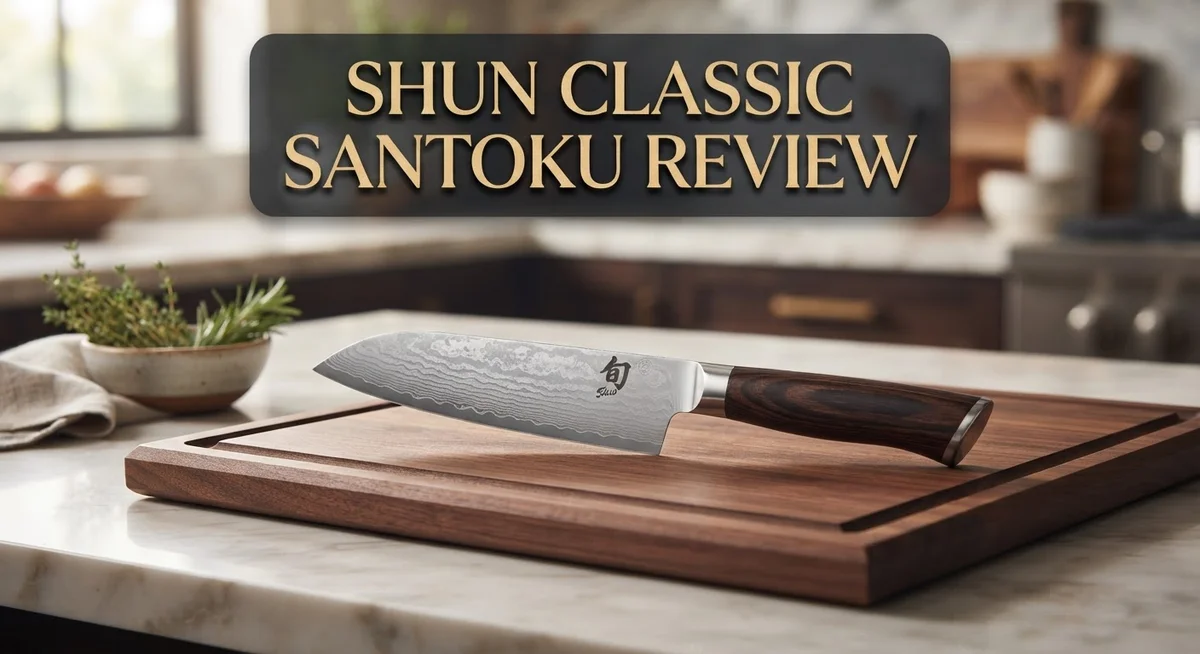
Shun Classic Santoku Review 2026: Worth the Hype?
Are you looking for a knife that feels like an extension of your hand? The Shun Classic Santoku might be exactly what your kitchen needs.
This knife comes from Japan. Skilled artisans handcraft each blade with care and precision. The blade uses VG-MAX steel at its core. This material resists wear and stays sharp for a long time.
A layer of Damascus steel wraps around the core. This gives the knife its signature wavy pattern and adds strength.
In a Nutshell
- Sharpness: This knife arrives razor sharp right out of the box. It slices through vegetables and proteins with ease.
- Build Quality: The fit and finish feel excellent. Each knife shows careful craftsmanship and strong attention to detail.
- Weight: The blade feels light in your hand. You can move it quickly during long prep sessions without tiring.
- Versatility: This santoku handles chopping, dicing, and slicing tasks well. It works great for everyday cooking needs.
- Edge Durability: The edge can chip easily if you hit bone or hard surfaces. You need to handle this knife with care.
- Sharpness Retention: The blade tends to dull faster than some competitors. Regular honing keeps it performing well.
- Quality Control: Shun maintains strong consistency across units. You get a reliable knife every time you order one.
Blade Quality and Steel Composition
The blade quality of the Shun Classic Santoku reveals why this knife earns respect in both home and professional kitchens. The VG-MAX steel core sits at the heart of this design. This material resists wear and corrosion remarkably well. The fine grain structure of VG-MAX allows the blade to hold a sharp edge for extended periods.
Wrapped around the core, Damascus steel cladding creates both visual appeal and functional benefits. The layered pattern you see on the blade isn’t just decoration. It serves a practical purpose by protecting the softer outer layers while the hard core maintains the cutting edge. This combination makes the knife durable and visually distinctive.
The blade geometry of the Shun Classic Santoku follows traditional santoku proportions. The flat edge with a slight curve near the tip gives you precision control. You can use a rocking motion or a straight up-and-down chopping action. The blade responds well to both techniques.


Last update on 2026-04-08 / Affiliate links / Images from Amazon Product Advertising API
One important consideration: the edge requires careful handling. VG-MAX steel, while excellent at staying sharp, can chip if you strike bone or extremely hard surfaces. This isn’t a flaw in design. It’s simply how this steel performs. Cooks who respect the blade’s purpose avoid using it for tasks outside its range.
The thickness of the blade strikes a good balance. It’s thin enough to glide through vegetables without resistance. It’s thick enough to provide stability when you’re cutting through tougher items like root vegetables or dense fruits.
Heat treatment during manufacturing ensures consistent hardness across every knife. Shun applies strict quality control at each production stage. This means your blade performs the same way as the next one off the line.
The overall steel composition makes this santoku excellent for slicing, dicing, and chopping. Vegetable prep becomes faster and more enjoyable. The blade’s ability to maintain sharpness between honing sessions gives you reliable performance day after day.

- ALL PURPOSE KITCHEN KNIFE: The Shun Classic 7-inch Santoku Knife is expertly designed for slicing vegetables, proteins...
- SUPERIOR SHARPNESS: Crafted with VG-MAX steel and 68 layers of Damascus cladding, this knife delivers razor-sharp...
Last update on 2026-08-29 / Affiliate links / Images from Amazon Product Advertising API
Design, Balance, and Handling
The Shun Classic Santoku feels like an extension of your hand from the moment you grip it. The D-shaped handle sits perfectly in your palm, whether you’re right or left handed. Your fingers wrap around the curve naturally without any awkward angles or pressure points.
Weight distribution matters more than you might think. This knife stays incredibly light throughout your cutting session, which reduces hand fatigue during prep work. You can chop vegetables for 30 minutes straight without your wrist getting tired. The balance point sits right where the blade meets the handle, giving you maximum control with minimal effort.
The blade itself moves through food with surprising ease. Its thin profile glides through tomatoes, onions, and herbs without crushing them. You get clean cuts every time because the geometry works with your natural cutting motion, not against it. The santoku’s flat edge and slight curve let you rock the blade forward and back or use a straight up and down motion.
Handling this knife feels responsive and precise. Your knuckles rest comfortably against the spine as you guide the blade. The Damascus cladding provides visual feedback too, so you can see exactly where your blade sits relative to the food. This matters when you’re working with delicate ingredients that need a gentle touch.
One thing to remember: the edge demands respect. This santoku’s sharpness is a double-edged sword. It cuts beautifully through soft items but can chip if you accidentally hit bone or use it on a hard cutting board. Many owners find that using a wood or bamboo board extends the knife’s life significantly.
The overall feel of the Shun Classic Santoku suggests Japanese craftsmanship at work. Every curve and angle serves a purpose. Your hand and wrist move naturally through each cutting task. Whether you’re slicing fish, dicing vegetables, or chopping herbs, this knife responds to your intentions instantly.
Cutting Performance and Versatility
The Shun Classic Santoku shines when you put it to work on your cutting board. This knife moves through vegetables, proteins, and fruits with minimal effort. The blade glides rather than forces its way through food, which makes prep work faster and more enjoyable.
The 5.5 inch and 7 inch options give you flexibility based on your cutting space and hand size. Most home cooks find the 5.5 inch version perfect for everyday tasks. The 7 inch model works better if you have larger cutting boards or prefer a longer blade reach.
What makes this santoku truly versatile is its flat edge design. Unlike chef’s knives, the straight blade lets you use a push cut motion. This technique works especially well for precise vegetable slicing and herb mincing. The knife also handles rocking motions smoothly, though that’s not its primary strength.
You’ll notice the blade performs beautifully on delicate items. Tomatoes slice cleanly without crushing. Herbs mince into fine pieces. Fish fillets separate from skin with ease. These tasks showcase where the Shun Classic really excels compared to heavier knives.
One area where versatility has limits: this knife prefers softer to medium density foods. Frozen items and very hard squashes push the edge closer to its breaking point. The blade simply wasn’t engineered for those situations.
The lightweight design contributes to its cutting performance. Less mass means you control the knife with your wrist and fingers rather than arm strength. This precision matters when you’re working with expensive ingredients or delicate preparations.
The blade’s thinness also plays a role. Thinner steel cuts cleaner and requires less downward pressure. However, this same thinness makes the edge more vulnerable during contact with bone or the cutting board surface.
For Asian cuisine, Western vegetable prep, and precision slicing tasks, the Shun Classic Santoku performs at a high level. It excels in situations where sharpness and control matter more than durability. The knife rewards careful technique and respectful handling with exceptional results.
Top 3 Alternatives
Wüsthof Classic Santoku

- WÜSTHOF SANTOKU – The fine, sharp 7" blade of the Santoku makes slicing wafer-thin pieces effortless. Quickly...
- FORGED ASIAN KNIFE – This versatile Japanese chef’s knife makes light work of slicing, chopping, and dicing. Forged...

Last update on 2026-08-29 / Affiliate links / Images from Amazon Product Advertising API
Victorinox Fibrox Santoku

- Perfect for cutting everything, from meat to vegetables and fruit
- Swiss made Santoku knife with fluted edge
Last update on 2026-08-29 / Affiliate links / Images from Amazon Product Advertising API
MAC Superior Santoku

- 2mm Blade, rust-resistant, exceptionally sharp, made out of high carbon and keeps the edge for a long time
- Razor-sharp edge
Last update on 2026-08-29 / Affiliate links / Images from Amazon Product Advertising API
Edge Retention and Maintenance
The Shun Classic Santoku’s edge retention depends heavily on how you use and care for it. The VG-MAX steel core holds sharpness well during regular cutting tasks, but this blade performs best when you treat it with respect. The Damascus cladding looks beautiful, yet it also signals that delicate handling matters.
Your maintenance routine makes a real difference. Hand wash this knife immediately after use. Never leave it in the sink or dishwasher, as moisture and impacts dull the edge quickly. Dry it right away with a soft cloth. This simple habit extends the time between sharpening sessions significantly.
Storage choices affect edge life too. Use a knife block, magnetic strip, or blade guard to protect the edge. Avoid tossing it into a drawer where it bumps against other utensils. Each contact damages the fine edge you paid for.
Honing and sharpening keep your Shun Classic Santoku performing at peak levels. Use a honing steel every few weeks to realign the edge. This takes just thirty seconds and maintains sharpness between deeper maintenance. When the blade finally dulls, professional sharpening restores it beautifully. Many users report that even after years of use, the knife responds well to proper sharpening.
The edge does dull faster than some competitors, particularly if you cut harder items like frozen foods or bones. Stick to vegetables, fish, and boneless meats for the longest edge retention. This knife excels at precision work on softer materials anyway.
Temperature stability matters more than people realize. Avoid washing with very hot water right after cutting cold items. Extreme temperature swings can affect the steel’s structure over time. Room temperature water works perfectly fine.
Consistent care transforms this santoku into a long lasting tool. The blade quality supports this commitment. You’ll find that proper maintenance keeps your Shun Classic Santoku sharp and ready for years of kitchen work. The investment in good habits pays off through extended performance and reliable cutting results.
Value for Money and Price Positioning
When you invest in a knife, you want to know what you’re getting for your commitment. The Shun Classic Santoku delivers exceptional craftsmanship that shows in every detail. Japanese artisans hand-finish each blade, and that dedication translates to superior edge geometry and fit.
The real question isn’t whether this santoku cuts well. It absolutely does. The question is whether the performance justifies your choice compared to other options on the market. Here’s what sets it apart: the VG-MAX core steel combined with Damascus cladding creates a blade that holds its edge better than many competitors in its category. The lightweight design reduces fatigue during extended use, which means less strain on your wrists and hands.
However, edge retention has a catch. While the blade starts incredibly sharp, it dulls faster than some alternatives like the Misono Molybdenum or Tojiro DP series. This means you’ll invest time in maintenance more frequently. If you’re willing to hone regularly and sharpen every few months, you maintain peak performance. If you prefer minimal maintenance, other options might suit you better.
The D-shaped handle deserves attention too. This ergonomic design fits most hand sizes comfortably and provides superior control during precision work. Many people find this handle shape worth the investment alone, especially if you spend hours in the kitchen.
The versatility factor strengthens the value proposition. This santoku handles Western vegetable prep, Asian cuisine, and delicate slicing tasks with equal skill. You’re not buying a one-trick knife. The 5.5 inch and 7 inch options let you choose based on your actual cutting space and hand size, which means better functionality for your specific kitchen.
Consider your usage patterns carefully. If you cut primarily soft to medium density foods and maintain your knife properly, the Shun Classic Santoku becomes a reliable companion for years. If you frequently work with harder items or prefer minimal maintenance, you might find better alignment with other brands. The value ultimately depends on matching the knife’s strengths to your actual cooking needs.
Pros and Cons
Pros
- Arrives sharp enough to slice paper and performs beautifully on delicate items like fish and vegetables
- Lightweight frame makes it easy to control during repetitive cutting tasks, reducing hand fatigue
- Handcrafted in Japan with excellent fit and finish that shows quality control throughout
- Versatile flat edge design handles slicing, dicing, and precision work across Asian and Western cuisines
- D-shaped handle fits comfortably in your hand and supports extended cutting sessions
Cons
- The delicate edge chips easily when you cut harder items like frozen foods or bones
- Edge dulls faster than many competitor santokus, requiring more frequent honing to maintain sharpness
- Demands consistent care and proper storage to avoid damage; neglect shortens its working life significantly
Who Should Buy It
The Shun Classic Santoku works best for home cooks who value precision and control. You’ll love this knife if you prepare Asian cuisine regularly or enjoy Western vegetable prep with finesse.
Professional chefs appreciate this santoku too. The lightweight design reduces hand fatigue during long prep sessions. Your wrist stays comfortable even after hours of slicing and dicing. The razor sharp edge handles delicate tasks like fish filleting and paper thin vegetable slices with ease.
This knife suits you if you’re willing to maintain it properly. The delicate edge requires consistent care and attention. You’ll need to hone regularly and store it carefully using a knife block, magnetic strip, or blade guard. If you prefer a knife that tolerates neglect, this isn’t your best choice.
Home cooks who cook mostly vegetables and fish benefit greatly. The santoku excels at these tasks. The flat blade design lets you rock and slice with precision. You’ll notice the difference compared to chef’s knives for these specific jobs.
Skip this knife if you cut frozen foods or bones frequently. The delicate edge chips easily under hard pressure. You’ll spend more time maintaining it than enjoying it. Look elsewhere if durability under rough use matters most to you.
The Shun Classic Santoku appeals to people who appreciate Japanese craftsmanship. The handcrafted quality shows in every detail. The D-shaped handle fits naturally and supports extended cutting sessions. The Damascus cladding looks beautiful on your counter or in your knife block.
Consider your usage patterns carefully before buying. If you prepare mostly soft items like vegetables, fish, and herbs, this santoku performs beautifully. The edge retention depends heavily on your care routine. Temperature stability matters too. Avoid washing with very hot water right after cutting cold ingredients.
This knife works for anyone seeking a versatile tool that handles slicing, dicing, and precision work across multiple cuisines. You get excellent fit and finish with strong quality control. The lightweight frame makes control easy. Your commitment to maintenance determines how long this santoku stays sharp and performs at peak levels.
Final Verdict
The Shun Classic Santoku stands out as a well made kitchen tool. It brings sharpness and comfort together in one blade.
This knife rewards careful owners. If you enjoy the ritual of honing and hand washing, this santoku fits your kitchen.
Casual cooks who want a grab and forget knife might feel let down. The blade demands attention that some people simply do not want to give.
Brands like Enso HD, Tojiro DP, and MAC offer sturdier edges for less fuss. Fujiwara Kanefusa and Misono Molybdenum also give solid alternatives if chipping worries you.
Still, few knives match the finish and balance found here. The craftsmanship feels genuine, not just marketed.
Shun built a reputation on precision, and this santoku reflects that legacy. It carries the brand’s identity in every cut.
Think about your kitchen habits before deciding. A knife should match your lifestyle, not fight against it.
If you cook often and treat your tools with respect, this santoku becomes a trusted companion. It rewards patience with lasting sharpness and clean cuts.
If your kitchen sees rough use daily, look elsewhere first. A tougher blade might serve you better in the long run.
For gift giving, this knife feels special. Its design and origin story add charm beyond simple function.
Home cooks who love Japanese blades will likely fall for this santoku fast. The experience feels personal, almost artisanal, every time you slice.
In the end, this santoku suits a specific kind of cook. It favors precision over durability, elegance over ruggedness.
Choose it if that trade off excites you. Skip it if you crave a low maintenance workhorse instead.
Every knife tells a story through its edge. This one tells a story of care, patience, and quiet mastery in the kitchen.
Frequently Asked Questions
Does the Shun Classic Santoku work for beginners?
Yes, it works well for beginners who want to learn proper knife technique. The lightweight blade makes it easy to control, and the sharp edge cuts cleanly without requiring much pressure. You’ll feel immediate results, which builds confidence quickly.
However, beginners must learn proper care habits early. This knife needs hand washing and regular honing to stay sharp. If you’re not ready for maintenance, a more forgiving blade might suit you better.
Can I use this santoku on frozen foods?
No, avoid cutting frozen items with this knife. The delicate edge chips easily when you apply pressure to hard or frozen foods. Bones and frozen vegetables will damage the blade faster than normal use.
Save this santoku for soft ingredients like fresh vegetables, fish, and herbs. Use a different knife for frozen or very hard items.
How often do I need to sharpen it?
You should hone your Shun Classic Santoku every few weeks with a honing steel. This realigns the edge between uses and keeps it sharp longer. Actual sharpening happens less often, maybe once or twice yearly with regular home use.
The blade dulls relatively quickly compared to some competitors. Regular honing prevents the need for professional sharpening and extends the time between services.
What makes this santoku different from the Enso HD or Tojiro DP?
The Shun Classic offers superior fit and finish with excellent balance. The Damascus cladding looks beautiful and the D-shaped handle feels comfortable during long sessions.
The Enso HD and Tojiro DP have sturdier edges that resist chipping better. They tolerate rougher use and dull more slowly. Choose Shun for precision work and beauty. Choose competitors if you want a more durable, low maintenance blade.

Hi, I’m Liza Jensen, your culinary companion here at Recipe by Liza. 🍳🥗Cooking has always been my passion—I find joy in every whisk, every sizzle, and every aromatic spice. As a home cook and recipe developer, I’ve explored flavors from around the world, creating dishes that warm hearts and tantalize taste buds.Join me on this flavorful journey! Let’s swap kitchen stories, share tips, and celebrate the magic of food together.