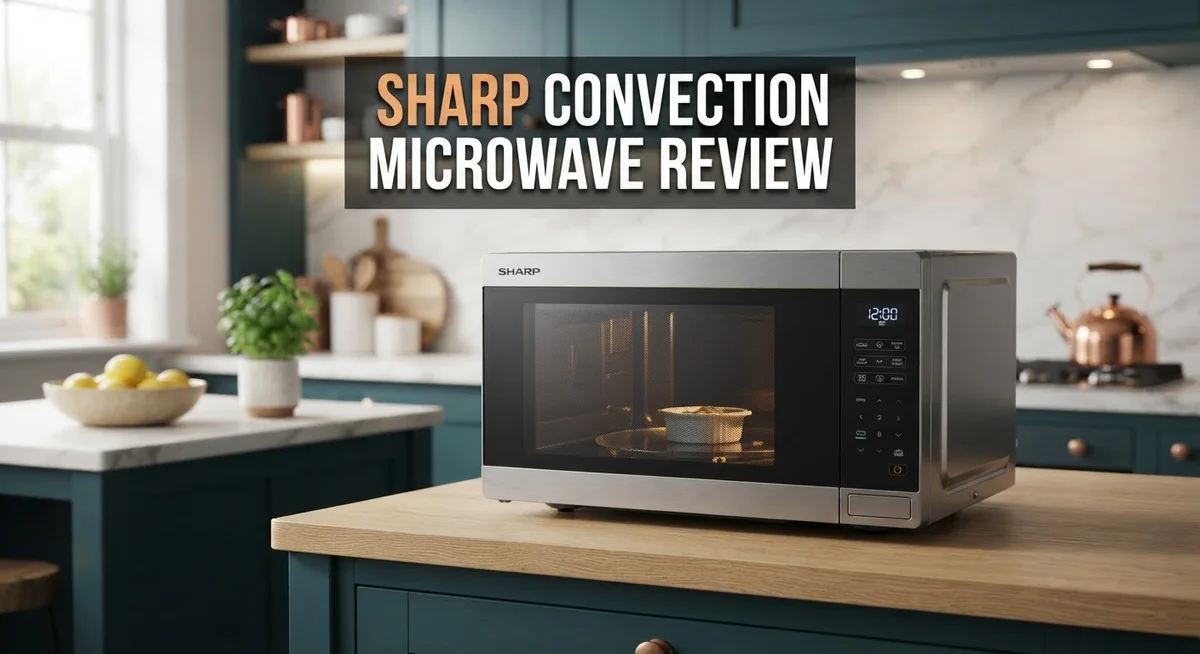
Sharp Convection Microwave Review 2026: Buyer’s Guide
Do you want one appliance that bakes, roasts, and microwaves? A Sharp convection microwave might be your answer. It blends speed with real cooking power.
This appliance does more than heat food fast. It uses hot air to brown, crisp, and roast meals like a conventional oven. That means fewer pots and pans on your counter.
Sharp offers these microwaves in many styles. You can pick countertop, over-the-range, or a built-in drawer model. Each one fits different kitchen needs and space limits.
In a Nutshell
- Versatile cooking power. This microwave handles baking, roasting, and broiling in one unit. You get consistent results without using multiple appliances.
- Smart automation. The Auto Defrost and preset functions take guesswork out of cooking. You press a button and let the microwave do the work.
- Flexible installation options. Sharp makes countertop, over the range, and drawer styles. You can pick what fits your kitchen layout best.
- Mixed performance feedback. Some users notice uneven heating in certain models. Air flow issues also pop up in a few reviews.
- Efficient use of energy. Many models use less power than running separate ovens and microwaves. This helps lower your kitchen’s overall energy use.
- Strong market presence. Sharp competes with brands like Thermador and Whirlpool. It holds its own thanks to smart features and flexible sizing.
Build Quality and Design
Sharp’s convection microwaves come in three main styles. You can choose countertop models for flexibility, over the range units to save counter space, or drawer models for a modern integrated look.
The capacity ranges from 0.7 to 1.5 cubic feet. Smaller models work well for apartments or kitchens with limited room. Larger capacities let you cook bigger meals and fit multiple dishes at once.
Build materials feel solid across most models. The exterior uses stainless steel or durable plastic depending on the style you pick. The interior cavity has a ceramic enamel coating that resists scratches and cleans easily. Sharp includes a carousel turntable in all models to help heat food more evenly.


Last update on 2026-04-08 / Affiliate links / Images from Amazon Product Advertising API
The control panel features touch buttons or dial knobs depending on your model. Buttons respond quickly and the display shows cooking time clearly. Menus are straightforward, so you won’t spend time hunting for functions.
Drawer models weigh between 117 and 129 pounds. This heavier weight comes from reinforced construction and the motorized drawer mechanism. Installation requires proper support and sometimes professional help. The drawer glides smoothly and closes with a soft touch in most units.
Ventilation design varies by style. Over the range models have external venting to pull steam away from your stovetop. Countertop units need clearance on all sides for air circulation. Some users report that drawer models have tighter air flow, which can affect cooking performance in certain situations.
The overall design prioritizes functionality over flashy looks. Controls are intuitive and the layout makes sense. Cleaning is simple because removable parts like the turntable come out easily.
Sharp’s construction holds up well with regular use. The appliance feels stable when operating and doesn’t vibrate excessively. Hinges and door seals appear durable, though long term durability depends on how often you use convection versus microwave functions.

- 850-watt, over-the-range convection microwave browns, bakes, broils, crisps, and roasts
- 2-color, 7-digit, interactive display; Smart and Easy sensor settings

Last update on 2026-10-04 / Affiliate links / Images from Amazon Product Advertising API
Cooking Performance and Heating Consistency
Cooking performance in Sharp convection microwaves centers on how well the unit heats food and distributes that heat evenly. The combination of microwave radiation and convection heat allows these appliances to handle multiple cooking tasks in one cycle.
Microwave heating speed is where Sharp excels. With wattage ranging from 700 to 950W, food cooks quickly compared to traditional ovens. The carousel turntable rotates during cooking to help distribute heat more uniformly across dishes.
The convection feature adds another layer to performance. When you activate Auto Bake or Auto Roast, the unit switches from microwave-only mode to a hybrid approach. Hot air circulates inside the cavity while microwaves work simultaneously. This combination can brown foods and create crispy exteriors while keeping interiors moist.
Heating consistency presents a real challenge, though. Some users report that certain models heat unevenly, with hot spots appearing in unpredictable locations. This inconsistency often stems from how air circulates inside the cavity. Poor air circulation in some designs means certain food areas receive more heat than others.
The 0.7 to 1.5 cubic foot capacity affects heating performance too. Smaller cavities tend to heat more uniformly because microwaves and convection heat cover the space more thoroughly. Larger models sometimes struggle to maintain consistent temperatures throughout the cooking zone.
Auto functions streamline the process. Auto Defrost adjusts power levels automatically as frozen items thaw. Auto Broil and Auto Roast monitor internal temperatures and adjust heating accordingly. These features help compensate for some heating inconsistencies by using preset algorithms.
The drawer style models offer unique advantages here. Their accessible cavity design allows better visibility during cooking, so you can rotate dishes manually if needed. This hands-on approach helps overcome heating gaps.
For best results, users should rotate dishes halfway through cooking and avoid overcrowding the cavity. These simple steps improve heating consistency significantly. Overall, Sharp convection microwaves deliver strong rapid heating but require awareness of potential hot spots during use.
Capacity, Power, and Cooking Modes
Sharp convection microwaves pack serious cooking power into compact frames. Most models deliver between 700 and 950 watts of cooking wattage, which means your food cooks fast and efficiently. The capacity ranges from 0.7 to 1.5 cubic feet depending on which style you choose.
The real strength here is versatility. You get microwave speed combined with convection heat in one unit. Sharp includes Auto Broil, Auto Roast, Auto Bake, and Auto Defrost functions that remove the guesswork from meal prep. These preset modes work by automatically adjusting time and temperature for common foods.
Countertop models offer easy placement anywhere in your kitchen. Over the range units save counter space while handling ventilation duties. Drawer style models provide a sleek look and accessible cavity that sits at waist level, making it easier to load and unload dishes. These drawer units weigh between 117 and 129 pounds due to their reinforced construction.
The carousel turntable comes standard on most models. It rotates your food during cooking to promote even heat distribution. However, some users report inconsistent heating in certain models, especially when the cavity gets crowded. Rotating dishes halfway through cooking helps improve results.
Air circulation varies by style. Countertop and over the range models typically handle ventilation better than drawer units. The drawer design prioritizes accessibility but can sometimes restrict airflow. This matters most when you’re using the convection or roasting modes.
Sharp’s power output sits in the middle range for convection microwaves. You won’t find extreme wattage, but the 700 to 950 watt range handles most cooking tasks without excessive energy drain. The combination of microwave and convection heating means you use less overall electricity than running a separate oven and microwave together.
The control panels feature either touch buttons or dial knobs. Both options are intuitive and straightforward. You’ll find the layout makes sense whether you’re defrosting chicken or baking a small pizza. The automatic functions truly shine when you’re in a hurry, though manual mode gives you full control when recipes demand precision.
Top 3 Alternatives
Panasonic Inverter Microwave

- Panasonic Microwave: This 1200 Watt high power, 1.2 cubic foot capacity stainless steel countertop/built in microwave...
- Inverter Technology with Turbo Defrost: Patented Inverter Technology generates a seamless stream of power and delivers...
Last update on 2026-06-09 / Affiliate links / Images from Amazon Product Advertising API
The Panasonic Inverter Microwave uses intelligent power delivery to heat food evenly. Unlike standard microwaves that turn power on and off, this model maintains consistent energy levels. Your dishes cook more uniformly without cold spots.
This microwave works great for defrosting delicate items like fish and meat. The inverter technology prevents overcooking edges while centers remain frozen. You get better results with fewer burnt or rubbery textures.
Cuisinart Convection Microwave

- Multi functionality: BAKE, ROAST, MICROWAVE, CONVECTION OVEN
- 5 ONE TOUCH COOK MENUS: POTATO, POPCORN, BEVERAGE, REHEAT, FROZEN DINNER
Last update on 2026-06-09 / Affiliate links / Images from Amazon Product Advertising API
The Cuisinart Convection Microwave combines two cooking methods in one unit. It uses microwave energy for speed and convection heat for browning and crisping. You can prepare roasted vegetables, baked goods, and crispy proteins without switching appliances.
This model offers flexible cooking options for busy kitchens. The convection feature produces golden, restaurant-quality finishes on foods. Families appreciate the time savings when preparing multiple dishes simultaneously.
LG NeoChef Microwave

- SMART INVERTER: LG NeoChef microwave features Smart Inverter technology for precise cooking power control and even...
- POWERFUL PERFORMANCE: 1000 watts of cooking power with 10 adjustable power levels for versatile cooking options to suit...
Last update on 2026-09-28 / Affiliate links / Images from Amazon Product Advertising API
The LG NeoChef Microwave features a unique inverter compressor system similar to refrigeration technology. This approach delivers steady, precise heating throughout the cooking process. Food heats more uniformly than traditional microwave models.
The NeoChef design includes a larger interior capacity for family-sized portions. Its smart sensor technology adjusts cooking time based on food moisture levels. You spend less time guessing cooking times and more time enjoying meals. The model excels at reheating leftovers while maintaining original texture and flavor.
Energy Efficiency and Operating Costs
Sharp convection microwaves offer genuine efficiency gains compared to running separate microwave and conventional oven appliances. The combination of microwave and convection cooking in one unit means you use less counter or cabinet space, which also reduces your overall kitchen energy draw.
The power output ranges from 700 to 950 watts depending on your model. Lower wattage doesn’t mean slower cooking. Sharp’s convection feature compensates by distributing heat more evenly, so food cooks through without requiring as much raw microwave power. This balanced approach cuts down on wasted energy during the cooking process.
One important note: not all Sharp convection microwaves carry ENERGY STAR certification. This matters if energy efficiency is your top priority. The lack of certification doesn’t mean the units are inefficient, but it does mean they haven’t met specific government standards for power consumption. Check your specific model before purchase if this certification matters to your household.
Operating costs depend heavily on how often you use the convection feature versus microwave-only mode. Convection cooking uses more electricity than basic microwave heating. However, because convection distributes heat evenly, you spend less total time cooking. This can actually lower your per-meal energy expense compared to using a traditional oven.
The drawer style models weigh 117 to 129 pounds, which reflects their solid construction and insulation. Better insulation means less heat escape and more efficient cooking cycles. Countertop and over-the-range models typically weigh less but may have slightly different insulation qualities.
Real world savings come from versatility. Since you’re replacing two appliances with one, your kitchen draws power from fewer devices. You eliminate the standby power draw from a separate conventional oven. Over months and years, this compounds into measurable utility bill reductions.
For maximum efficiency, use the auto functions whenever possible. The Auto Bake, Auto Roast, and Auto Broil settings optimize power delivery for specific foods. These modes prevent unnecessary energy waste from manual adjustments and guesswork during cooking.
Ease of Use and Cleaning
Keeping your Sharp convection microwave clean is straightforward because the design prioritizes easy access. The carousel turntable lifts out in seconds, so you can wash it separately in your sink or dishwasher. This simple step prevents food debris from building up underneath.
The interior cavity has smooth walls that wipe down quickly with a damp cloth. Sharp avoided sharp edges and awkward corners that trap grease and crumbs. You’ll spend less time scrubbing compared to older microwave models.
Drawer style models shine here for cleaning purposes. The front-loading design means you reach the cavity without stretching or bending over. Your arms stay at a comfortable angle when wiping down the interior. This matters more than you’d think, especially if you use the microwave daily.
The control panel sits outside the cooking chamber, so spills don’t splash onto buttons or touch sensors. Wipe the exterior with a soft cloth and mild soap. The buttons and dials remain protected from moisture and steam.
One practical tip: clean the microwave right after cooking. Warm interiors make stubborn food particles easier to remove. Let steam loosen dried spots for 30 seconds before wiping.
The venting system on over-the-range models needs occasional attention. Grease filters are accessible and removable. Check your manual for cleaning intervals, as convection cooking produces more steam than standard microwaves.
Sharp’s auto functions reduce splatter significantly. When you use Auto Broil or Auto Roast, the unit manages temperature and time automatically. Less manual intervention means fewer opportunities for food to escape the turntable and coat the walls.
The door seals are simple rubber gaskets that you can inspect monthly. Remove any food particles stuck in the grooves with a soft brush. A clean seal ensures proper operation and prevents heat loss.
Storage space around the microwave matters too. Keep cleaning supplies nearby so you’re more likely to wipe spills immediately. Quick maintenance prevents buildup that becomes harder to remove later.
Pros and Cons
Pros
- Combines microwave speed with convection heat for baking, roasting, and broiling in one appliance
- Eliminates the need for a separate conventional oven, saving valuable kitchen space
- Drawer models feature front-loading design for easy access and convenient cleaning
- Auto functions (broil, roast, bake, defrost) handle cooking adjustments automatically
- Operates more efficiently than running both a microwave and traditional oven separately
Cons
- Some users report inconsistent heating across dishes, requiring manual rotation for even cooking
- Air circulation performance varies by model style, affecting convection cooking results
- Not all units carry ENERGY STAR certification, so efficiency depends on your specific model
- Drawer models are heavy (117 to 129 pounds), making installation and repositioning challenging
Who Should Buy It
A Sharp convection microwave works best for busy families who want speed and versatility in one unit. If you cook multiple dishes at different temperatures, this appliance handles that job efficiently.
Home cooks who bake regularly benefit from the convection feature. You get even heat distribution without the wait time of a traditional oven. The auto bake and auto roast functions simplify the process by adjusting settings automatically.
Small kitchens gain the most value here. Eliminating a separate conventional oven frees up counter or cabinet space. Drawer models work especially well in tight layouts because the front loading design doesn’t require clearance above the unit.
People who defrost frequently appreciate the auto defrost setting. It prevents cold spots and uneven thawing that manual defrosting often causes. This feature saves time on weeknight meal prep.
If you live in a rental or temporary home, countertop models offer flexibility. You move them easily when you relocate. Over the range models suit homeowners planning permanent kitchen upgrades.
Households focused on energy efficiency should consider how often they’ll use convection mode. Running microwave only uses less power than activating the convection feature. Your actual savings depend on your cooking habits.
Users who value simple cleanup appreciate the smooth interior walls and accessible cavity design. Spills wipe down quickly without reaching awkward corners. The control panel sits outside the cooking chamber, so buttons stay protected.
People who need consistent results might want to research specific models first. Some units show uneven heating that requires manual rotation during cooking. Reading reviews helps identify which styles perform better for your needs.
Families with limited oven space during holiday cooking find this appliance helpful. You can roast vegetables while the main oven handles the turkey. The carousel turntable keeps food rotating for even cooking.
Skip this if you prefer traditional cooking methods or rarely use convection features. The appliance shines when you embrace its auto functions and dual cooking modes. Buyers who want simplicity and speed in the kitchen make the best match for Sharp convection microwaves.
Final Verdict
A Sharp convection microwave earns its spot in modern kitchens. It blends speed and versatility into one appliance. Families get microwave power plus oven style cooking without buying two machines.
The auto functions make daily cooking simple. Broil, roast, bake, and defrost settings remove the guesswork. Even new cooks can rely on these presets for consistent results.
Some models show weak spots. Heating can feel uneven in certain units, and air flow differs across styles. These issues appear more often in specific configurations rather than across the whole lineup.
Still, the core benefits outweigh these flaws for most households. Drawer models offer smooth operation and simple access. Countertop versions suit renters or anyone who needs a flexible setup.
Sharp builds these units to handle multiple cooking tasks at once. This saves counter space and cuts down on extra appliances. A single unit replacing two machines is a smart move for compact kitchens.
Energy use stands out as another strong point. Running one convection microwave uses less power than running a microwave and a full size oven together. This suits households that watch their energy habits closely.
The brand also keeps cleaning simple across most models. Smooth cavity walls and accessible designs cut down on daily maintenance. This matters for busy homes that want fast cleanup after cooking.
Choosing the right model depends on your kitchen setup and cooking habits. Bakers and roasters will enjoy the convection mode the most. Those who mainly reheat food may find a standard microwave sufficient.
Overall, a Sharp convection microwave delivers solid performance for most daily cooking needs. It fits well in small kitchens, rental spaces, and busy households alike. Minor inconsistencies exist, but they don’t outweigh the convenience this appliance brings.
For anyone wanting one appliance that handles multiple cooking styles, Sharp offers a dependable choice. It combines practical features with everyday ease of use.
Frequently Asked Questions
Does a Sharp convection microwave heat food evenly?
Sharp convection microwaves combine microwave speed with convection heat. Most models distribute heat fairly well, but some users report uneven cooking in certain spots. You may need to rotate dishes halfway through cooking for best results. The carousel turntable helps, but it doesn’t guarantee perfect evenness every time.
Air circulation varies by model style. Countertop units tend to perform better than drawer models in this area. If even heating is critical for your cooking, check individual model reviews before buying.
Can I use a Sharp convection microwave for baking?
Yes. The convection feature lets you bake cookies, cakes, and bread. Auto Bake mode removes guesswork by adjusting time and temperature automatically. The smaller cavity size (0.7 to 1.5 cu. ft.) works best for single batches or smaller items.
Home bakers appreciate this feature because it saves counter space. You get oven-like results without a full-sized conventional oven. Keep in mind that baking in a microwave cavity differs from traditional ovens, so recipes may need slight adjustments.
What’s the difference between countertop and drawer models?
Countertop models sit on your counter like a standard microwave. Drawer models slide out like a kitchen drawer and mount under cabinets. Drawer units offer a sleek look and free up counter space, but they weigh 117 to 129 pounds and require professional installation.
Countertop models are easier to install and move. Drawer models provide better accessibility since you don’t reach up or down as far. Choose based on your kitchen layout and installation preferences.
How much energy does a Sharp convection microwave use?
Running one convection microwave uses less power than operating both a microwave and traditional oven separately. Most models run between 700 to 950 watts. Using convection mode only (without microwave) consumes more energy than microwave-only cooking, but still beats running two appliances.
For maximum efficiency, use microwave mode for quick tasks and convection for longer cooking jobs. This approach balances speed and energy consumption throughout your day.

Hi, I’m Liza Jensen, your culinary companion here at Recipe by Liza. 🍳🥗Cooking has always been my passion—I find joy in every whisk, every sizzle, and every aromatic spice. As a home cook and recipe developer, I’ve explored flavors from around the world, creating dishes that warm hearts and tantalize taste buds.Join me on this flavorful journey! Let’s swap kitchen stories, share tips, and celebrate the magic of food together.