Kazumi Coffee Maker Review: Worth Buying?
I love a good coffee ritual, and the Kazumi Siphon Coffee Maker kept popping up on my feed with those dreamy glass chambers and bubbling brew. It looks like something out of a science lab.
So I had to know: does it actually make better coffee, or is it just a pretty countertop showpiece? Here’s my honest take after digging into the specs, the reviews, and the real buyer feedback.
This review is for anyone tired of flat, bitter drip coffee who wants a cleaner, brighter cup and doesn’t mind a little hands-on effort. If you want push-button convenience, I’ll be upfront early: this is probably not your machine.
In A Nutshell
- The design is stunning. It’s borosilicate glass built like classic labware, so it doubles as decor. Guests will ask about it.
- The coffee is genuinely cleaner. The G3 fritted glass filter traps fine sediment and pulls a smooth, sediment-free cup with no paper waste.
- It’s a full ritual, not a quick fix. Expect 5 to 10 minutes of active brewing. This is slow coffee on purpose.
- Capacity is modest. The 1L flask brews up to four small cups, which suits couples and solo drinkers more than big households.
- Pricing is steep. The official set runs around $199.99, and lead times can stretch 25 to 35 days.
- Fragility is the trade-off. Glass can crack from sudden temperature shifts or a careless bump, so it needs gentle handling.
What Is The Kazumi Coffee Maker
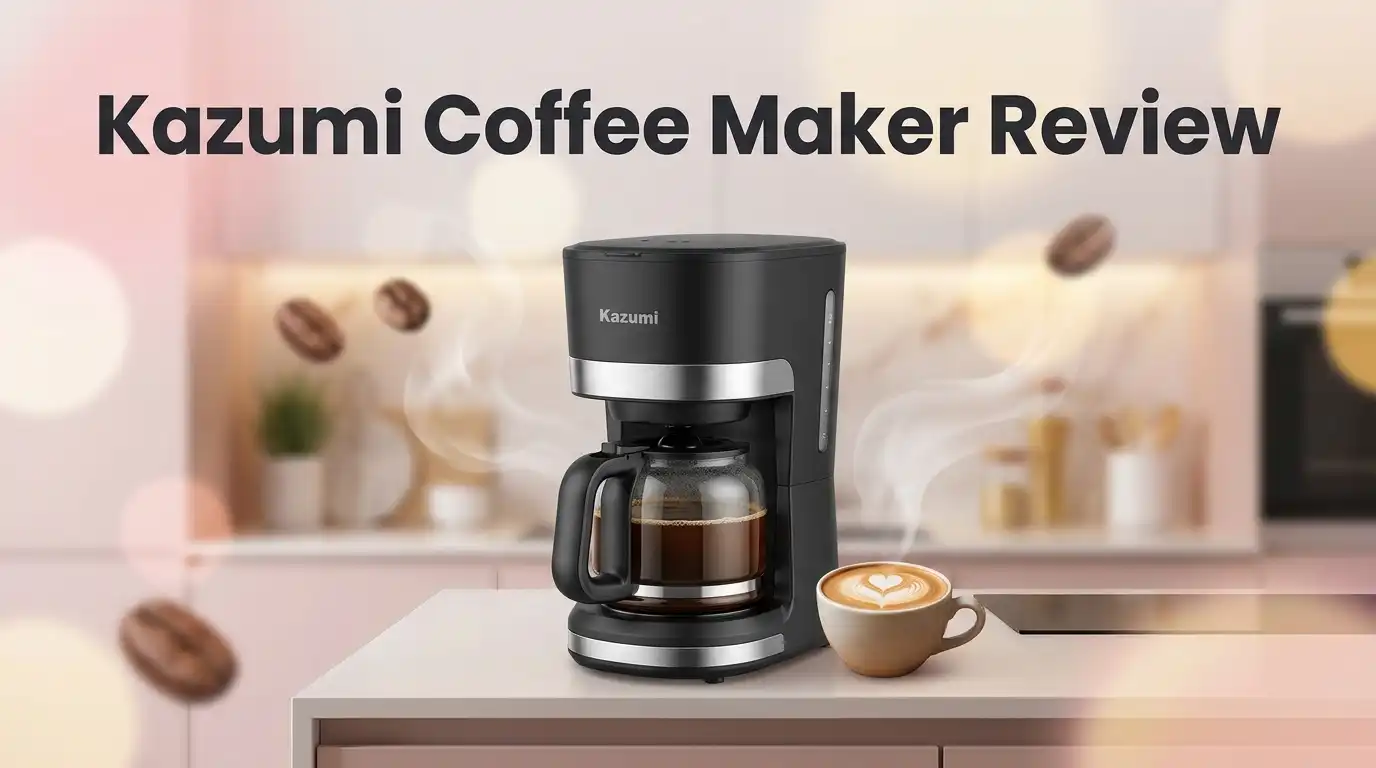
The Kazumi is a Japanese-style siphon (vacuum) coffee maker. It brews using vapor pressure and gravity instead of a pump or drip basket. You get a flask, a funnel, a condenser, a connecting tube, and two holders in the set.
The whole thing is made from borosilicate glass, the same heat-resistant material used in lab equipment. That’s why it can handle direct heat and quick temperature changes better than ordinary glass.
What sets it apart from most siphons is the reusable G3 fritted glass filter. Most siphon brewers rely on cloth or paper. Kazumi skips both, which means no paper taste and no ongoing filter costs. For pour-over fans who hate sediment but love brightness, that’s a real draw.


Last update on 2026-04-08 / Affiliate links / Images from Amazon Product Advertising API

- Upper bowl, lower bowl and burner are made of the best heat resistant borosilicate glass from Hario
- Stand, burner cover, and filter are made of stainless steel
Last update on 2026-07-21 / Affiliate links / Images from Amazon Product Advertising API
How The Siphon Brewing Actually Works
The process is honestly the best part. You add coffee grounds to the funnel and water to the lower flask, then set it over a heat source. As the water heats, vapor pressure pushes it up into the upper chamber to mix with the grounds.
Once you cut the heat, the brew cools and vacuum pressure pulls the coffee back down through the filter. Watching it happen feels a little theatrical, in a good way.
This method controls extraction temperature well, which helps avoid the bitterness and over-extraction you get from boiling coffee too hard. The result is a full-bodied but clean cup with the aromatic oils intact. It rewards medium-ground, freshly roasted beans far more than pre-ground supermarket coffee.
Top 3 Alternatives For The Kazumi Coffee Maker
If the price or wait time gives you pause, these three are worth a look. All are established siphon brewers with strong track records on Amazon.
Hario Technica 5-Cup Syphon Coffee Maker
- Upper bowl, lower bowl and burner are made of the best heat resistant borosilicate glass from Hario
- Stand, burner cover, and filter are made of stainless steel
Last update on 2026-07-21 / Affiliate links / Images from Amazon Product Advertising API
Yama Glass 5-Cup Tabletop Siphon with Alcohol Burner

- Unique Vacuum-Style Brewer: Elevate your coffee experience with the Yama Glass Tabletop Siphon Coffee Maker, a...
- Smooth, Strong Brew: Utilizing a vintage vacuum coffee maker design, this brewer produces a richer, smoother cup of...
Last update on 2026-07-21 / Affiliate links / Images from Amazon Product Advertising API
Bodum PEBO 34 oz Vacuum Coffee Maker

- VACUUM COFFEE MAKER: The PEBO's effective vacuum brewing method extracts all precious oils of your favorite coffee...
- GLASS CONSTRUCTION: Watch the brewing process through two firmly attached glass bowls, which completely seal off the...
Last update on 2026-07-21 / Affiliate links / Images from Amazon Product Advertising API
Unboxing And First Impressions
The Kazumi arrives with each glass component nested and padded, which makes sense given how delicate the pieces are. My honest reaction unpacking a siphon like this is always a mix of excitement and mild anxiety about dropping something.
The glass itself feels substantial, not flimsy. The finishes look precise, and buyers repeatedly call it “a work of art” and “beautifully crafted.” That tracks with what I saw.
Assembly is intuitive once you handle it once. The funnel seats into the flask with a snug seal, and the holders keep everything stable during setup. First-timers should expect a short learning curve, though. You’ll fumble the first brew, then it clicks. Budget a practice run before you serve it to guests.
The Brewing Experience Day To Day
Living with the Kazumi is where expectations matter most. This is not a morning-rush machine. You’re looking at heating water, timing the rise, stirring, and waiting for the draw-down. Call it five to ten minutes of attention.
For me, that’s the appeal on a slow weekend. It turns coffee into a small ceremony rather than a chore. On a frantic Tuesday, I’d reach for something faster.
The payoff is a cup that’s bright, aromatic, and clean with no grit. If you dial in grind size and coffee-to-water ratio (roughly one to two tablespoons per cup), the flavor clarity is genuinely impressive. Casual coffee drinkers may not notice the difference enough to justify the effort. Hobbyists absolutely will.
Taste And Cup Quality
Siphon coffee has a signature profile, and Kazumi leans into it. Because the G3 glass filter is finer than cloth but doesn’t absorb oils like paper, you get the body of a French press with the clarity of pour-over. That’s a rare middle ground.
The vacuum method also keeps water off a rolling boil, so delicate floral and fruity notes survive. Light and medium roasts shine here.
One honest caveat: darker, oil-heavy roasts can taste a touch thin through this filter compared to a press. If you love bold, syrupy dark roast, temper your expectations. Buyers describe “the best nuance of aroma and flavor” they’ve gotten at home, and I’d say that’s fair for the right beans.
Cleaning And Maintenance
Cleanup is more involved than a drip machine but not painful. The parts disassemble easily and rinse under warm water. For a deeper clean, a soft brush and mild detergent handle any residue.
The reusable G3 filter is the standout for maintenance. It’s rated for thousands of brews, so you’re not buying replacements. Coffee may cause slight discoloration over time, but that doesn’t affect taste.
Kazumi says the pieces are dishwasher-safe, though I’d hand-wash anyway to protect the glass and finishes. My real-world advice: rinse right after brewing so grounds don’t dry onto the filter. That single habit keeps the whole thing looking pristine and cuts your scrubbing time way down.
Honest Downsides And Who Should Skip It
Time to be blunt. The fragility is the biggest drawback. Borosilicate resists thermal shock, but it can still crack from a sudden temperature swing or a knock. Clumsy kitchens, beware.
The $199.99 price is high for a manual brewer, and the 25 to 35 day production wait tests your patience. Third-party review scores for the seller’s site are also mixed, so order with realistic expectations.
Skip this if you want speed, programmable settings, or auto shut-off. It has none. Skip it if you brew for a large household, since four small cups is the ceiling. And skip it if you’re rough with glassware or shopping purely on budget. This is a deliberate, hands-on tool for people who enjoy the process itself.
Who Will Love The Kazumi
Now the flip side. If you’re a coffee hobbyist who already grinds fresh beans and geeks out over extraction, this is your kind of gear. The control and clarity reward your effort.
It also suits entertainers. Brewing siphon coffee tableside is a genuine conversation piece, and the glass-and-flame theater impresses guests every time.
Finally, it fits people who value sustainability and design. There’s no paper waste, the filter lasts for years, and the apparatus looks beautiful sitting out. If you see coffee as a daily ritual worth savoring rather than a caffeine transaction, the Kazumi delivers on that promise. For the right person, the price and wait become part of the charm rather than a dealbreaker.
My Final Verdict
So, is the Kazumi worth buying? For the right person, yes. It makes a cleaner, brighter, more aromatic cup than most home methods, and it’s stunning to use and display.
But it asks for time, care, and money in return. It’s a specialist’s brewer, not a daily workhorse. Go in knowing that and you’ll love it.
If the price, wait, or fragility worries you, the Hario Technica offers similar siphon magic with a longer market track record and easier availability. Either way, siphon coffee is a rewarding rabbit hole once you fall in.
Frequently Asked Questions
How many cups does the Kazumi brew at once?
The Kazumi has a 1L flask and brews up to four small cups per batch. That’s ideal for solo drinkers or couples, but large households may find it limiting and need to run multiple rounds.
Does the Kazumi need paper filters?
No. It uses a reusable G3 fritted glass filter that traps fine particles without paper or cloth. It’s rated for thousands of brews, so you never buy replacements. This also means no paper taste in your cup.
Is siphon coffee hard to make for beginners?
There’s a short learning curve. Your first brew may be uneven while you dial in grind size and timing. After a practice run or two, the process becomes intuitive. Expect five to ten minutes of hands-on brewing each time.
Can I put the Kazumi in the dishwasher?
Kazumi says it’s dishwasher-safe, but I recommend hand-washing to protect the glass and finishes. Rinse the parts under warm water right after brewing, and use a soft brush for any stubborn residue.
Is the glass likely to break?
The borosilicate glass resists heat and thermal shock well, but it can crack from sudden temperature changes or impact. Handle it gently, avoid moving it between hot and cold too fast, and store it safely when not in use.
Why does shipping take so long?
Due to high demand and made-to-order production, orders can take 25 to 35 days to produce and ship. If you need coffee gear quickly, an in-stock alternative like the Hario or Yama siphon will reach you far sooner.

Hi, I’m Liza Jensen, your culinary companion here at Recipe by Liza. 🍳🥗Cooking has always been my passion—I find joy in every whisk, every sizzle, and every aromatic spice. As a home cook and recipe developer, I’ve explored flavors from around the world, creating dishes that warm hearts and tantalize taste buds.Join me on this flavorful journey! Let’s swap kitchen stories, share tips, and celebrate the magic of food together.