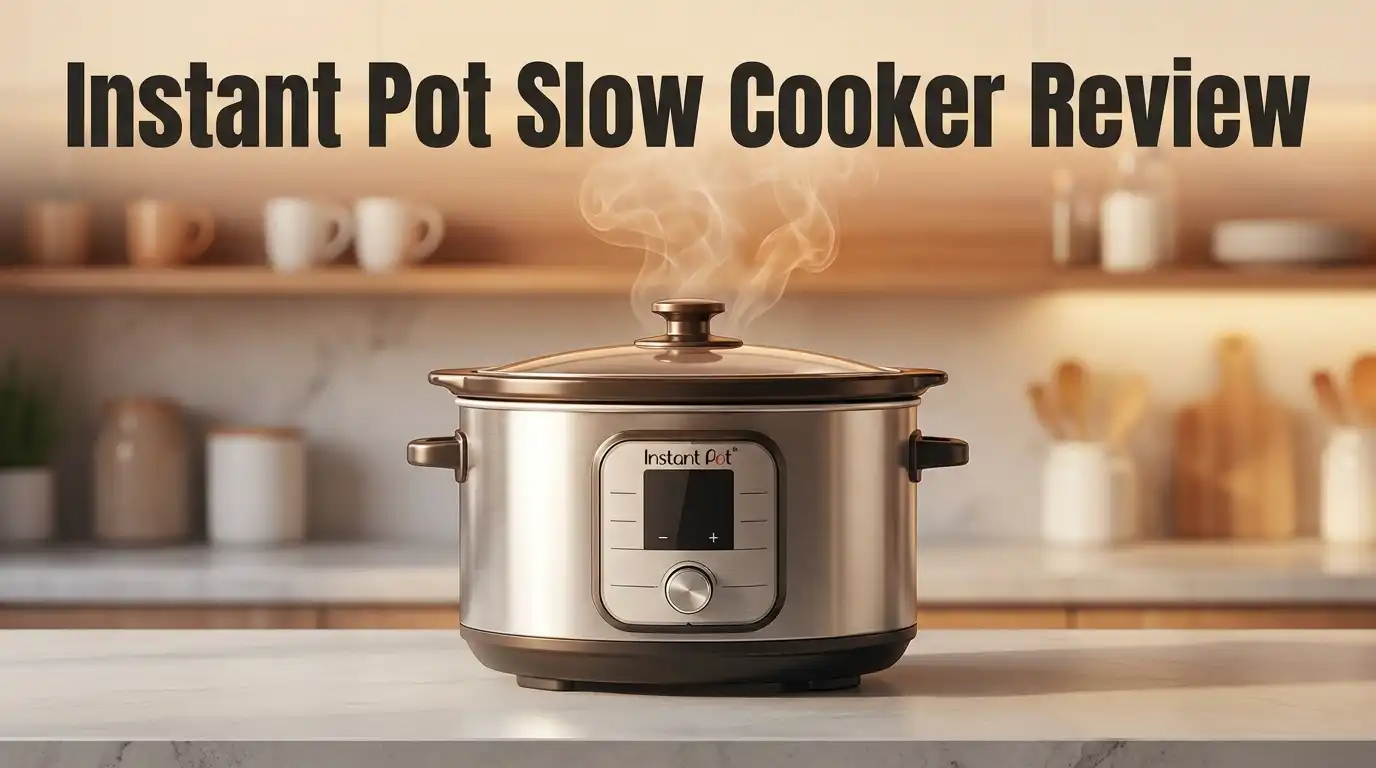
Instant Pot Slow Cooker Review 2026: Genuine Replacement?
You gave away your old crockpot the week your Instant Pot arrived. Then you tried the Slow Cook button, came home eight hours later, and found lukewarm broth with raw carrots floating in it.
That single disappointment sends thousands of people searching every winter. The pressure cooking is brilliant. The slow cooking feels broken.
This review looks only at that one function. I ran beans, chuck roast, chili, pulled pork, and overnight oats through the Duo across three months, with a thermometer in the pot for most of it.
In a Nutshell
- The heat settings lie by one notch. Instant Pot’s Less behaves like a slow cooker’s Keep Warm, Normal behaves like Low, and More behaves like High. Set everything one step higher than your recipe says.
- Real measured temperatures run cool. My probe read roughly 170°F on Less, 185°F on Normal, and 192°F on More after long holds. Published specs claim 180°F to 210°F. Owners across forums report the same gap.
- The sealing lid ruins sauces. Pressure lids trap steam. Nothing evaporates, so stews arrive watery. A tempered glass lid with a steam hole fixes this for under twenty dollars.
- Heat comes from the bottom only. A ceramic crock heats from the sides and base. The Duo’s stainless inner pot heats from one plate underneath, so thick chilis scorch below and stay cool on top.
- It rewards stirring, not neglect. This is not a set and forget appliance. Recipes with large meat cuts and thin liquid work. Dairy, delicate vegetables, and dry rubs struggle.
- It still earns counter space. For pressure cooking, rice, yogurt, and sauté, the Duo remains excellent value. Slow cooking is the weakest of its seven jobs.
Instant Pot Duo 6 Quart Multicooker

- 7 Cooking Functions: Pressure cook, slow cook, sauté, steam, make rice, yogurt, or simply keep your meal warm—all in...
- Customizable Smart Programs: Tackle every recipe with 13 one-touch options, from hearty soups to decadent cakes

Last update on 2026-06-09 / Affiliate links / Images from Amazon Product Advertising API
The Duo is the model most people actually own. It has sold in enormous numbers since 2013 and still anchors the lineup.
You get 1000 watts, a stainless steel inner pot, and seven programs printed across a plain button panel.


Last update on 2026-04-08 / Affiliate links / Images from Amazon Product Advertising API
Slow Cook sits on the bottom row. Press it, press Adjust to pick Less, Normal, or More, then set hours with the plus and minus keys.
The maximum slow cook time is 20 hours, which beats most standalone crockpots.
Build quality feels honest rather than premium. The housing is brushed stainless on the outside, plastic everywhere you touch.
At 6 quarts it holds a four pound roast comfortably. An 8 quart version exists for larger families.
The steam valve must sit in the Venting position during slow cooking. Leave it sealed and you are pressure cooking by accident.
One detail matters more than the marketing suggests. The lid that ships in the box was engineered for pressure, not for gentle simmering, and that shapes every result below.
Unboxing and First Impressions
The box is compact and unglamorous. Cardboard inserts, a folded manual, no ribbon or tissue.
Inside you find the base, the stainless inner pot, a plastic steam rack, a rice paddle, a soup spoon, and a measuring cup.
The accessories feel cheap. My rice paddle warped slightly after two dishwasher cycles.
The inner pot is the good part. It is thick, seamless, and free of nonstick coating, so metal spoons cause no damage.
New units carry a faint plastic smell for the first two or three uses. Boiling two cups of water with a splash of vinegar clears it.
The silicone sealing ring has a stronger odor and holds it for weeks. Many owners buy a second ring so savory and sweet dishes never share flavors.
The lid locks with a firm quarter turn and a loud beep. That beep becomes muscle memory fast.
Counter footprint is roughly 13 inches tall with the lid on. Under a standard cabinet it fits, but you cannot open the lid there.
Nothing about the unboxing feels luxurious. Everything about it feels durable.
Top 3 Alternative for Instant Pot Duo Slow Cooker

- Generous Capacity: 7-quart slow cooker that comfortably serves 9+ people or fits a 7-pound roast
- Cooking Flexibility: High or low slow cooking settings, with convenient warm function for ideal serving temperature
Last update on 2026-06-10 / Affiliate links / Images from Amazon Product Advertising API
Crock-Pot 7 Quart Manual Slow Cooker

- REPLACE 14 KITCHEN APPLIANCES IN ONE POT: This 8.5 qt multi-cooker handles slow cooking, Dutch oven, searing, sautéing...
- 8 COOKING FUNCTIONS: Slow Cook, Sear/Sauté, Steam, Keep Warm, Sous Vide, Braise, Bake, and Proof.
Last update on 2026-09-19 / Affiliate links / Images from Amazon Product Advertising API
Ninja PossibleCooker PRO 8.5 Quart Multi Cooker

- 9 Cooking Functions: Pressure cook, slow cook, sauté, sous vide, steam, sterilize, keep warm, make rice and...
- Customizable Smart Programs: Tackle every recipe with 15 one-touch options, from hearty soups to decadent cakes
Last update on 2026-06-09 / Affiliate links / Images from Amazon Product Advertising API
Instant Pot Duo Plus 9 in 1 Multicooker
How the Slow Cook Button Actually Works
The Duo has no thermostat probe in the food. It runs a heating plate under the pot and cycles it against a base sensor.
That single difference explains almost every complaint online.
A ceramic crockpot surrounds food with warm walls. The Duo pushes heat through one metal disc and hopes it spreads.
Preheating takes far longer than people expect. My chuck roast with two cups of stock sat below 140°F for nearly ninety minutes on Normal.
Cold or frozen ingredients extend that window dangerously. Never start a slow cook cycle with frozen meat in this machine.
A simple trick removes the lag. Run Sauté for five minutes to bring liquid to a bare simmer, then switch to Slow Cook.
The display shows a rising time count, not a temperature. You are cooking blind unless you own an instant read thermometer.
Stirring once every two or three hours changed my results more than any setting adjustment. Bottom layers cook, top layers wait.
This is a simmering pot with a timer, not a true slow cooker. Treat it that way and it performs.
Real Temperatures Inside the Pot
I tested with a submerged digital probe, not an infrared gun, because shiny steel and clear water fool laser readings.
With the pot two thirds full of water and the glass lid on, my numbers settled after four hours.
Less held around 170°F to 178°F. That is Keep Warm territory and it will not cook beans.
Normal held around 185°F to 194°F. This lines up with a real slow cooker’s Low setting.
More held around 192°F to 203°F. Close to a crockpot’s High, though never a rolling boil.
Instant Pot publishes higher figures. Owner measurements across forums land closer to mine, and a few report units barely reaching 150°F, which suggests genuine unit variation.
Food safety guidance for slow cookers expects at least 185°F after eight hours on Low. My unit passed on Normal and failed on Less.
Test yours once. Fill it two thirds with tepid water, run Normal for eight hours, and probe it.
If it reads below 185°F, the base is out of spec and worth a warranty claim.
The Lid Problem and the Glass Fix

- Compatible with all 6QT Instant Pot multicookers.
- 9.1-INCH LID: This Instant Pot lid is made of tempered glass, and features a steam vent for your quality cooking. The...
Last update on 2026-06-09 / Affiliate links / Images from Amazon Product Advertising API
This accessory changes the machine more than any button does.
The pressure lid seals completely. Even vented, it condenses steam and drips it straight back into your food.
A slow cooker lid rests loosely and lets moisture escape. That evaporation is how stews thicken and sauces reduce.
Without it, my beef stew finished as beef soup. Correct flavor, wrong texture, every single time.
The Instant Pot tempered glass lid has a steam hole and sits loose on the rim. It costs less than a takeout dinner.
Two immediate benefits appear. Liquid reduces properly, and you can watch food without lifting anything.
The second benefit matters because lifting a lid costs roughly 20 to 25 minutes of recovery time.
Match the diameter to your pot. 9.1 inches for 6 quart models, 10.2 inches for 8 quart models.
If you refuse to buy one, reduce every recipe’s liquid by 15 to 20 percent and accept a thinner sauce.
I consider the glass lid mandatory rather than optional. Slow cooking with the pressure lid is the single biggest reason people call this function useless.
Stainless Steel Against Ceramic Heat
Material science decides this argument, not brand loyalty.
Ceramic is a poor conductor and an excellent retainer. It absorbs heat slowly, then radiates it evenly for hours.
Stainless steel does the opposite. It heats fast and sheds heat fast through the sides into your kitchen air.
The practical result is a hot bottom and a cool top inside the Duo during long cooks.
My probe measured a 15 degree gap between the base and the surface of a full pot of chili.
Thick mixtures suffer most. Refried beans, tomato heavy sauces, and dairy based dishes scorch against the plate before the top warms.
Thin, liquid heavy dishes barely notice. Stocks, brothy soups, pot roast, and pulled pork came out genuinely good.
Ingredients cut smaller than two inches cook far more evenly. Whole potatoes and thick carrot chunks stayed firm on top.
Nearly submerging your ingredients is the fix. Slow cooker recipes written for ceramic assume rising side heat that this pot cannot produce.
None of this makes the Duo defective. It makes it a different tool wearing a familiar label.
Recipe Conversion That Actually Works
After enough failures I settled on five adjustments that I now apply automatically.
One. Shift the setting up a notch. Recipe says Low, use Normal. Recipe says High, use More.
Two. Add time. Roughly 15 extra minutes per hour of the original recipe. A six hour braise becomes about seven and a half.
Three. Preheat with Sauté for five minutes. This alone cut my total cook time by more than an hour.
Four. Cut solids to two inches or smaller and keep them mostly submerged in at least two cups of thin liquid.
Five. Stir at the halfway point. Yes, it defeats the romance of walking away. It also prevents scorching.
Dishes that thrived: pulled pork shoulder, dried beans, chicken stock, lentil soup, and pot roast.
Dishes that failed: creamy chowders, delicate fish, whole chickens, and anything expecting a browned crust.
Overnight oats worked beautifully on Less, which is the one job that low setting does well.
Write these rules inside your manual. The machine becomes predictable the moment you stop treating it like a crockpot.
Pros and Cons
Pros
- Twenty hour maximum timer beats nearly every dedicated slow cooker, which usually stops at ten or twelve hours.
- The Sauté function lets you brown meat and soften onions in the same pot, so nothing goes to a second pan.
- Stainless steel construction means no nonstick coating to flake, no PTFE concerns, and metal utensils cause no harm.
- Temperature stays steady and gentle once it finally arrives, with none of the aggressive boiling some cheap crockpots produce.
- One appliance replaces several, which genuinely matters in small kitchens and apartments.
Cons
- Preheating takes 60 to 90 minutes, which throws off timing on every recipe written for a standard slow cooker.
- The sealed pressure lid prevents evaporation, leaving sauces thin unless you buy the glass lid separately.
- Heat arrives from the bottom only, causing scorching underneath and cool spots on top in thick dishes.
- Actual temperatures run below published specifications, and unit to unit variation appears to be real.
- It needs periodic stirring, so the set and forget promise does not hold.
- No see through lid in the box, meaning you either buy an accessory or cook without seeing anything.
Who Should Skip This Machine
Be honest about your cooking habits before you buy.
Skip it if you already own a working ceramic slow cooker and love it. Nothing here improves on that.
Skip it if you leave for a ten hour workday and need dinner ready with zero intervention. The stirring requirement kills that plan.
Skip it if your favorite recipes involve cream, cheese, milk, or delicate vegetables. Bottom heat punishes all four.
Skip it if you want browned edges on a roast. Slow cooking here produces moist, pale, falling apart meat and nothing else.
Skip it if you cook for a crowd and need a portable pot with a locking travel lid. This appliance is heavy and awkward to move.
Buy it if pressure cooking is your main goal and slow cooking is a bonus you use occasionally.
Buy it if counter space is tight and one machine has to cover rice, yogurt, steaming, sautéing, and pressure cooking.
The Duo is a strong pressure cooker that also simmers. Judging it as a crockpot sets it up to fail.
My Verdict After Three Months
The Instant Pot slow cooker function is real, functional, and consistently misunderstood.
It will not replace a Crock-Pot straight from the box. The temperature offset, the trapped steam, and the bottom heating make sure of that.
Add a tempered glass lid, shift every setting up one notch, and stir occasionally, and it turns into a capable simmering pot.
My pulled pork and dried beans came out equal to anything my old ceramic cooker produced.
My chowder and creamy chicken dishes never once came out right.
For a person who slow cooks twice a month, this is enough. For a person who slow cooks twice a week, buy the dedicated appliance and keep the Duo for pressure.
The honest score is six out of ten as a slow cooker and nine out of ten as a multicooker.
Instant Pot should describe this feature more carefully. Until they do, the workarounds above are the difference between a great dinner and a disappointing one.
Expert FAQs
Why does my Instant Pot never leave the preheating stage on slow cook?
The base sensor waits for a target temperature that cold ingredients delay for a long time. Run Sauté for five minutes first to warm the liquid, then switch to Slow Cook. Never start with frozen food, since that can extend preheating past safe limits.
Which Instant Pot slow cook setting matches a crockpot Low?
Use Normal, not Less. The Less setting behaves closer to a slow cooker’s Keep Warm and will leave beans and tough cuts underdone. For a crockpot High setting, choose More and expect it to run slightly cooler than a real High.
Do I need to buy the glass lid or can I use the pressure lid?
You can use the pressure lid with the valve set to Venting, but sauces will stay thin. The tempered glass lid has a steam hole that allows proper evaporation and lets you monitor food without losing heat. It is the single best upgrade for this function.
Can I leave the Instant Pot slow cooking while I am out of the house?
It is electrically safe to do so, and the twenty hour timer supports it. The problem is quality rather than safety, because thick dishes scorch on the bottom without stirring. Choose brothy, liquid heavy recipes if nobody will be home.
How much liquid should a slow cook recipe use in an Instant Pot?
Use at least two cups of thin liquid, with ingredients nearly submerged, because side heat is absent. If you are cooking with the sealed pressure lid instead of glass, reduce the original recipe’s liquid by 15 to 20 percent to compensate for zero evaporation.
Is the newer Instant Pot Pro better at slow cooking than the Duo?
Owners of newer models report noticeably better heat retention and faster preheating, and Instant Pot promotes the improvement heavily. The underlying design has not changed, though, since heat still enters from the bottom through a stainless pot. Expect an improvement, not a transformation.

Hi, I’m Liza Jensen, your culinary companion here at Recipe by Liza. 🍳🥗Cooking has always been my passion—I find joy in every whisk, every sizzle, and every aromatic spice. As a home cook and recipe developer, I’ve explored flavors from around the world, creating dishes that warm hearts and tantalize taste buds.Join me on this flavorful journey! Let’s swap kitchen stories, share tips, and celebrate the magic of food together.