Breville Espresso Machine Review 2026: Worth the Price Tag?
Making great espresso at home sounds hard. Many people think you need a barista’s skills to do it. The Breville espresso machine changes that idea. It combines a grinder and an espresso maker in one unit.
This setup helps beginners learn fast. You get fresh ground beans and hot espresso from a single machine. We tested this machine to see if it lives up to the hype. Our review covers real results from regular use.
Consistency stands out as a major strength. Each cup tastes as good as the last one. The learning curve feels gentle too. New users pick up the basics within days, not months.
In a Nutshell
- Built-in grinder: This machine grinds beans and brews espresso in one unit. You get a compact footprint that saves counter space.
- Preheat time: The machine needs 10 to 15 minutes to warm up. Plan your morning around this small wait.
- Grinder quality: The built-in grinder works but does not match standalone grinders. Serious users may want an upgrade later.
- Durability: Owners report reliable performance past three years. This machine holds up well with regular use.
- Automated maintenance: The machine tracks cleaning and descaling for you. Notifications remind you when service is due.
- Bean knowledge required: You need to learn basics about beans and grind size. This knowledge helps you get better results.
- Alternatives exist: Models like the Breville Bambino Plus and Barista Express Impress offer different features. Compare these if this model does not fit your needs.
Build Quality and Design
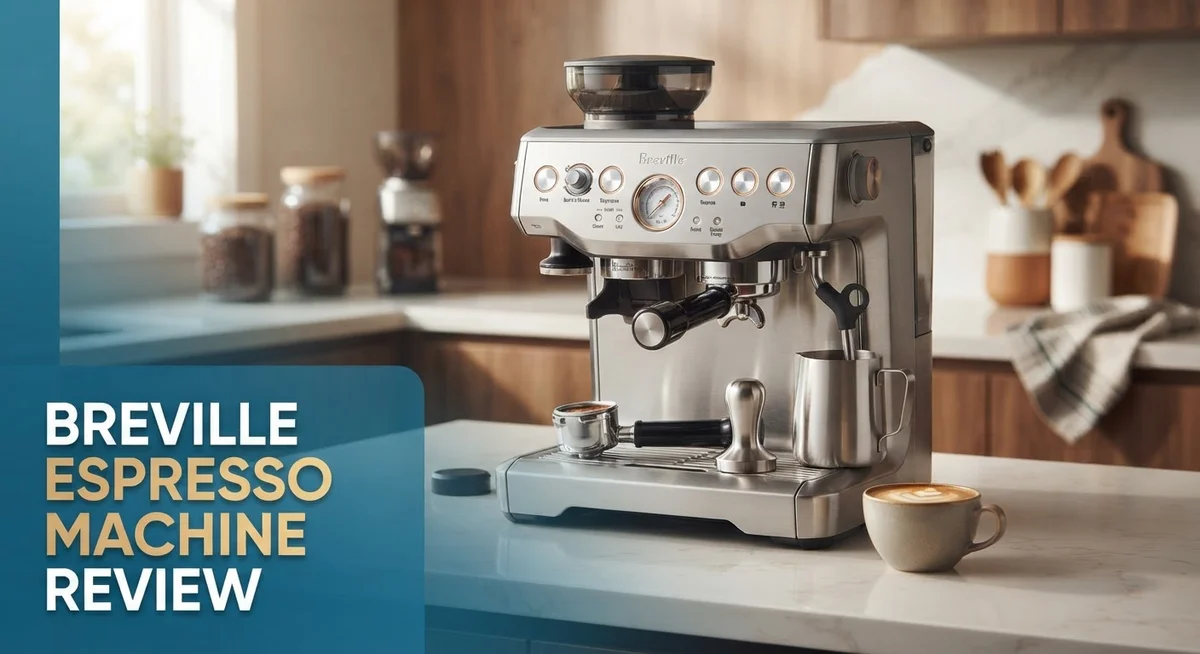
The Breville espresso machine features a compact design that fits on most kitchen counters without taking over your space. The stainless steel exterior looks professional and clean. It feels solid when you touch it, which gives you confidence in the build quality from day one.
The machine’s footprint stays small, so apartment dwellers and those with limited counter space will appreciate this. Despite its compact size, all the controls remain easy to reach. The buttons and dials have good spacing, so you won’t accidentally hit the wrong one mid brew.
The integrated grinder sits on top of the main unit. This two in one design eliminates the need for a separate grinder purchase. The grinder chamber holds enough beans for multiple shots without constant refilling. However, the grinder itself uses burrs that don’t match standalone grinder quality, so many users upgrade this component later.


Last update on 2026-04-08 / Affiliate links / Images from Amazon Product Advertising API
The water tank sits on the side and holds enough for several drinks before refilling. The group head and portafilter feel sturdy and well constructed. The steam wand attaches securely and won’t wiggle during use. All metal parts resist corrosion, which matters if you use the machine daily.
The display screen shows clear text that’s easy to read from across the kitchen. The interface uses simple icons and straightforward menus. You won’t need to squint or guess what each button does.
Durability stands as a real strength for this machine. Owners report consistent performance well past three years of regular use. The automated cleaning reminders help you maintain the machine properly, which extends its lifespan. Internal components show solid engineering, and replacement parts remain available if something eventually wears out.
The overall design balances function with form. Nothing feels cheap or plastic heavy. The machine looks like it belongs on a coffee shop counter, not hidden away in a cabinet. This aesthetic appeal matters if you enjoy displaying your equipment. The build quality justifies keeping it visible on your counter space.

- The Breville Barista Express delivers third wave specialty coffee at home using the 4 keys formula and is part of the...
- DOSE CONTROL GRINDING: Integrated precision conical burr grinder grinds on demand to deliver the right amount of freshly...
Last update on 2026-06-09 / Affiliate links / Images from Amazon Product Advertising API
Espresso Performance and Consistency
The Breville espresso machine delivers consistent shots that rival what you’d get from a café. Each pull produces similar crema, body, and flavor when you dial in your grind correctly. This consistency matters because it builds your confidence as you learn.
The machine maintains stable temperature throughout your brewing session. Water stays hot enough to extract espresso properly without scorching the grounds. You notice this stability when back-to-back shots taste nearly identical.
Pressure control plays a big role here. The machine applies the right amount of force to pull water through your puck. This means you get better extraction compared to cheaper models that lack proper pressure regulation.
Grind size affects your results more than you might think. The built-in grinder works, but upgrading to a separate burr grinder often improves shot quality. Many owners make this switch after their first few months. The machine itself performs well, but the grinder becomes the limiting factor.
Bean freshness impacts consistency too. Use beans roasted within two weeks for best results. Older beans produce flat shots that taste stale. This isn’t a machine issue—it’s just how espresso works.
The learning phase takes time. Your first shots might taste bitter or sour. This happens because dialing in the grind requires practice. After a few weeks, you’ll understand how small adjustments change your cup. The machine responds predictably to these changes, which helps you learn faster.
Water quality matters for consistent espresso. Hard water can build mineral deposits that affect flow rate. Using filtered water keeps your shots tasting clean and bright. The machine includes automated descaling reminders to handle this maintenance.
Tamping pressure influences consistency too. Apply firm, level pressure when packing grounds into the portafilter. Uneven tamping creates channeling where water rushes through weak spots. The machine can’t fix poor tamping technique, but it does reward good form with excellent shots.
Overall, this machine produces reliable espresso when you follow proper technique. You get consistency that matches machines costing significantly more.
Integrated Grinder and Ease of Use
The integrated grinder is the machine’s biggest selling point for new espresso makers. You get everything in one compact unit. No need to buy a separate grinder or juggle multiple appliances on your counter.
The grinder sits right on top of the machine. You load beans into the hopper, dial in your desired grind size, and the machine grinds fresh beans moments before brewing. This keeps your espresso tasting vibrant and full of flavor.
The learning curve is gentle here. The control dial is straightforward. You can adjust grind size easily between shots. Beginners appreciate this simplicity because they can experiment without feeling overwhelmed.
However, the built in grinder has limitations. It doesn’t match the performance of standalone grinders you’d buy separately. The burrs are smaller, and consistency drops slightly compared to dedicated equipment. Many users upgrade to an external grinder after a few months once they get serious about espresso.
The overall interface keeps things simple. The display screen shows clear text. Buttons are labeled logically. You won’t need to consult the manual constantly after your first few uses.
Ease of use extends to maintenance too. The machine sends you cleaning notifications. Descaling cycles run automatically when needed. You don’t have to guess when to clean internal components. This removes guesswork and keeps the machine running smoothly.
Setup takes about 10 to 15 minutes before your first shot. The preheat time is reasonable for a home machine. You can prepare your cup and workspace while waiting.
One thing to know: you still need basic knowledge about beans and grind sizes. The machine won’t do everything for you. Understanding how grind affects extraction helps you dial in better shots. This isn’t complicated, but it does require some hands on learning.
The compact design makes daily use convenient. The water tank refills easily from the side. The drip tray empties without hassle. Everything sits within arm’s reach. This practical layout encourages regular use and keeps your routine flowing smoothly.
Top 3 Alternatives
DeLonghi Dedica Espresso

- A SIP OF ITALIAN DESIGN:At only 6inch wide, the uniquely designed Dedica is our slimmest espresso machine yet...
- HIGH PERFORMANCE THERMOBLOCK: 15-bar professional pressure assures quality results every time, and adjustable controls...
Last update on 2026-06-09 / Affiliate links / Images from Amazon Product Advertising API
The DeLonghi Dedica brings Italian engineering to your kitchen counter. This machine excels at producing consistent espresso shots with its 15-bar pressure pump. The compact design fits perfectly in small spaces without sacrificing performance.
You get a manual steam wand for milk frothing. The water tank holds enough for multiple drinks before refilling. Temperature stability remains solid throughout your brewing session. Many users appreciate how quickly this machine heats up and delivers results.
Gaggia Classic Pro

- Solid Steel Housing, Made in Italy
- 9 Bar Espresso Extractions

Last update on 2026-06-09 / Affiliate links / Images from Amazon Product Advertising API
The Gaggia Classic Pro offers true manual control over your espresso shots. This machine appeals to coffee enthusiasts who want hands-on brewing. You’ll find a commercial-style group head that accepts standard portafilters.
The 3-cup capacity lets you pull shots for yourself or a friend. Steam power comes from a dedicated wand that froths milk effectively. This model requires more skill and attention during operation, but rewards you with excellent espresso quality. The learning curve pays off quickly for dedicated users.
Roka Espresso Machine

- [Café-Quality Espresso Made Simple]:Enjoy rich espresso from espresso machine with a velvety crema at home. Easily...
- [Brew Hot & Iced Coffee Instantly—No Waiting]:Skip the wait between drinks. The advanced dual-circuit system of...
Last update on 2026-09-20 / Affiliate links / Images from Amazon Product Advertising API
Roka delivers a modern approach to home espresso brewing. The machine features intuitive controls that simplify the brewing process. You won’t need extensive coffee knowledge to pull decent shots.
Consistency stands out as Roka’s main strength. The build quality feels solid and reliable for daily use. Heating times remain reasonable, and the steam function handles milk drinks well. This option works best for people who want simplicity without compromising on taste.
Each alternative serves different needs. Choose based on your space, skill level, and brewing preferences.
Maintenance and Cleaning Requirements
Keeping your Breville espresso machine clean is straightforward, and the machine makes it easy with automatic reminders. You’ll receive notifications on the display screen when it’s time to run a cleaning cycle. This takes the guesswork out of maintenance.
Daily cleaning happens right after you brew. Purge the group head by running water through it without the portafilter attached. This clears old grounds and oils. Then remove the portafilter basket and rinse it under hot water. Wipe the shower screen clean with a damp cloth. These quick steps take about two minutes and prevent buildup.
Weekly deep cleaning requires a cleaning tablet. Insert the tablet into the basket, lock the portafilter, and run water through the group head into a cup for about five seconds. Stop and let it sit for ten seconds. Repeat this cycle five or six times. The machine will alert you when this cleaning is complete. Rinse the portafilter thoroughly after.
Descaling happens every few months, depending on your water hardness. The Breville includes a descaling solution with your machine. Fill the water tank with the solution mixed with water, then run it through the group head into a cup until the tank empties. Let it sit for 20 minutes. Refill the tank with fresh water and flush the system completely. This removes mineral deposits that affect performance.
The steam wand needs attention too. Purge it immediately after steaming milk by pressing the steam button. Wipe the tip with a damp cloth right away. Once weekly, soak the tip in hot water with a cleaning tablet for five minutes, then backflush it several times.
Storage matters if you’re not using the machine for a while. Run water through the group head to clear any remaining grounds. Empty and dry the water tank completely. Store it in a dry spot away from direct sunlight.
Most owners report that maintenance becomes second nature quickly. The automated reminders help you stay on schedule without stress.
Preheat Time and Workflow Efficiency
The Breville espresso machine reaches brewing temperature in 10 to 15 minutes. This timeframe matters when you’re eager for your morning shot. Most users find this waiting period reasonable for a home setup.
The preheat process is automatic. You turn on the machine and a light indicator shows when it’s ready. No guesswork involved here. The machine maintains heat stability once it reaches temperature, so your first shot and your fifth shot pull with similar results.
Workflow efficiency improves once you understand the machine’s rhythm. You grind beans, tamp, insert the portafilter, and brew. The integrated grinder eliminates trips between separate equipment. Everything sits in one compact space on your counter.
Daily workflow becomes faster after your first week. Your hands learn where controls sit. You stop checking the manual for button locations. The steam wand heats quickly for milk drinks. Switching between espresso and steam modes takes seconds.
The machine’s notification system keeps you on track. Cleaning alerts pop up at the right moments. You don’t wonder if you’ve skipped maintenance. This feature saves time by preventing buildup that slows your workflow down.
Water refilling happens from the side tank. You don’t need to move the entire machine. This small detail makes regular use less annoying. The tank capacity handles multiple drinks before needing a refill.
One workflow consideration: bean preparation matters. You need fresh beans and proper grind settings. Dialing in your grind takes 5 to 10 minutes when starting. This upfront investment pays off because your shots improve quickly.
The compact footprint keeps your workflow tight. You reach all parts easily during use. Cramped spaces don’t become a problem. Most kitchens accommodate this machine without rearranging cabinets.
Temperature stability means consistent timing between shots. Your extraction time stays predictable. This consistency reduces waste and builds your confidence. You spend less time troubleshooting and more time enjoying espresso.
Overall, the Breville machine streamlines your espresso routine. The preheat time is short enough for daily use. Workflow efficiency improves steadily as you gain experience.
Pros and Cons
Pros
- Produces consistent, quality espresso shots once you master the basics
- Integrated grinder saves counter space and simplifies your setup process
- User-friendly controls make the learning curve quick for beginners
- Hot water source lets you steam milk and brew back-to-back without waiting
- Automatic cleaning notifications and descaling cycles keep maintenance simple
- Reliable durability with many users reporting 3+ years of regular use
Cons
- Built-in grinder lacks the precision of standalone models, so many users upgrade it later
- Requires you to learn proper bean selection and grind techniques for best results
- Weekly maintenance is necessary if you use the machine regularly
- Higher initial investment compared to some budget alternatives on the market
Who Should Buy It
The Breville espresso machine works best for people who want to start making espresso at home without overwhelming complexity. Beginners benefit most because the machine teaches you core skills while handling the technical work for you.
You should buy this machine if you brew espresso regularly. Daily users find the automatic reminders and cleaning cycles save time and effort. The machine fits nicely on most kitchen counters, so space-conscious home cooks appreciate its compact design.
Coffee enthusiasts who want to learn find this model ideal. You’ll master grind selection, tamping pressure, and extraction timing. The integrated grinder and hot water source let you practice all these skills without buying separate equipment. This all-in-one setup removes barriers to entry.
People who value consistency should consider this machine. Once you dial in your beans and technique, you get reliable shots every time. The temperature stability means your morning espresso tastes the same as your afternoon drink.
You’re a good fit if you’re willing to invest time in maintenance. The machine requires weekly cleaning and occasional descaling. Some owners find this routine satisfying; others see it as extra work. If you enjoy hands-on equipment care, this appeals to you.
Skip this machine if you want zero learning curve. You need to understand grind sizes and bean quality. The built-in grinder works, but serious coffee lovers eventually upgrade to a burr grinder. This means you might spend more money later.
Casual drinkers who want espresso once a week might find the maintenance tedious. The 10 to 15 minute preheat time requires planning ahead. If you need espresso instantly, this isn’t your machine.
This machine suits apartment dwellers and small kitchen owners. The footprint stays minimal, and noise levels stay reasonable. Families who share kitchen space appreciate that it doesn’t dominate the counter.
Finally, buy this if you want a machine that lasts. Users report three plus years of reliable performance. You’re investing in durability, not just a quick gadget purchase.
Final Verdict
The Breville espresso machine earns its spot as a solid choice for home baristas. It combines grinding and brewing in one unit, which simplifies your morning routine.
Quality matters more than quantity here. Each cup reflects the effort you put into learning the machine’s quirks.
If you compare this model to the Breville Bambino Plus, you will notice this version offers more control. The Bambino Plus skips the grinder, so you lose that all in one convenience.
The Barista Express Impress adds automation features. Some users prefer manual control, though, which this classic model still delivers.
This machine rewards patience. Give it a fair trial period, and your shots will improve steadily.
Think about your daily coffee habits before buying. Someone who drinks espresso every morning will get the most value from this investment.
Someone who only wants occasional coffee might feel the upkeep is unnecessary. Weekly cleaning and grind adjustments take real commitment.
The build quality stands out. Many owners report years of steady performance without major issues. That kind of reliability builds trust over time.
The grinder remains the weak link in this setup. Serious enthusiasts often swap it for a standalone unit eventually.
Even with that limitation, the machine still produces espresso that rivals café quality. Most beginners will not notice the grinder gap until they get more experienced.
This model fits people who want to grow their skills. It teaches you the fundamentals of espresso making without overwhelming complexity.
Final thought: choose this machine if you want a dependable entry point into home espresso. Skip it if you need instant results with zero effort.
For most coffee lovers ready to learn, this remains a smart pick. It balances convenience, control, and consistency well.
Your kitchen counter will thank you for the compact design. Your taste buds will thank you for the quality it delivers, shot after shot.
Frequently Asked Questions
Does the Breville Espresso Machine need a lot of maintenance?
Weekly maintenance keeps this machine running smoothly. You’ll rinse the group head and purge water lines after each use. The automated cleaning notifications remind you when descaling is due, which takes about 15 minutes.
Most owners find the routine simple once they get used to it. The machine handles much of the work for you with its automatic cycles.
Can I upgrade the built-in grinder later?
Yes, many users do. The built-in grinder works fine for beginners, but it lacks precision compared to standalone models. You can swap it out when you’re ready to dial in your technique further.
This flexibility makes the machine a great starting point. You don’t need to buy everything upfront.
How long does it take to get good espresso from this machine?
Most people pull decent shots within their first week. The learning curve is gentle because the machine guides you through each step.
Mastering grind size and bean selection takes a bit longer, usually 2-4 weeks of regular use. Patience pays off with each cup.
Is this machine good for small kitchens?
Absolutely. The compact footprint fits easily on counters next to other appliances. It won’t dominate your space.
The noise level stays reasonable compared to commercial machines, so it works well in apartments too.
What’s the difference between this model and the Bambino Plus?
This version gives you more manual control over the brewing process. The Bambino Plus adds more automation features if you prefer hands-off operation.
Choose based on whether you want to learn the craft or prefer simplicity.

Hi, I’m Liza Jensen, your culinary companion here at Recipe by Liza. 🍳🥗Cooking has always been my passion—I find joy in every whisk, every sizzle, and every aromatic spice. As a home cook and recipe developer, I’ve explored flavors from around the world, creating dishes that warm hearts and tantalize taste buds.Join me on this flavorful journey! Let’s swap kitchen stories, share tips, and celebrate the magic of food together.