
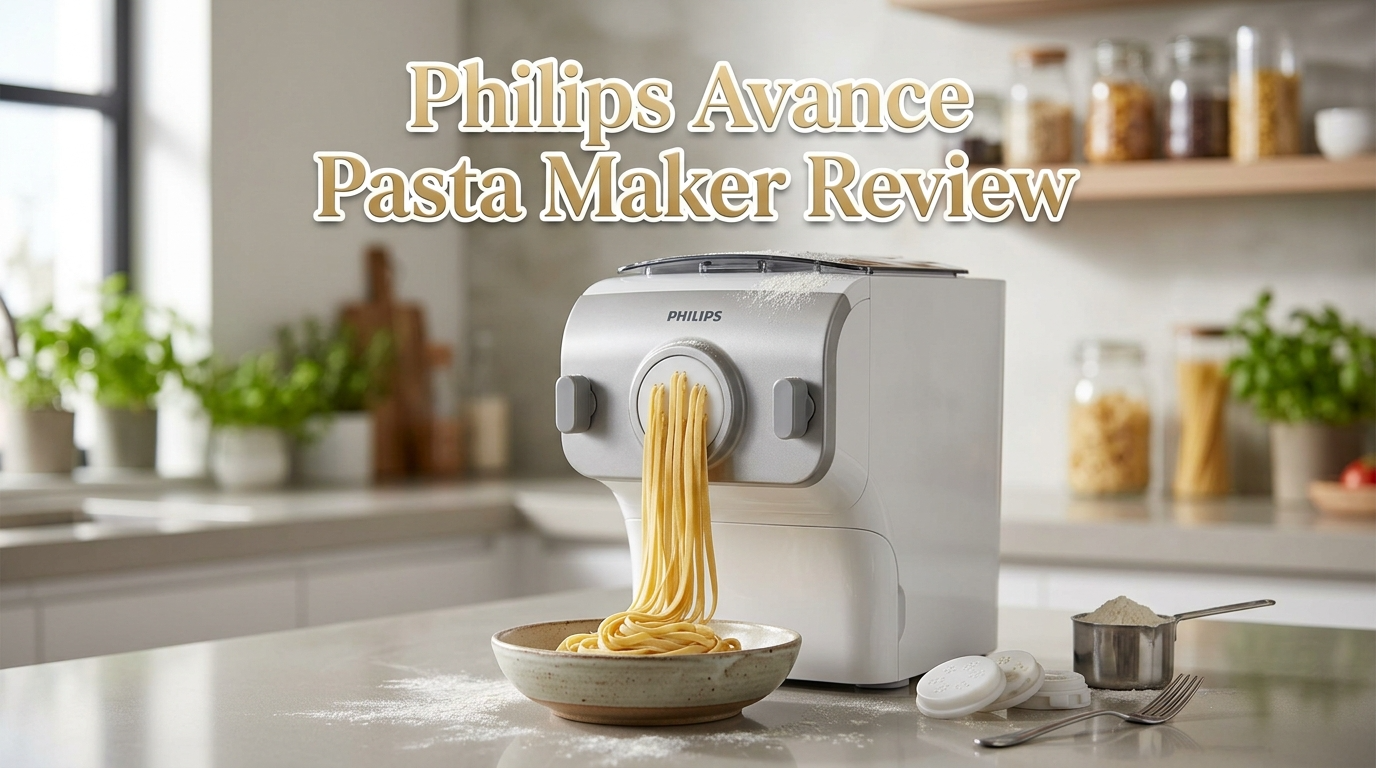
Philips Avance Pasta Maker Review 2026: Is It Still Worth It?
Fresh pasta at home sounds like a dream, right? The Philips Avance Pasta Maker promises to turn that dream into a 10-minute reality. This machine mixes, kneads, and extrudes pasta automatically. You just add flour, eggs, and water.
But does it actually deliver? Is it worth the investment in 2026 when newer models exist? We tested it, read hundreds of user reviews, and dug into every detail. This review covers performance, ease of use, cleanup, pasta quality, and more.
Whether you are a first-time pasta maker or a seasoned home chef, this review will help you decide. Stick around because we also compare it with three solid alternatives.
Key Takeaways:
- The Philips Avance Pasta Maker (HR2375/06) makes fresh pasta in about 10 minutes. It handles the entire process from mixing to extrusion. You measure the ingredients, press a button, and the machine does the rest. This saves a huge amount of time compared to hand-rolling.
- It comes with 4 shaping discs for spaghetti, penne, fettuccine, and lasagna. You can also purchase additional discs separately to make shapes like rigatoni, paccheri, and angel hair pasta. The variety keeps meals interesting.
- Cleanup is easier than expected. Most of the removable parts are dishwasher safe. The included cleaning tool helps remove leftover dough from the shaping discs and barrel. Many users say cleaning takes about 5 to 8 minutes.
- The 150-watt motor generates up to 1,600 pounds of extrusion force. This is strong enough to push dough through even the thickest pasta shapes. The motor runs quietly and handles standard flour, semolina, and whole wheat.
- Finding the right dough recipe can take some practice. Several users report that getting the correct flour-to-liquid ratio matters a lot. Once you master the recipe, the results are consistent and impressive.
- The machine weighs about 14.7 pounds and has a solid build. It does take up counter space, so plan your kitchen layout accordingly. The silver and white design looks clean and modern.

- Fresh flavorful pasta and noodles has never been easier. It automatically mixes, kneads and extrudes your favorites. Add...
- Experiment with an unlimited number of ingredients like egg, vegetable juices, herbs and flours to create healthy and...
Last update on 2026-06-09 / Affiliate links / Images from Amazon Product Advertising API
Philips Avance Pasta Maker: Product Overview
The Philips Avance Pasta and Noodle Maker Plus (HR2375/06) is a fully automatic electric pasta machine. Philips built this model as an upgrade to their earlier HR2357 version. The machine sits in the mid-to-premium price range for home pasta makers.
It uses a single-button operation system. You add your dry ingredients to the barrel and pour liquid through the top opening. The machine mixes the dough for a few minutes, then pushes it through your selected shaping disc.


Last update on 2026-04-08 / Affiliate links / Images from Amazon Product Advertising API
The entire cycle takes roughly 10 to 15 minutes depending on the pasta shape. You get about half a pound of pasta per batch. That serves around two to three people comfortably.
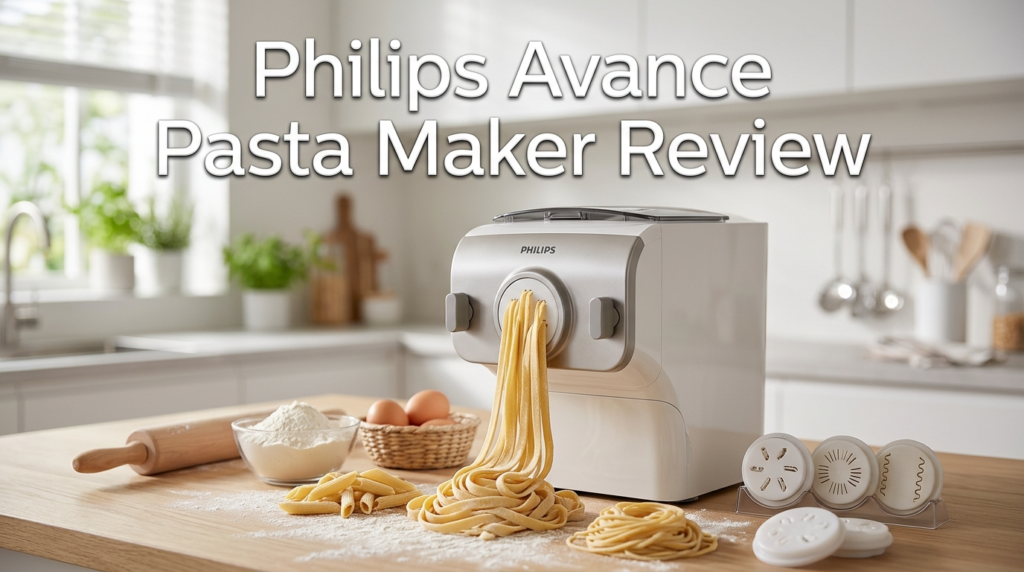
The body is made from a combination of alloy steel and durable plastic. The front extrusion panel and shaping discs feel solid in hand. Philips includes a measuring cup, a cleaning tool, a recipe booklet, and four standard discs in the box.
Design and Build Quality
The Philips Avance has a clean, modern look. The white and silver color scheme fits most kitchen styles. The machine measures about 16 x 12 x 12 inches, so it does need a dedicated spot on your countertop.
Build quality is strong for a kitchen appliance. The barrel where dough forms is thick plastic that holds up well over time. The front metal panel provides the structural strength needed to handle high extrusion pressure.
One smart design choice is the storage compartment on top of the unit. It holds the power cord and accessories. This keeps everything in one place when the machine is not in use.
The LED display on the front shows the current mode and cycle progress. It is simple and easy to read. Buttons are responsive and clearly labeled. There are no confusing menus or complicated settings to worry about.
Users who have owned the machine for over a year report that the exterior stays in good shape. The plastic does not yellow easily, and the metal parts resist corrosion with proper care.
How to Use the Philips Avance Pasta Maker
Using this machine is straightforward. You start by selecting a shaping disc and locking it into the front panel. Then you attach the barrel and the mixing paddle to the main unit.
Next, measure your flour and add it to the barrel. The included recipe booklet tells you exact amounts. A standard batch uses about 250 grams of flour and 95 grams of liquid (egg and water combined).
Press the start button. The machine begins mixing the ingredients automatically. After a few minutes of mixing, it transitions to the extrusion phase. Pasta starts coming out of the front disc.
You cut the pasta to your desired length with scissors or the included cutting tool. The whole process from start to finish takes about 10 minutes for most shapes. Thicker shapes like penne may take a couple of minutes longer.
One tip from experienced users: let the dough rest for 2 minutes after mixing before extrusion. This gives the flour time to fully absorb the liquid. The result is smoother, more uniform pasta.
Top 3 Alternatives for Philips Avance Pasta Maker
If the Philips Avance does not fit your budget or needs, these three alternatives are worth considering. Each brings something different to the table.
1. Philips 7000 Series Pasta Maker (HR2660/03)

- PASTA UNDER 10 MINUTES: Enjoy fresh homemade pasta effortlessly in under 10 minutes¹.
- LARGE CAPACITY: Makes up to 8 portions⁴ of homemade pasta in one go for family and friends.

Last update on 2026-07-01 / Affiliate links / Images from Amazon Product Advertising API
This is the newer and upgraded model from Philips. It features ProExtrude technology, an automatic weighing system, and 8 shaping discs included. The 7000 Series also connects to the Philips HomeID app for guided recipes. If you want the latest technology and do not mind a higher price, this is the top pick.
2. Philips Viva Compact Pasta Maker (HR2371/05)

- Automatically kneads and extrudes 2-3 servings of fresh pasta in just 18 minutes thanks to uniquely designed stirring...
- With the machine there are 3 default classic shaping discs for Spaghetti, Penne and Fettuccini. The special shaping...
Last update on 2026-06-09 / Affiliate links / Images from Amazon Product Advertising API
This is the budget-friendly option from Philips. It is smaller and comes with 3 shaping discs. It makes 2 to 3 servings per batch in about 18 minutes. The compact size is great for smaller kitchens. You get the same automatic mixing and extrusion but in a lighter package.
3. Marcato Atlas 150 Classic Manual Pasta Maker

- Material Type: Nickel-Plated Steel, Chrome-Plated Steel, ABS
- Included Components: User Manual
Last update on 2026-06-09 / Affiliate links / Images from Amazon Product Advertising API
If you prefer a manual, hands-on approach, the Marcato Atlas 150 is the gold standard. It rolls and cuts dough into lasagna, fettuccine, and tagliolini. It has 10 thickness settings and is made of chrome steel in Italy. This machine lasts for decades with proper care. No electricity needed.
Pasta Quality and Texture
The pasta that comes out of the Philips Avance is genuinely impressive. It has a rough, slightly textured surface. This texture helps sauces cling to the noodles better than smooth store-bought pasta.
Spaghetti and fettuccine come out uniform in thickness and length. The shaping discs produce consistent results batch after batch. Penne shapes are a bit trickier because gravity affects how the tubes form as they exit the disc.
The taste difference between fresh extruded pasta and dried boxed pasta is significant. Fresh pasta cooks faster, usually in 2 to 4 minutes. It has a softer bite and a richer flavor, especially when made with eggs.
Users report excellent results with semolina flour for a firmer texture. All-purpose flour works well for softer, more delicate pasta. Whole wheat flour produces heavier noodles but adds nutritional value. You can also mix flours to find your ideal balance.
Shaping Discs and Accessories
The Philips Avance ships with four shaping discs: spaghetti, penne, fettuccine, and lasagna/sheet pasta. These cover the most popular pasta shapes for everyday cooking.
Philips sells additional disc kits separately. The 4-in-1 accessory kit (ASIN: B08FD4F36D) adds shells, paccheri, rigatoni, and macaroni. Another kit adds angel hair, pappardelle, thick spaghetti, and tagliatelle. This means you can expand your options over time without buying a new machine.
Third-party companies like Pastidea and Pastadisc also sell compatible discs. These include fun shapes like bikes, animals, and holiday themes. They use POM (polyoxymethylene) material, which is food-safe and durable.
Each disc clicks into the front panel with a simple twist-lock mechanism. Swapping discs between batches takes about 30 seconds. The discs are easy to clean with warm water and the included tool.
Cleaning and Maintenance
Cleanup is one area where the Philips Avance performs better than many competitors. The barrel, mixing paddle, and shaping discs all detach easily. Philips made most of these parts dishwasher safe, which is a big convenience.
The best approach is to let leftover dough dry for about 15 to 20 minutes after use. Dried dough crumbles off the parts easily. The included cleaning tool has prongs that fit into the disc holes to push out stuck dough.
The main unit should never be submerged in water. A damp cloth wipe-down is all it needs. The barrel and mixing assembly can go straight into the dishwasher top rack.
Total cleaning time is about 5 to 10 minutes per session. This is a major improvement over hand-rolling pasta, where cleanup often involves scraping dried dough off countertops, rolling pins, and boards.
One maintenance tip: inspect the rubber gasket around the extrusion area periodically. Flour buildup in this spot can affect seal quality over time. A quick rinse after each use prevents this issue.
Noise Level and Motor Performance
The Philips Avance runs on a 150-watt motor that generates up to 1,600 pounds of extrusion force. That is enough power to push dough through every included disc shape without stalling.
The noise level is moderate. It is louder than a blender on low speed but quieter than a food processor on high. You can have a conversation in the same room while it runs. The motor hum is steady and does not produce sudden loud spikes.
During the mixing phase, you may hear a slight grinding sound. This is normal as the paddle works the flour and liquid together. The extrusion phase is smoother and quieter.
Users who have run the machine multiple times per week for a year or more report no motor issues. The motor seems built for regular home use. It does not overheat during a standard single-batch cycle.
If you want to make multiple batches in a row, let the machine rest for 5 to 10 minutes between runs. This prevents unnecessary heat buildup and extends the motor’s lifespan.
Recipe Flexibility and Flour Options
One of the best features of the Philips Avance is its flexibility with different doughs. You are not limited to basic egg pasta. The machine handles a wide range of flour types and flavor additions.
Standard egg pasta uses all-purpose or type 00 flour with eggs and a splash of water. Semolina pasta uses durum wheat semolina with water only. This version is eggless and produces a firmer, chewier noodle.
You can also make flavored pasta by adding spinach puree, beetroot juice, squid ink, or tomato paste to the liquid. The machine mixes these additions evenly into the dough. The colors come out vibrant and the flavors stay consistent.
Whole wheat and gluten-free flours also work. Gluten-free pasta requires a bit more liquid and sometimes an added binding agent like xanthan gum. The recipe booklet includes some alternative flour recipes, but online communities have hundreds more.
The Philips HomeID app and various Facebook groups dedicated to Philips pasta makers are excellent resources. Members share tested recipes, tips, and troubleshooting advice daily.
Pros and Cons of the Philips Avance Pasta Maker
Pros:
The biggest advantage is speed and convenience. Fresh pasta in 10 minutes with minimal effort is hard to beat. The automatic mixing and extrusion save you from the physical work of kneading and rolling.
Pasta quality is excellent. The textured surface and consistent shapes rival what you get at a good Italian restaurant. The ability to use different flours and flavors adds real variety to your meals.
Cleanup is manageable. Dishwasher-safe parts and the drying method make this a realistic weeknight cooking tool, not just a weekend project.
Cons:
The learning curve is real. Your first few batches may not be perfect. Getting the flour-to-liquid ratio right takes practice. Too much liquid creates sticky dough that clogs the disc. Too little produces dry, crumbly pasta.
The price is higher than manual pasta makers. You are paying for the electric motor and automation. If you enjoy the hands-on process of making pasta, a manual machine might be more satisfying and cheaper.
Batch size is limited. Half a pound per cycle serves 2 to 3 people. For larger families or dinner parties, you need to run multiple batches. This adds time and requires rest periods between cycles.
Who Should Buy the Philips Avance Pasta Maker?
This machine is ideal for home cooks who want fresh pasta regularly without the physical effort. If you love pasta but do not want to spend 30 to 45 minutes kneading and rolling by hand, the Avance solves that problem.
It is also a great choice for busy parents and working professionals. You can start a batch, prep your sauce, and have dinner ready in under 30 minutes. Kids also enjoy watching the pasta come out of the machine. It can be a fun family activity.
People with dietary restrictions benefit too. You control every ingredient. No preservatives, no added salt or sugar unless you choose to include them. Gluten-free pasta is possible with the right flour blend.
This machine is not the best choice for people who only make pasta once or twice a year. The investment makes sense if you plan to use it at least a few times per month. Otherwise, a $30 manual roller might serve you just as well.
If you want the absolute latest technology, consider the Philips 7000 Series instead. But the Avance remains a strong performer at a lower price point.
Philips Avance vs. Philips 7000 Series: Quick Comparison
The Philips 7000 Series (HR2660/03) is the newer model that replaced the Avance line. It costs more but adds several features.
The 7000 Series includes 8 shaping discs versus 4 in the Avance. It has an automatic weighing function that tells you exactly how much flour and liquid to add. The ProExtrude technology uses a metal mixing paddle and a stronger front panel for smoother pasta.
The Avance still holds its own in core performance. The pasta quality from both machines is similar. The Avance is often available at a lower price since it is the older model. Some retailers offer it refurbished at significant discounts.
If you want app connectivity and guided recipes, the 7000 Series wins. If you want a proven, reliable machine at a lower cost, the Avance is the smarter buy. Both machines accept the same third-party shaping discs.
The size difference is minimal. Both machines have similar footprints and weight. Your choice comes down to budget and whether the extra features of the 7000 Series justify the higher price for your needs.
Customer Feedback and Common Concerns
Online reviews for the Philips Avance are overwhelmingly positive. It holds a rating above 4 stars across Amazon, Best Buy, and Walmart. Users consistently praise the ease of use and pasta quality.
The most common complaint is the learning curve with dough recipes. First-time users sometimes add too much liquid. The machine then produces wet, sticky pasta that clumps together. This issue disappears once you learn the correct measurements.
Some users mention that penne and other tube shapes are less consistent than flat pasta. The tubes can collapse slightly as they exit the disc due to gravity. A quick fix is to cut the pasta shorter as it comes out.
A few users report difficulty finding the machine in stock. Since Philips has shifted focus to the 7000 Series, the Avance may be discontinued in some markets. Buying sooner rather than later is wise if this is your preferred model.
Customer service from Philips receives mixed reviews. Some users had smooth warranty experiences. Others found the process slow. Keeping your receipt and registering the product online helps speed up any claims.
Final Verdict: Should You Buy the Philips Avance Pasta Maker in 2026?

- Fresh flavorful pasta and noodles has never been easier. It automatically mixes, kneads and extrudes your favorites. Add...
- Experiment with an unlimited number of ingredients like egg, vegetable juices, herbs and flours to create healthy and...
Last update on 2026-06-09 / Affiliate links / Images from Amazon Product Advertising API
The Philips Avance Pasta Maker remains an excellent kitchen appliance in 2026. It delivers on its core promise. Fresh, restaurant-quality pasta at home in about 10 minutes. The build quality is solid. The cleanup is reasonable. The pasta tastes fantastic.
Yes, the Philips 7000 Series offers more features. But the Avance costs less and performs almost identically where it matters most: pasta quality, speed, and reliability.
If you eat pasta regularly and value fresh ingredients, this machine pays for itself over time. A box of premium dried pasta costs $3 to $5. A batch of fresh pasta from the Avance costs under $1 in flour and eggs. The savings add up quickly.
We recommend the Philips Avance Pasta Maker for anyone looking for a dependable, user-friendly electric pasta machine. Take the time to learn the dough ratios. Join an online community for recipe ideas. You will not regret it.
Frequently Asked Questions
How long does the Philips Avance Pasta Maker take to make a batch of pasta?
A single batch takes about 10 to 15 minutes from start to finish. This includes the automatic mixing and extrusion phases. Thinner pasta shapes like spaghetti tend to finish faster than thicker shapes like penne.
Can you make gluten-free pasta with the Philips Avance?
Yes. The machine works with gluten-free flours like rice flour and chickpea flour. You may need to adjust the liquid ratio and add a binding agent such as xanthan gum. Online communities share tested gluten-free recipes specifically for this machine.
Is the Philips Avance Pasta Maker dishwasher safe?
The removable parts like the barrel, mixing paddle, and shaping discs are dishwasher safe. The main motor unit should never be placed in water. Wipe it down with a damp cloth only.
How many servings does one batch make?
Each batch produces about half a pound of pasta, which serves 2 to 3 people. For larger groups, you can run multiple batches with a 5 to 10 minute rest period between each cycle.
What is the difference between the Philips Avance and the Philips 7000 Series?
The 7000 Series is the newer model with 8 discs, an automatic weighing function, app connectivity, and ProExtrude technology. The Avance has 4 discs and a simpler interface. Pasta quality from both machines is very similar. The Avance is typically less expensive.
Can you use the Philips Avance to make noodles for Asian dishes?
Absolutely. The machine works great for egg noodles, ramen-style noodles, and udon. You can adjust the flour type and thickness to match your preferred noodle style. Many users make Asian noodles with this machine regularly.
Where can you buy additional shaping discs for the Philips Avance?
You can buy official Philips disc kits on Amazon, Best Buy, and the Philips website. Third-party brands like Pastidea and Pastadisc also sell compatible discs on Amazon with dozens of creative shapes.

Hi, I’m Liza Jensen, your culinary companion here at Recipe by Liza. 🍳🥗Cooking has always been my passion—I find joy in every whisk, every sizzle, and every aromatic spice. As a home cook and recipe developer, I’ve explored flavors from around the world, creating dishes that warm hearts and tantalize taste buds.Join me on this flavorful journey! Let’s swap kitchen stories, share tips, and celebrate the magic of food together.
